-
Q Can D&D hinges be used on projects outside Europe that require CE standards?
A Yes. While CE marking is mandatory within the European Economic Area, many international projects — particularly in the Middle East (UAE, Saudi Arabia, Qatar), Southeast Asia (Singapore, Malaysia), Africa, and Oceania — specify CE/EN standards for commercial fire door hardware. D&D currently exports CE-certified hinges to over 30 countries worldwide. Our documentation is formatted to meet the submission requirements of various national building authorities, and our export team is experienced in handling the specific compliance documentation required by different markets.
-
Q How many hinges are needed per fire door, and does hinge count affect fire rating?
A The number of hinges required is determined by the door's height, weight, and the fire door assembly certification. As a general guideline: doors up to 2100mm height typically require 3 hinges; doors between 2100-2700mm require 4 hinges; and doors exceeding 2700mm may require 5 or more. The fire rating is tested per hinge — so each individual hinge must carry the appropriate EN1634 certification regardless of how many are installed. Using fewer hinges than specified can void the fire door assembly certification. D&D's technical team can advise on the correct hinge count based on your specific door manufacturer's assembly certification.
-
Q Which stainless steel grade should I specify for my application?
A The choice depends on your installation environment. SS201 is suitable for interior applications in dry, controlled environments where cost optimization is a priority. SS304 is the standard recommendation for most commercial interior fire doors — it provides excellent corrosion resistance for indoor environments including kitchens, bathrooms, and areas with moderate humidity. SS316 is specified for exterior fire doors, coastal buildings (within 5km of saltwater), swimming pool areas, chemical processing facilities, and any environment with chloride exposure. All three grades carry the same CE certification and fire rating — the difference is in long-term surface corrosion performance.
-
Q Do you offer OEM private labeling and custom packaging?
A Absolutely. As a factory-direct manufacturer, D&D provides comprehensive OEM services tailored to door manufacturers and hardware distributors. This includes: laser-engraved or stamped brand logos on hinge leaves, custom retail or bulk packaging with your branding, bespoke finish development to match your product line aesthetic, and custom size engineering for non-standard door preparations. Our OEM team works closely with your product development and marketing departments to deliver a finished product that integrates seamlessly into your brand portfolio.
-
Q What is the minimum order quantity and lead time for CE hinges?
A D&D offers flexible ordering options to suit different buyer types. For standard sizes in stock finishes (SSS, PSS), we maintain inventory for rapid dispatch with competitive MOQs suitable for distributors and smaller projects. For OEM orders with custom finishes, private labeling, or non-standard sizes, MOQs are quoted based on the specific requirements — typically starting from 500-1000 pieces per size depending on complexity. Standard production lead time is 15-30 days from order confirmation. We also support phased delivery schedules for large construction projects requiring staged hardware supply.
-
Q Can you supply CE certification documents for building inspections and insurance?
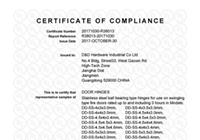
A Yes. D&D Hardware provides a complete certification package for every order: Declaration of Performance (DoP) per CPR No. 305/2011, third-party test reports from accredited European laboratories, CE mark certificates with unique identification numbers, and technical data sheets. These documents are formatted for direct submission to building control authorities, insurance underwriters, and project handover documentation. We can provide documents in advance during the specification stage to support your tender submissions.
-
Q How does the 260-minute fire rating compare to standard requirements?
A Most European building regulations require fire doors rated between FD30 (30 minutes) and FD120 (120 minutes) depending on the building type and compartmentation strategy. D&D's 260-minute fire rating for steel doors exceeds even the most stringent FD240 requirement, providing a substantial safety margin. This extended rating is particularly valuable for high-risk applications such as industrial facilities, data centers, and healthcare buildings where maximum passive fire protection is specified. The 192-minute rating for wooden doors similarly exceeds FD120 requirements common in commercial construction.
-
Q What is the difference between CE Grade 13 and lower hinge grades?
A Grade 13 under EN1935 represents the highest practical performance level for commercial door hinges: 200,000 open/close cycles tested at 120kg door mass. Lower grades (e.g., Grade 7 at 40kg, Grade 11 at 80kg) may be adequate for lighter residential doors but are insufficient for heavy commercial fire doors that experience high daily traffic. For steel fire doors in commercial buildings — which typically weigh 20-160kg — Grade 13 is the recommended specification to ensure the hinge maintains smooth operation and structural integrity throughout the door's 20+ year service life.
-
Q Does D&D Hardware provide technical documentation for project submittals?
A D&D Hardware provides complete technical documentation packages including: UL certification letters, ANSI/BHMA test reports, product specification sheets with dimensional drawings, material certifications, finish samples, and compliance letters formatted for project submittal requirements. Their technical team can also assist with specification writing and respond to architect RFIs (Requests for Information) regarding fire door hardware compliance.
-
Q Can D&D Hardware provide hinges with my company's branding?
A Yes. D&D Hardware offers comprehensive OEM and private label services including custom branding (laser engraving or stamping), private packaging design, custom finish colors, and documentation under your brand identity. This service is particularly valuable for door manufacturers and hardware distributors who want to offer UL certified hinges under their own brand while maintaining full certification traceability. The UL listing remains valid as the product itself is unchanged — only the external branding and packaging are customized.
-
Q What is D&D Hardware's minimum order quantity (MOQ)?
A D&D Hardware accommodates both project-based orders and ongoing supply partnerships. MOQ varies by product configuration and finish. For standard stainless steel finishes, MOQs are typically accessible for mid-size door manufacturers and distributors. Contact their sales team at sales@danddhardware.com with your specific size, material, and finish requirements for a detailed quotation including MOQ, lead time, and volume pricing tiers.
-
Q Should I choose 2 ball bearing or 4 ball bearing hinges?
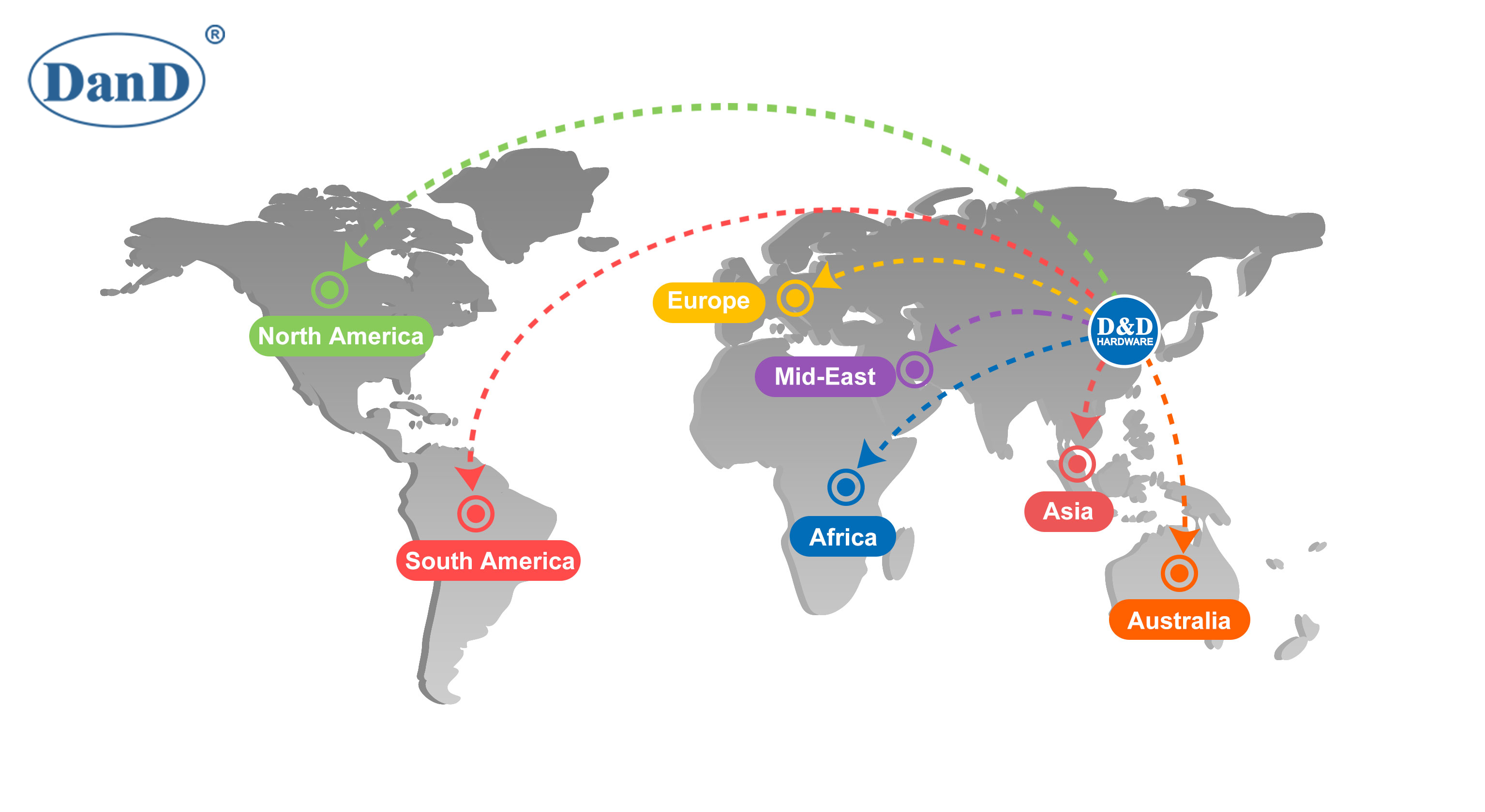
A The decision depends on door weight, traffic frequency, and additional hardware load. Four ball bearing (4BB) hinges are classified as heavy-duty and recommended for: doors exceeding 60 kg, high-frequency doors (hospitals, schools, retail), doors with automatic closers or access control devices, and oversized doors exceeding 1100mm width. Two ball bearing (2BB) hinges are standard weight and appropriate for moderate-traffic interior fire doors under 60 kg. Both configurations must carry UL 10C certification when installed on fire-rated assemblies.
-
Q What is the difference between UL fire rating and ANSI/BHMA mechanical rating?
A These are complementary but distinct certifications. UL fire rating (UL 10C) certifies that a hinge can withstand fire conditions for a specified duration and is required for fire-rated door assemblies. ANSI/BHMA rating (A156.1) certifies mechanical durability through accelerated cycle testing — Grade 1 requires 2,500,000 open/close cycles and Grade 2 requires 1,500,000 cycles. The ideal commercial fire door hinge carries both certifications: UL for fire code compliance and ANSI/BHMA for documented mechanical longevity. D&D Hardware's hinges hold both UL/cUL and ANSI/BHMA Grade 1 & Grade 2 certifications.
-
Q How do I verify if a manufacturer's UL listing is legitimate?
A Every legitimate UL listing can be verified through the UL Product iQ database at productiq.ulprospector.com. Request the manufacturer's UL File Number and search it directly. The database will show the listed company name, product categories covered, and certification details. For example, D&D Hardware's listing is verifiable under File No. R38013. If a supplier cannot provide a File Number, or if the number does not appear in the database, their UL claim should be considered unverified and potentially fraudulent.
-
Q What is UL 10C certification and why does it matter for door hinges?
A UL 10C is the Positive Pressure Fire Test standard administered by Underwriters Laboratories for door assemblies and their components. When a door hinge carries UL 10C certification, it has been independently tested under simulated fire conditions with positive pressure applied to the unexposed side of the door — replicating real fire dynamics. For D&D Hardware's hinges, this certification confirms that the hinge maintains the fire door's structural integrity for a full 3 hours (180 minutes) under these demanding conditions, preventing the passage of flame and hot gases through the door assembly. This certification is legally required by NFPA 80 for all hardware installed on fire-rated door assemblies in the United States.
-
Q Can D&D provide certification documents for project submissions?
A Yes. We supply comprehensive certification packages including ANSI/BHMA test reports, UL fire rating certificates, BHMA listing documents, and detailed product specification sheets. Documentation can be customized for your project submission requirements upon request.
-
Q What is the minimum order quantity and lead time?
A D&D Hardware offers flexible ordering to accommodate projects of all scales. Popular models are maintained in stock for rapid dispatch, while custom configurations carry competitive production timelines. Contact our sales team for specific MOQ and delivery details tailored to your project scope.
-
Q How many lock functions are available?
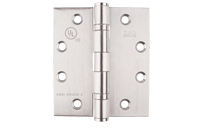
A The range encompasses over 20 distinct functions — from basic passage (F01) and privacy (F02) to classroom (F05), storeroom (F07), corridor (F13), entrance (F20), and multiple deadbolt configurations. Every function shares the same universal lock case, enabling field-reversible handing without disassembly.
-
Q Can these locks be installed on both metal and wood doors?
A Absolutely. The locks conform to standard ANSI door preparations and are engineered for universal compatibility with hollow metal and solid wood doors. Whether you are specifying for a new construction project or retrofitting existing openings, no custom modifications are required.
-
Q What material is used for the lock body and trim?
A The lock case, face plate, strike plate, deadbolt, and latchbolt are all manufactured from SUS304 austenitic stainless steel — a premium alloy renowned for its exceptional corrosion resistance, mechanical strength, and longevity even in coastal or high-humidity environments.