Views: 0 Author: D and D Hardware Publish Time: 2026-08-10 Origin: D and D Hardware


Most distributors don't lose a customer because of price. They lose a customer because a shipment was late, a certification number didn't match what the project spec required, or a "match" part from a new supplier turned out to be close enough to cause a return. If you've been sourcing commercial door hardware for more than a couple of years, you already know this. The real work of building a wholesale business isn't finding the cheapest quote — it's finding a commercial door hardware wholesale supplier you don't have to double-check every time an order goes out.

This matters even more once fire-rated products enter the picture. A standard hinge or lock that ships a week late is annoying. A fire door assembly that's missing the right UL listing on a hospital or school project can hold up an inspection, delay a handover, and put your company's name in front of a general contractor for all the wrong reasons. That's the environment commercial distributors actually work in, and it's why supplier selection deserves more attention than most sourcing guides give it.

Distributors selling into commercial construction usually aren't dealing with a single buyer type. On any given week you might be quoting a door manufacturer building out a hospital wing, a contractor finishing a mid-rise office building, and a facilities buyer restocking hardware for a school district. Each of these customers wants something slightly different, but they share a baseline expectation: the product will perform exactly as specified, every time, without them having to think about it.
When a supplier can't hold that line — inconsistent tolerances, spec sheets that don't match what actually ships, certifications that are hard to verify — the cost doesn't land on the manufacturer. It lands on the distributor, in the form of return calls, delayed handoffs, and a reputation that takes far longer to rebuild than it took to damage. That's really the case for treating supplier selection as a strategic decision rather than a purchasing formality.

A catalog full of products tells you very little about whether a factory understands commercial applications. Building-grade hardware has to account for door weight, frame tolerances, fire-rating assemblies, and code requirements that vary by project type — none of which shows up on a spec sheet unless you ask the right questions.
Before signing on with any commercial door hardware manufacturer, it's worth digging into:
•How long they've actually been producing for commercial (not residential) projects
•Which export markets they regularly ship to, and under what codes
•Whether they've supported large, multi-building projects before, or mostly one-off orders
•Their actual production capacity versus what they claim on paper
A factory that's spent nearly two decades supplying commercial projects tends to have already solved the problems a newer manufacturer is still learning about — tolerance drift across production runs, packaging that survives international freight, documentation that actually holds up when an inspector asks for it.
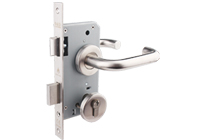
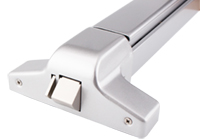
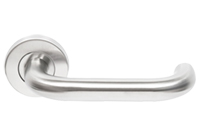
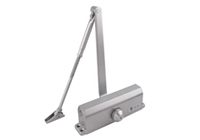
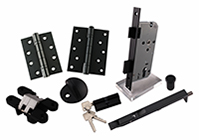
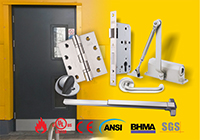
There's a reason experienced distributors gravitate toward suppliers who can cover hinges, mortise locks, closers, exit devices, panic hardware, handles, and cylinders under one roof. It's not just convenience — fewer supplier relationships mean fewer compatibility gaps, fewer shipping schedules to coordinate, and fewer places for something to go wrong between order and delivery.
Working with a single wholesale door hardware sourcing partner that carries a broad catalog also opens the door to bundling opportunities that a narrower supplier simply can't offer. A contractor asking for a complete door package — hinges, lock, closer, and exit device that are all rated to work together — is a much easier sale when one supplier can confirm compatibility across the whole set instead of you piecing it together from three different factories.

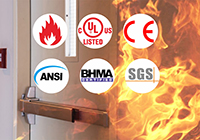
This is the part of the business where supplier choice stops being about convenience and starts being about whether you can even bid on certain projects. Hospitals, schools, high-rises, and most institutional builds require fire door assemblies with verifiable UL or cUL listings. A distributor who can't produce that documentation on request isn't in the running for that work at all.
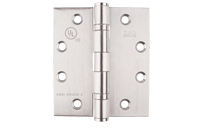
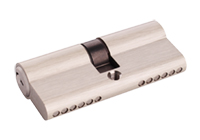
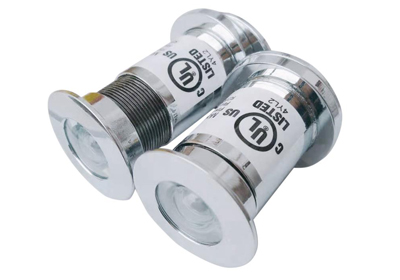
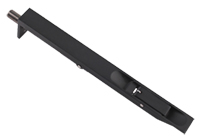
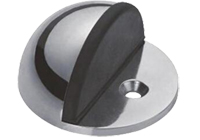
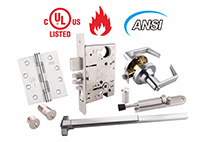
D&D Hardware's UL Series is built specifically around this gap. The lineup includes:
Product | Certification | File Number | |
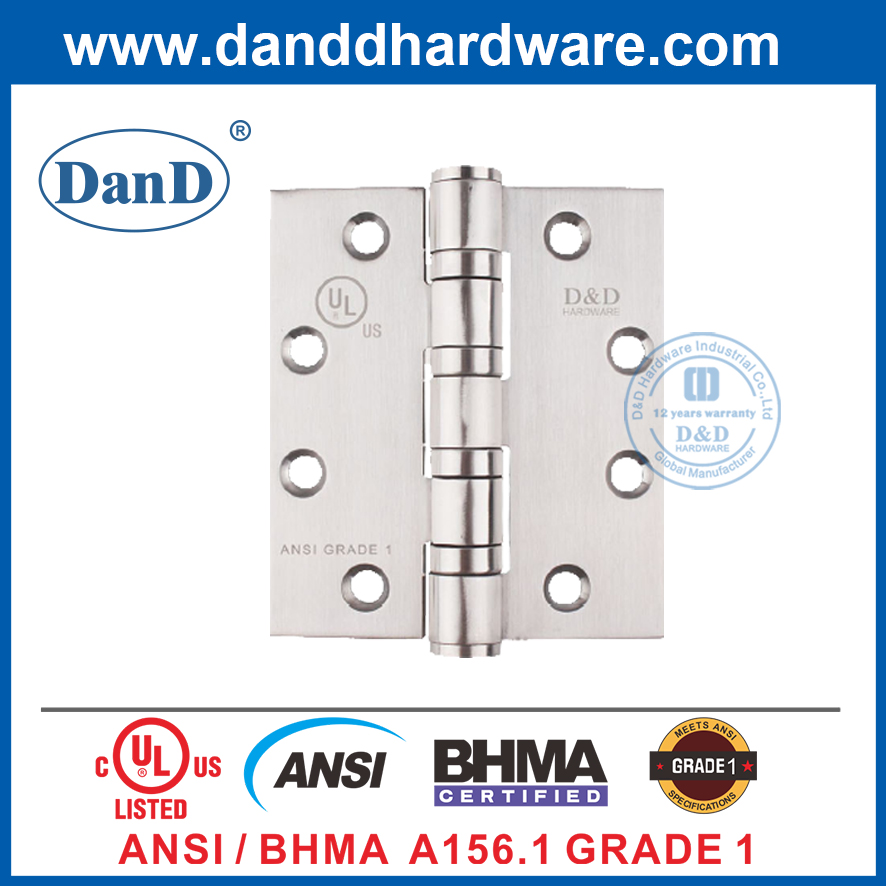 | UL 10C, 3-hour fire rated, ANSI/BHMA Grade 1 & 2 | R38013 | |
 | UL 10C fire rated | R38013 | |
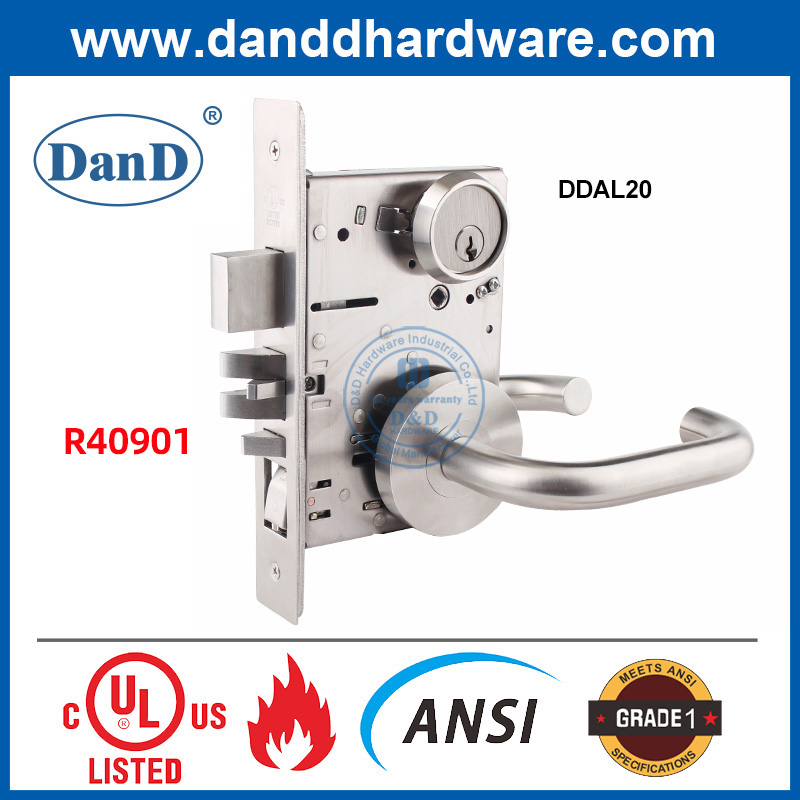 | UL 10C, 3-hour fire rated | R40901 | |
 | UL 10C, 3-hour fire rated | R40717 | |
 | UL 10C, 3-hour fire rated | R40486 | |
 | UL305 | SA45817 |
For a distributor, the practical advantage of working with a UL fire rated door hardware supplier that carries this full range isn't just having certified parts — it's being able to hand a contractor or inspector a documented, traceable UL fire rated hardware solutions package without stitching it together from multiple vendors, each with their own paperwork format and verification process. That difference alone determines which distributors get invited to quote on institutional and multi-family projects, and which ones don't.

Ask any distributor who's been through a difficult project and they'll tell you the supplier relationship that mattered wasn't the one with the lowest unit price — it was the one that picked up the phone when a spec question came up mid-bid. A fire door hardware distributor competing for institutional work needs a manufacturing partner that shows up with more than boxes:
•Spec sheets and certification files that are ready to hand to an inspector, not something you have to chase down
•Installation guidance that matches what's actually in the box
•Product photography and marketing material that doesn't look like it was scanned from a 2009 catalog
•Someone on the technical side who can answer a compatibility question before a bid deadline, not after
This is also where OEM door hardware supplier relationships tend to pay off. A manufacturer willing to support private labeling and custom packaging gives a distributor room to build its own brand presence in the market, rather than reselling someone else's name on every box.
Every distributor has felt both sides of this problem. Overstock ties up cash and warehouse space on parts that might sit for a year. Understock means losing a sale to whoever had the part on the shelf when the contractor called. Neither extreme is sustainable, and neither is really solvable alone — it takes a supplier that's willing to work off your actual sales data rather than just filling whatever order you send.
The distributors who manage this well usually have a standing conversation with their manufacturer about which SKUs move fastest, what lead times look like during peak construction season, and how far out production schedules need to be locked in. That kind of forecasting only works when the supplier relationship is stable enough to plan around in the first place.


It's tempting to sort supplier quotes by unit cost and stop there. But the distributors who've been doing this for a while tend to weigh a wider set of factors before committing:
What You're Evaluating | Why It Actually Matters |
Product consistency | Fewer returns, fewer angry phone calls |
Supply stability | Orders ship when promised, no scrambling |
Technical support | Helps you win bids you'd otherwise lose |
Product breadth | One supplier covers more of your catalog |
Certification depth | Opens the door to institutional projects |
Manufacturing track record | Lowers the risk of a bad surprise |
A quote that's 5% cheaper doesn't mean much if it costs you a return shipment, a delayed project, or a customer who quietly starts calling someone else next time.

Before signing on with any new commercial hardware wholesaler, it's worth running through a short list of questions:
•Does this supplier actually specialize in commercial hardware, or is that a small slice of what they do?
•Can they cover multiple product categories, or will you need a second supplier within a year?
•Do they carry documented UL fire rated certifications you can hand to an inspector?
•Is their quality system controlled enough that Batch 40 looks like Batch 4?
•Can their production capacity actually support your order volume during peak season?
•Do they offer OEM or private label options if you need them?
•Are their lead times realistic, and do they hold up under pressure?
•When you call with a problem, does someone actually answer?
If a supplier hesitates on more than one or two of these, that's worth noting before you place a large order.
D&D Hardware has spent over 18 years manufacturing for commercial projects specifically, which is a different discipline than scaling up residential production. That experience shows up in the details distributors actually care about: an ISO 9001-controlled production process, OEM and private label programs for distributors building their own brand, technical documentation that's ready before you ask for it, and a UL Series built to support fire door applications without forcing you to source certified parts from three different factories.
For distributors handling commercial hardware procurement across hospitals, schools, and multi-family or commercial builds, that combination — full product range, verifiable UL fire rated hardware solutions, and a manufacturer that treats the relationship as long-term rather than transactional — tends to matter more over a five-year stretch than any single quote ever will.

Choosing a door hardware distributor supplier isn't a decision you want to make purely on price, and most experienced distributors already know this from experience, sometimes the hard way. What actually protects your business over time is manufacturing consistency, real UL fire rated capability, responsive technical support, and a supplier relationship built to last longer than one purchase order.
The distributors who treat their supplier list as a long-term partnership — not just a rotating set of quotes — are usually the ones still winning the harder, higher-value projects five years from now.
Manufacturing experience with commercial (not just residential) projects, a broad product range, a controlled quality system, verifiable certifications, realistic delivery timelines, and technical support that's actually responsive.
It's the difference between being able to bid on institutional projects — hospitals, schools, multi-family builds — and being locked out of them entirely. Contractors and inspectors need documentation they can verify, not just a claim on a spec sheet.
For most distributors, yes. Direct relationships tend to offer better supply control, more room for customization, and the possibility of a long-term partnership rather than a series of one-off transactions.
By vetting manufacturers on actual production history rather than catalog size, confirming certifications independently, and paying attention to how a supplier communicates before there's a problem — not after.