Views: 0 Author: D and D Hardware Publish Time: 2026-08-12 Origin: D and D Hardware


Most distributors don't lose commercial accounts over price. They lose them over a missed certification document, a hinge that's back-ordered for six weeks, or a project buyer who asks a technical question nobody on the sales team can answer. In fire rated hardware, those gaps show up faster than anywhere else — because the product touches life safety, and buyers know it.
That's the real argument for treating a manufacturer relationship as a partnership rather than a purchase order. A commercial door hardware distributor who sources reactively, chasing whichever factory has stock this quarter, ends up managing chaos instead of building a business. A distributor working with one dependable fire rated door hardware supplier ends up with something closer to a product division — consistent quality, a shared technical language, and a supply line that doesn't collapse when one factory has a bad month.

This article looks at what that kind of partnership actually delivers, and why it matters more in fire rated hardware than in almost any other building product category.

Multi-vendor sourcing feels flexible until it isn't. A hinge from one factory, a closer from another, panic hardware from a third — each with its own lead time, its own quality tolerance, its own paperwork format. On a small residential job that's manageable. On a hospital or school project with a fire marshal reviewing submittals, it becomes a liability.
Every additional supplier is another point of failure: another shipping schedule to track, another set of UL listings to verify, another company that may or may not answer the phone when a general contractor needs an urgent substitution. Distributors who've been through a failed inspection because two "equivalent" fire rated products actually carried different UL file numbers know exactly how expensive that liability gets.
A single, capable commercial hardware manufacturer removes most of that risk simply by consolidating it. One factory, one quality standard, one point of accountability.

Nobody buys one fire rated component. A single opening might call for a UL-listed hinge, a fire-rated lock, a closer rated for the same door assembly, and exit hardware that matches the listing. If a distributor's supplier only makes hinges, every other item has to come from somewhere else — and now the distributor is back to managing multiple vendors for a single door.
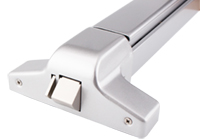
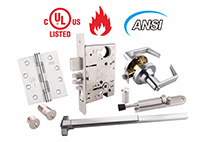
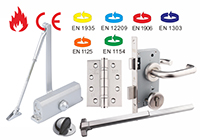
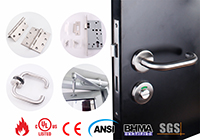
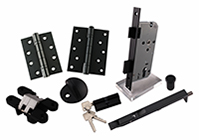
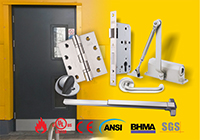
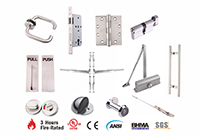
Working with a UL fire rated hardware supplier that manufactures the full assembly — hinges, locks, closers, exit devices, panic hardware — turns a fragmented purchase into one conversation. D&D Hardware's UL Series is built around exactly this logic:
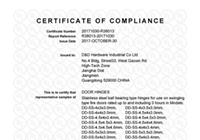
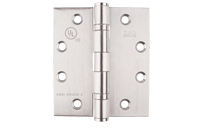
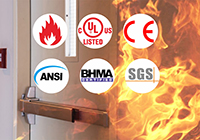
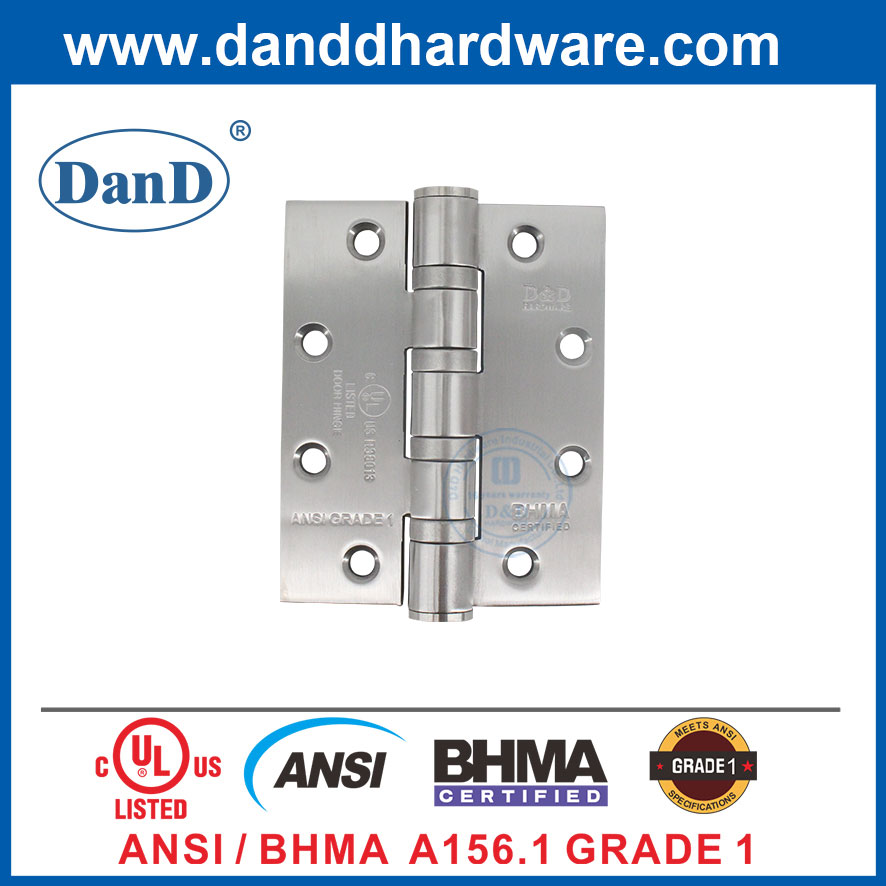
•UL/cUL fire rated door hinges, 3-hour rated, File No. R38013, ANSI/BHMA Grade 1 & 2
•Concealed hinges carrying the same UL 10C listing, File No. R38013, for projects where appearance matters as much as performance
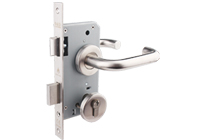
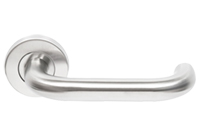
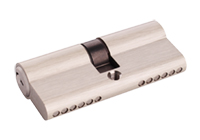
•UL 10C fire rated door locks, 3-hour rated, File No. R40901
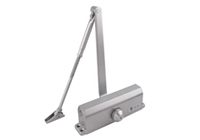
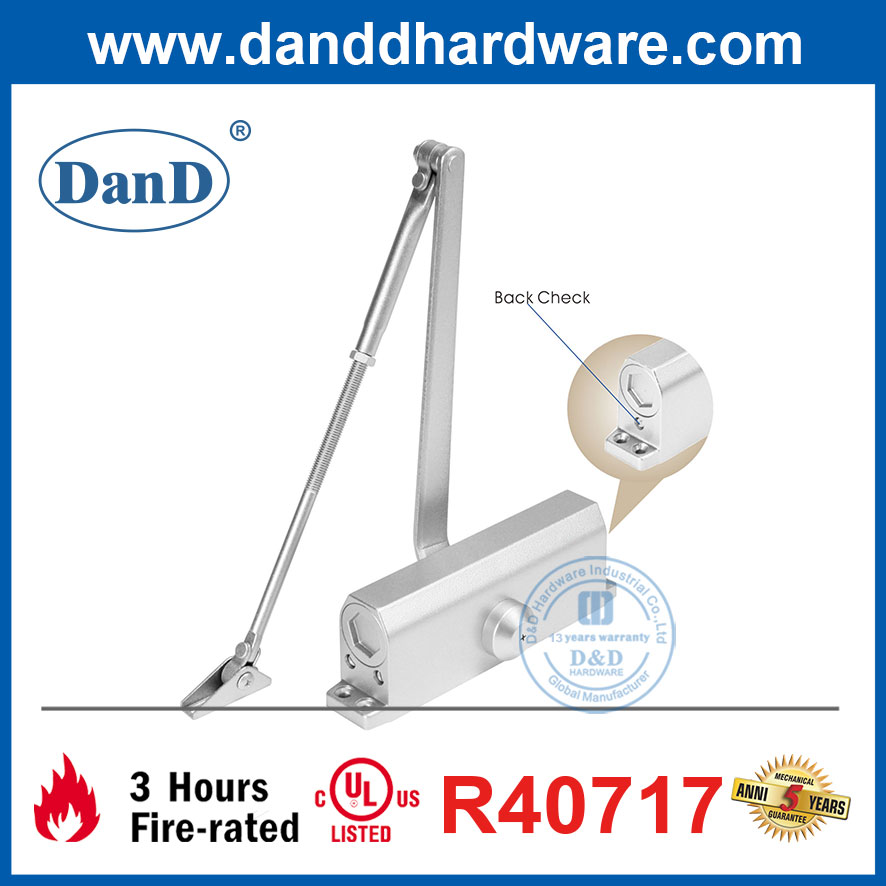
•UL 10C fire rated door closers, File No. R40717
•Fire exit hardware, UL 10C, 3-hour rated, File No. R40486
•Panic hardware certified to UL305, File No. SA45817
None of that matters to a project buyer as a spec sheet. What matters is that a distributor can quote a complete opening — hinge to exit device — from one source, with matching documentation, instead of stitching together a solution and hoping the file numbers line up.
Selling someone else's brand has a ceiling. Distributors who want to be more than a pass-through — who want a customer to ask for their hardware line by name — need a manufacturer willing to build for that outcome.
This is where an OEM door hardware manufacturer relationship changes the math. Instead of relabeling a catalog item, a distributor can develop private label fire door hardware under its own brand: its own packaging, its own model numbers, sometimes its own performance variations for a specific regional market. It's a slower path than reselling, but it's the only one that builds equity a distributor actually owns.
The competitive upside is straightforward. A private-labeled product is harder for a competitor to underbid on price alone, because there's nothing directly comparable on the shelf next to it. Loyalty follows naturally — a contractor who's used a distributor's own fire door line on three projects isn't going to switch over a two percent discount elsewhere.

Commercial buyers, architects, and code officials don't just want a price sheet — they want someone who can answer whether an assembly meets the listing for a given application, without putting them on hold. That's not a marketing function. It's a manufacturing function, and it only works if the factory behind the product is set up to support it.
A strong fire door hardware manufacturer partner supplies submittal documentation, listing files, and product guidance the distributor's own team can hand straight to a specifier. That turns a transactional pitch — here's the price — into a consultative one: here's the complete, certified solution for this opening. That shift is usually what separates the distributor who wins the bid from the one who just quoted it.
Reputation in commercial hardware is built slowly and lost quickly. One late shipment on a project with a hard inspection date can undo years of trust with a general contractor. The value of a stable distributor supplier partnership is mostly invisible — it shows up as the problems that never happened: no surprise spec changes, no quality drift between production runs, no scramble to find a substitute product two weeks before close-out.
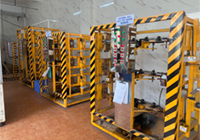
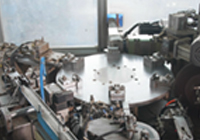
That stability isn't an accident. It comes from a manufacturer with real production capacity and a quality system built for it — which is why certifications like ISO 9001 matter more in practice than they do on a spec sheet.

The distributors who get the most out of a manufacturer relationship treat it as a two-way conversation, not a supply chain. New product ideas, feedback from the field, requests for a variant that fits a specific regional code — a partner manufacturer that's willing to develop around that input turns into a genuine growth engine rather than a static vendor. Over time, that's how a distributor moves from selling commercial door hardware solutions to shaping what those solutions look like.

What to Check | Why It Matters |
Manufacturing Experience | Ensures reliable production capability |
Fire Rated Hardware Expertise | Supports commercial project requirements |
Product Portfolio | Creates more sales opportunities |
Certification Capability | Helps serve higher-value markets |
OEM Support | Enables brand development |
Technical Support | Improves customer service |
Production Stability | Reduces supply risks |
Long-Term Vision | Supports sustainable growth |
D&D Hardware has spent more than 18 years manufacturing commercial door hardware, and the UL Series was built specifically around what distributors need to compete for fire-rated commercial work: certified hinges, locks, closers, and exit devices under one roof, ISO 9001-controlled production, and OEM and private label programs for distributors ready to build their own market identity. Full documentation support comes standard, not as an add-on — because a distributor shouldn't have to chase down a listing file the week before a submittal is due.
The goal isn't just to ship product. It's to give a door hardware partnership enough substance that a distributor can genuinely grow a fire-rated commercial book of business on top of it.

Confirm the UL/cUL file numbers directly, not just marketing claims — check that documentation matches the specific hardware category (hinges, locks, closers, exit devices) and rating duration you need.
For distributors targeting commercial and fire-rated projects, yes — direct relationships give more control over lead times, customization, and documentation than buying through an intermediary layer.
It can, once order volume justifies it. Many manufacturers set minimum thresholds for private label runs, so it's usually a second-stage move after a distributor has established steady volume with a supplier.
Any building requiring rated fire door assemblies under code — schools, hospitals, hotels, offices, and public facilities — which is a substantial share of new commercial construction and renovation work.
A manufacturing relationship in fire rated hardware isn't really about finding the lowest unit cost. It's about finding a factory that won't create problems six months into a project — one with the certified product range, the documentation, and the capacity to let a distributor bid with confidence instead of crossed fingers. That's the difference between a supplier and a partner, and it's usually visible in the first project that goes sideways with the wrong one.