Views: 0 Author: Site Editor Publish Time: 2026-09-09 Origin: Site


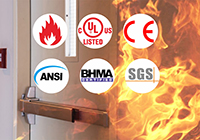
A Rim Exit Device is the better choice for single-door openings, latching directly into a strike on the door frame, while a Vertical Rod Exit Device is designed for double-door openings, securing the door at the top and bottom of the frame. Both configurations are available with UL 10C 3-hour fire ratings and ANSI/BHMA Grade 1 durability certification, so the right choice comes down to your door configuration and application, not the level of fire protection.
Choosing between these two panic hardware types is one of the most common questions door hardware buyers ask, since the wrong selection can cause compliance issues, installation delays, or costly reordering. This guide breaks down how each device works, where it performs best, and what to check before you specify or purchase.
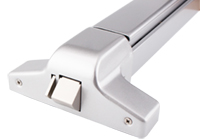
A Rim Exit Device is a panic hardware option that mounts on the surface of the door and latches into a strike plate mounted on the door frame. It's the simplest and most common configuration for single-door openings.
Best suited for: Single doors, including fire-rated exit doors requiring egress hardware
How it locks: A latchbolt engages a strike on the frame when the door closes
Typical applications: Storerooms, classrooms, office suites, and single-leaf fire doors
D&D Hardware's UL Listed ANSI Stainless Steel Fire Exit Rim Panic Device (DDPD003) is an example of this configuration, offering UL 10C 3-hour fire-rated protection along with ANSI Grade 1 durability, meaning it's tested to withstand extensive daily-use cycles without failure.
A Vertical Rod Exit Device secures a door using rods that extend vertically from the device up into the frame header and down into the floor or threshold. This double-point locking makes it the standard choice for double-door (pair) openings.
Best suited for: Double-door openings where doors meet at a center mullion-free opening
How it locks: Top and bottom rods engage strikes in the frame header and floor
Typical applications: Stairwells, main entrances, warehouses, and high-traffic fire escape routes
D&D Hardware's UL Listed ANSI Steel Vertical Rod Exit Device (DDPD004) reflects this design, also carrying UL 10C 3-hour fire ratings and ANSI/BHMA Grade 1 certification for long-term reliability under frequent use.
Feature | Rim Exit Device | Vertical Rod Exit Device |
|---|---|---|
Door configuration | Single door | Double (pair) doors |
Locking points | One (latch into frame strike) | Two (top and bottom rods) |
Installation complexity | Simpler, faster | More involved, requires frame prep at header and floor |
Common use cases | Classrooms, offices, storerooms | Stairwells, main entries, escape routes |
UL 10C fire rating available | Yes (3-hour rated) | Yes (3-hour rated) |
ANSI/BHMA Grade 1 available | Yes | Yes |

The decision depends primarily on your door configuration, not on fire performance, since both devices can meet UL 10C 3-hour requirements. Rim Exit Devices work best for single doors that need a straightforward, single-point latch, while Vertical Rod Exit Devices are necessary for double-door openings that require secure locking at both the top and bottom of the frame to maintain fire door integrity across the full opening.
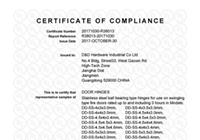
For fire door manufacturers, importers, and contractors sourcing UL 10C-rated exit hardware, working with an experienced manufacturer matters as much as the device type. A UL 10C panic bar manufacturer in China with SGS-audited production, such as D&D Hardware, can supply both configurations with consistent certification, documentation, and technical support across projects.
Can a Rim Exit Device be used on a double door?
No. Rim Exit Devices are designed for single-door latching into a frame strike and don't provide the top-and-bottom locking that double-door openings require. Double doors need Vertical Rod Exit Devices (or a combination with a mullion, where applicable) to secure both leaves properly.
Do both device types cost the same to install?
Generally, Rim Exit Devices are less expensive to install because they require less frame preparation. Vertical Rod Exit Devices involve additional labor for routing top and bottom rods into the header and floor, which typically increases installation time and cost.
Are UL 10C-rated exit devices required by code on all fire doors?
Building and fire codes generally require UL 10C-rated panic hardware on any door that is part of a fire-rated assembly, since the device must maintain the door's fire rating under positive-pressure conditions. Always confirm requirements with your local authority having jurisdiction (AHJ) or fire door schedule.