Views: 0 Author: D and D Hardware Publish Time: 2026-07-27 Origin: D and D Hardware


An ISO 9001 certificate can be a useful starting point when evaluating a commercial door hardware manufacturer. It shows that the company has established a documented quality management system covering defined areas of its operation.
It does not, however, prove that every hinge, lock, door closer or exit device meets the buyer's technical requirements. Nor does it replace product certification, sample approval or order-specific inspection.
For procurement teams, the real question is not simply whether a manufacturer holds an ISO 9001 certificate. It is whether the quality system can be seen in the way materials are controlled, production changes are approved, defects are investigated and repeat orders are kept consistent.

This guide explains how commercial door hardware buyers should review ISO 9001 certification and what evidence to request before selecting a manufacturing partner.

ISO 9001 is an international standard for quality management systems. It focuses on how an organization manages its processes, responsibilities, documentation, customer requirements and continual improvement.
Certification is conducted by an independent certification body—not by ISO itself. According to ISO, accredited certification can provide additional confidence because the certification body's competence has been independently assessed. ISO 9001 explained
For a door hardware manufacturer, a functioning quality management system may cover activities such as:
•Reviewing customer and product requirements
•Approving raw materials and purchased components
•Controlling drawings and production instructions
•Inspecting products during manufacturing
•Identifying and separating nonconforming goods
•Recording corrective actions
•Managing customer complaints
•Controlling changes to products or processes
The certificate indicates that a system has been assessed. Buyers still need to determine whether its scope covers the products and manufacturing location involved in their order.


This distinction is particularly important when sourcing fire-rated commercial door hardware.
ISO 9001 certifies an organization's quality management system. It does not certify an individual hinge, lock, closer or exit device, and it does not establish a product's fire rating.
Product certification and management system certification answer different procurement questions:
Evidence | What it helps buyers verify | What it does not prove |
ISO 9001 certification | The manufacturer operates a documented quality management system within the stated scope | That a particular product is UL Listed or suitable for a specified fire door |
UL product certification | An identified product or series has been evaluated within a defined certification scope | That every product made by the company has the same coverage |
Approved sample | The agreed appearance, construction and operation | That all production units will match unless production is controlled |
Inspection report | The recorded results for an identified order or batch | Long-term consistency across future orders |
A well-managed procurement process uses these forms of evidence together.

Receiving a PDF copy of a certificate should not be the end of the review. Buyers should examine the document carefully and confirm that it is relevant to the proposed order.
Check the following information:
•Legal name of the certified company
•Address of the certified manufacturing site
•Standard and edition stated on the certificate
•Certification scope
•Issue and expiry or recertification dates
•Name of the certification body
•Certificate number
•Accreditation information, where applicable
The certification scope deserves particular attention. A certificate covering the “production and sales of door hardware accessories,” for example, is more relevant than a certificate covering only trading or administrative activities.
Buyers should also confirm that the company named on the certificate is the entity manufacturing or controlling the products. Differences between the factory name, export company and brand name should be explained clearly.
Accredited certificates may also be checked through the certification body, accreditation body or IAF CertSearch, where available.
A current certificate is useful, but the factory's everyday practices provide stronger evidence of whether the system is working.
During a supplier audit or technical discussion, select one representative product and follow its records through the production process. For example, when evaluating a commercial hinge, ask to see how the material specification, thickness, dimensions, finish and functional requirements are transferred from the approved drawing to production and inspection.
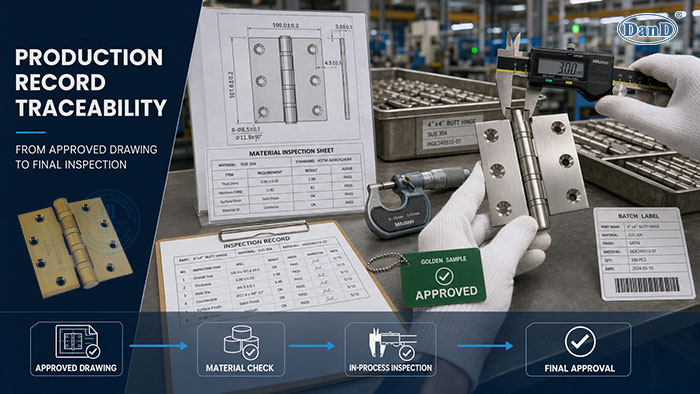
Useful evidence includes:
•Approved product drawings and specifications
•Incoming-material inspection records
•First-piece or first-article reports
•In-process inspection records
•Equipment or gauge calibration records
•Final inspection reports
•Nonconforming-product records
•Corrective-action reports
•Batch or production identification
•Approved golden samples
The objective is not to collect paperwork for its own sake. Each record should help answer a practical question: what was required, what was checked, who approved it and what happened when a result was outside the specification?
Commercial door hardware often combines in-house manufactured parts with purchased components. Springs, bearings, seals, screws, castings and packaging may come from specialist component suppliers.
That arrangement is common, but it introduces additional procurement risks. A change in spring wire, bearing construction or sealing component may affect performance even if the finished product looks unchanged.
Ask the manufacturer:
•Which critical parts are manufactured internally?
•Which components are purchased or outsourced?
•How are component suppliers approved?
•How are material grade and thickness verified?
•Are critical components identified in the product specification?
•What happens when a material or component supplier changes?
•Is buyer approval required for changes affecting the agreed product?
ISO 9001 provides a framework for controlling externally supplied processes and products, but buyers should still confirm how the manufacturer applies those controls to the selected hardware.

Final inspection alone is not enough for commercial door hardware. By the time a repeated dimensional or assembly problem reaches final inspection, a large quantity may already have been completed.
A more reliable system uses inspection at several points:
Inspection point | Typical buyer concern |
Incoming inspection | Material grade, thickness and purchased-component conformity |
First-piece confirmation | Critical dimensions before full production begins |
In-process inspection | Machining, stamping, finishing and assembly variation |
Functional testing | Product operation and adjustment |
Final inspection | Appearance, markings, dimensions and accessory completeness |
Packaging inspection | Labels, quantities, protection and carton condition |
Inspection requirements should be product-specific. A door closer may require checks for hydraulic operation, valve adjustment and leakage. A mortise lock requires different checks for latch movement, deadbolt engagement, follower operation and spring return.
Ask which characteristics are considered critical, what sampling method is used and whether an order-specific inspection report can be supplied.


One of the most common causes of inconsistency is an undocumented change after sample approval.
A manufacturer may change a component supplier, machining method, material thickness or finishing process to improve availability or reduce production cost. Some changes are harmless; others affect fit, appearance, durability or certification status.
Before ordering, establish which changes require notification or approval. At minimum, this should cover:
•Materials and critical component specifications
•Product dimensions
•Internal construction
•Manufacturing location
•Surface-finishing process
•Product markings
•Packaging identification
•Features connected with product certification
A golden sample, approved drawing and written product specification give both parties a clear reference. Without them, terms such as “same quality as the sample” are difficult to enforce.

No manufacturing operation is completely free from defects. A more useful measure of supplier reliability is how the manufacturer responds when a problem occurs.
When reviewing a potential partner, ask for an example of how a previous production issue was handled. A structured response should normally identify:
1.The affected product and batch
2.The immediate containment action
3.The cause of the problem
4.The corrective action taken
5.How recurrence will be prevented
6.How the effectiveness of the action will be checked
Vague answers such as “workers were reminded to be more careful” do not demonstrate strong corrective control. A useful corrective action addresses the process that allowed the problem to occur.
For UL fire-rated hardware, product certification must always be checked at the individual product or series level.
A manufacturer may produce certified and non-certified products that appear similar. Buyers should therefore verify:
•The exact UL file number
•Product category and model
•Applicable standard
•Fire-rating scope
•Available sizes and functions
•Required product markings
•Whether the ordered construction matches the certified product
ISO 9001 can support this process through document control, traceability, inspection and controlled production. It does not extend UL coverage to products that are not included in the relevant certification file.
In practical terms, UL certification establishes the product-specific compliance basis, while ISO 9001 helps demonstrate that the manufacturer has a system for managing repeat production.

D&D Hardware operates under an ISO 9001:2015 quality management system covering the production and sales of door hardware accessories.
Its quality controls include requirement confirmation, incoming-material inspection, first-piece checking, in-process inspection, functional verification, final inspection and packaging review. For customized orders, approved drawings, product specifications and golden samples provide references for production.
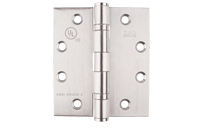
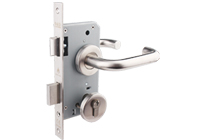
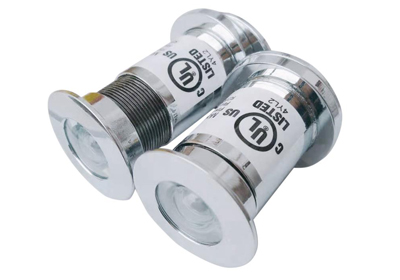
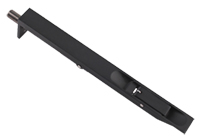
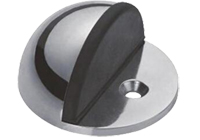
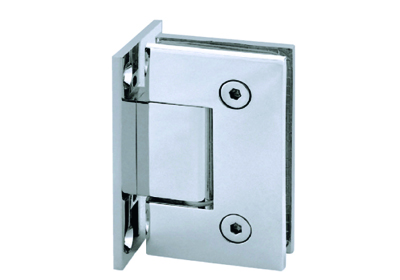
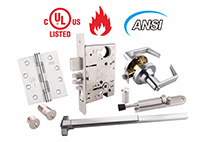
D&D also maintains UL certification programs across major commercial fire door hardware categories:
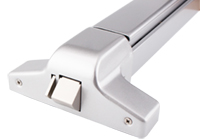
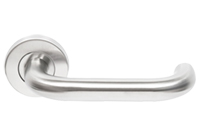
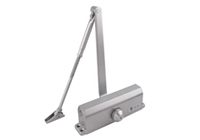
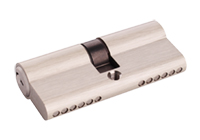
| Product pic | D&D product category | Certification | File number |
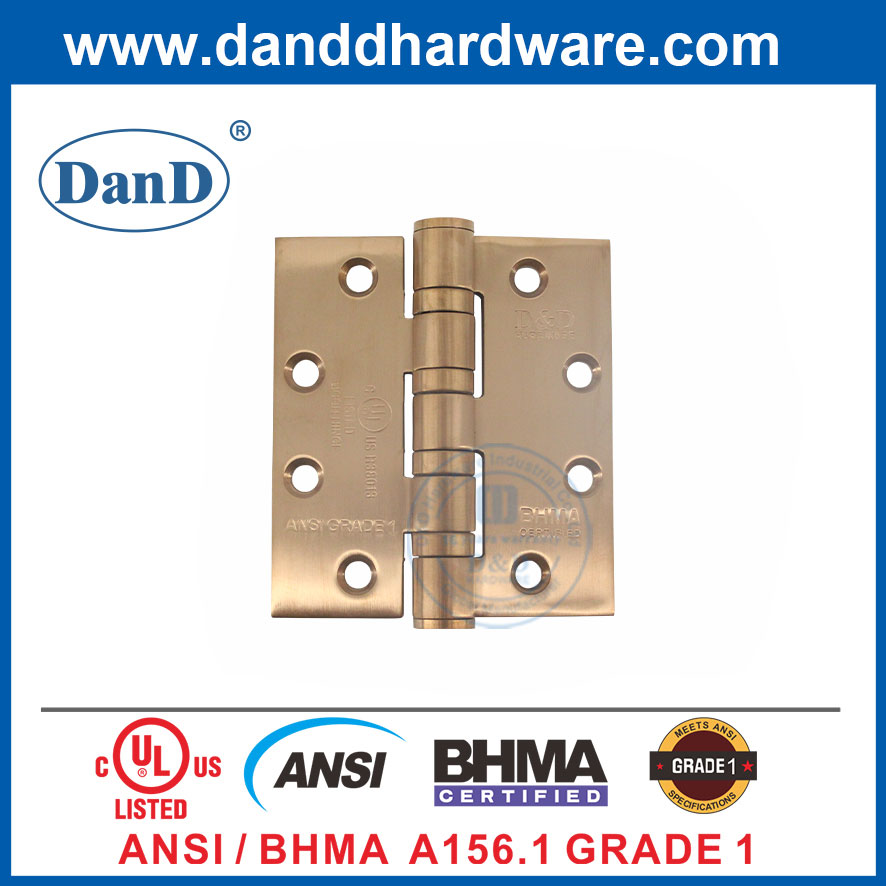 | UL/cUL, UL 10C, up to 3-hour fire rating; ANSI/BHMA Grade 1 and Grade 2 options | R38013 | |
 | UL 10C fire-rated products | R38013 | |
 | UL 10C, up to 3-hour fire rating | R40901 | |
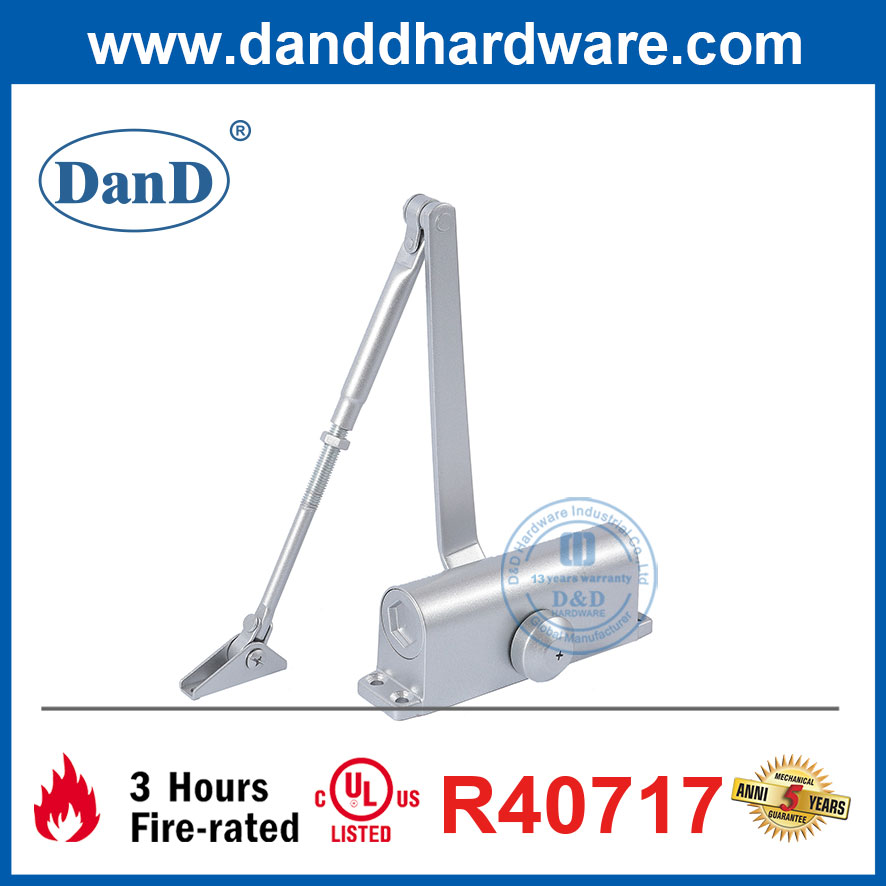 | UL 10C, up to 3-hour fire rating | R40717 | |
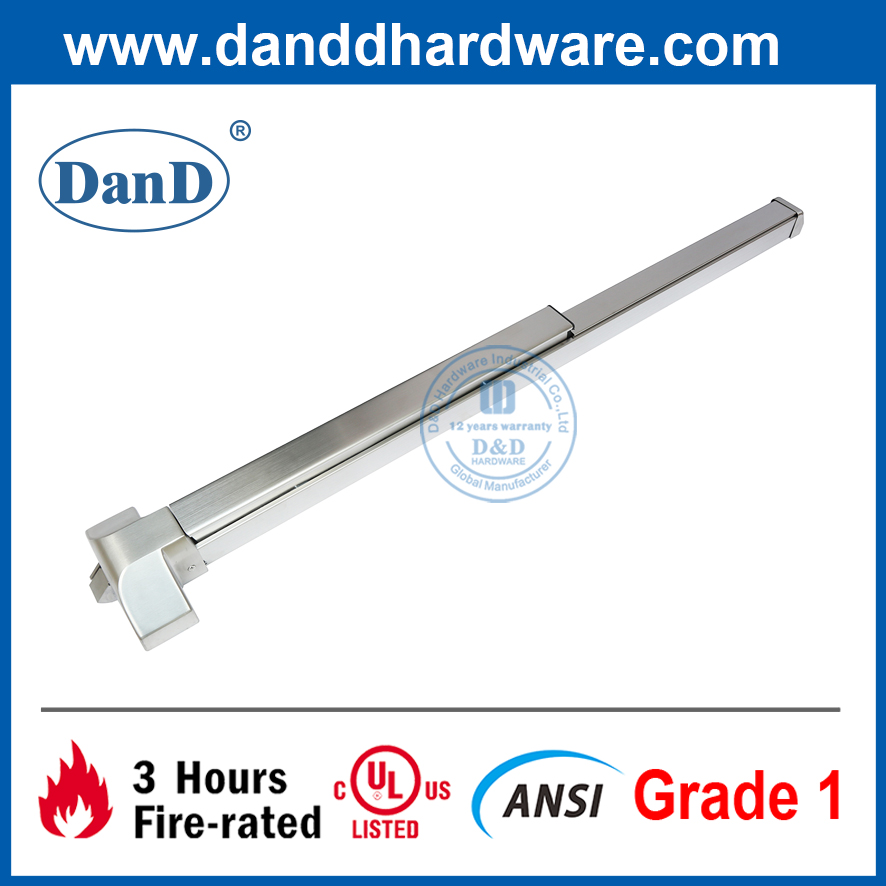 | UL 10C, up to 3-hour fire rating | R40486 | |
 | UL 305 | SA45817 |
Certification coverage should still be confirmed for the selected model, size and application. D&D can assist distributors, door manufacturers and project buyers with product selection, drawings, certification references, OEM requirements and order-specific documentation.
This combination of an established quality management system and clearly identified product certification makes D&D Hardware a dependable Chinese manufacturing partner for commercial door hardware procurement.

Before approving an ISO 9001 door hardware manufacturer, verify the following:
1.Is the certificate current and independently verifiable?
2.Does its scope cover the relevant products and manufacturing activities?
3.Is the certified location involved in producing the order?
4.Are specifications and drawings controlled by revision number?
5.Are incoming materials and critical purchased components inspected?
6.Is the first production piece approved before mass production?
7.Are inspection methods specific to the product category?
8.Can the finished shipment be traced to a production batch?
9.Are significant product and component changes communicated?
10.Can the manufacturer provide relevant UL files and model-level information?
11.Will an approved golden sample be retained?
12.Is there a defined process for complaints, replacements and corrective action?
A manufacturer that answers these questions with records and specific examples gives buyers more confidence than one that relies only on certificates and general quality claims.
No. ISO 9001 certifies a quality management system, not the performance of an individual product. Buyers still need to approve specifications, verify relevant product certifications and define inspection requirements.
No. ISO 9001 concerns organizational quality management. UL certification applies to identified products within a defined certification scope. One does not replace the other.
Check the company name, manufacturing address, certification scope, validity period, certification body and accreditation details. Verification may be available through the certification body or IAF CertSearch.
For customized, project-based or safety-related hardware, reviewing sample inspection records can be valuable. Buyers should agree in advance which records must accompany the final shipment.
The certificate describes the manufacturer's management system. A golden sample records what the buyer actually approved, including construction, dimensions, finish, function, markings and packaging.
ISO 9001 certification is a valuable supplier-screening tool, but it should not be treated as automatic proof of product quality.
Commercial door hardware buyers should verify the certificate’s scope and validity, then examine how the manufacturer controls materials, drawings, production changes, inspection records and corrective actions. For fire-rated products, they must also confirm the exact UL-certified model and ensure that the ordered construction matches the applicable certification coverage.
D&D Hardware combines an ISO 9001:2015 quality management system with identified UL certification programs for hinges, concealed hinges, locks, door closers, fire exit hardware and panic hardware. This gives commercial buyers a more complete foundation for supplier evaluation, product approval and repeat-order control.