Views: 0 Author: D and D Hardware Publish Time: 2026-11-23 Origin: D and D Hardware


Commercial concealed hinge purchasing mistakes often begin with a small mismatch between the buyer’s order and the door manufacturer’s production information. A quantity entered as pairs, an abbreviated model code or an outdated pocket drawing can affect an entire batch of doors.
Buyers can reduce these problems by checking the order at the points where information changes hands. The quotation, approved sample, machining instruction and receiving record should describe the same configuration.

At D&D Hardware, we manufacture door hardware and review concealed hinge enquiries against the proposed opening. This guide forms part of our UL Fire Rated Commercial Door Hardware procurement resources and focuses on errors that purchasing teams can catch before they become site delays.

An enquiry for “100 sets” leaves room for different interpretations. A supplier may quote a pair while the door schedule requires a different approved quantity per leaf.
State the buying unit and show both the number of doors and the number of individual hinges. Ask the manufacturer to confirm hinge quantity and spacing for the actual leaf dimensions, finished weight and construction.
For example, if an approved arrangement uses three hinges on each of 100 doors, the requirement is 300 individual hinges before agreed spares. Use that arithmetic only after the arrangement is confirmed. Apply the same unit to the quotation, purchase order and packing list.
A series name is useful for browsing, but the order needs the complete product identification. Different variants may have different dimensions or permitted applications.
For the DDCH008 concealed hinge and DDCH011 concealed hinge ranges, record the full selected code on each order line. Keep the corresponding drawing revision with it. If the same project uses several variants, give each one a separate purchasing code.
Ask for carton identification that matches those codes. This helps the receiving team distinguish similar-looking hinges before they reach door assembly.

A concealed hinge may look similar to the specified product while having a different construction or certification status. Review documentary evidence when procuring a fire rated concealed hinge.
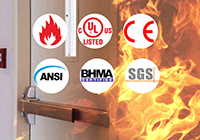
D&D Hardware offers applicable concealed hinge variants with UL 10C Fire Rated certification under File No. R38013. Relevant certified variants include DDCH008 and DDCH011. Confirm the full supplied model against the current certification scope and the intended installation.
DDCH008 - 40kg / 80kg / 120kg


DDCH011 - 60kg / 100kg
UL Product iQ supports searches by company, model and file number, giving purchasers a way to check the certification information supplied.
Where certified hinges are required, establish the approved variant before committing to door machining. Agree how a proposed substitute will be reviewed before acceptance.

“Silver concealed hinge” describes an appearance. The purchase specification also needs the component materials.
D&D Hardware’s DDCH008 and DDCH011 use zinc alloy main bodies, stainless steel covers and aluminium alloy central connecting components. Carry this description into the approved product record.
For a zinc alloy concealed hinge, ask which components receive the selected finish and whether the sample represents the complete supplied assembly. Check the covers, fixings and any included accessories together. Resolve a discrepancy between the quotation and sample before approving the bulk order.

Door production may need drawings before the hardware shipment arrives. Problems arise when a preliminary drawing becomes the machining instruction while the buyer is still considering another model.
Set a drawing approval date alongside the hardware delivery date. Confirm the leaf-side and frame-side pockets, fixing locations and relevant reinforcement with the door manufacturer.
For a 3D adjustable concealed hinge, review adjustment access and the stated range on a representative opening. Record the final model and template revision before releasing the production batch. If the hinge changes later, assess the effect on the prepared doors before accepting the change.

A bulk concealed hinge order may contain several small runs once it is divided by variant and finish. A headline total can hide a shortage in the configuration needed first.
Separate confirmed quantities by product code, finish and required delivery window. Ask the supplier to confirm minimum quantities and lead times for each line.
For a distributor, distinguish stock replenishment from a committed project order. For a door manufacturer, align delivery with assembly requirements. Where deliveries are phased, agree release quantities and responsibility for the remaining goods.
This lets the buyer compare the quoted saving with the actual inventory and delivery obligations.
The purchasing team may approve the right hinge while the installer receives an older drawing or incomplete accessory pack.
Include the model identification, current installation instructions and agreed accessory list in the handover. Confirm who distributes updates to the door manufacturer and site team.
Ask the commercial concealed hinge supplier to identify the supplied contents clearly. During receiving, reconcile hinges and accessories against the approved order before allocating them to production or installation.

A replacement enquiry becomes harder when the buyer has only a photograph and a finish description. Keep full model codes, drawings and order references accessible after delivery.
Agree how shortages, damaged covers and reported operating issues will be documented and investigated. Ask which replacement parts are available and whether they match the installed variant.
As a concealed hinge manufacturer, D&D Hardware can discuss the selected product, supporting drawings and repeat-order references during quotation. Send your door schedule, quantities by variant, finishes and required dates so we can review the complete purchasing requirement.
What should I check first in a commercial concealed hinge quotation?
Check the full variant, buying unit and quantity per approved opening. Then reconcile materials, finish, accessories, documentation and delivery terms with your enquiry.
Can I use one spare hinge across several door types?
Confirm compatibility with each installed configuration. The pocket, fixings, load arrangement and applicable fire-door conditions must suit the replacement. Keep spares identified by full model code.
When should a concealed hinge sample be approved?
Approve the representative product and its drawing before production machining begins. Include the covers, fixings and finish intended for the order.
What should an OEM concealed hinge order retain for future purchasing?
Keep the manufacturer’s product reference alongside the private-label code, approved drawing, material description, artwork and finish sample. These records help maintain continuity between orders.