Views: 0 Author: D and D Hardware Publish Time: 2026-08-05 Origin: D and D Hardware


In commercial construction, the real cost of a door hardware order isn't just the price per unit—it's the financial blowback of a missed deadline. Seasoned contractors and facility managers know that a stalled shipment of locks or hinges can grind a punch list to a halt. Because of this, supply chain risk management has overtaken simple cost-cutting as the top priority in commercial door hardware procurement.
When you're specifying for a project that demands strict compliance, you aren't just buying metal components. You are securing a path to project sign-off. This is particularly true for those sourcing from a UL fire rated door hardware supplier, where the margin for error is zero.

The key to reducing exposure isn't panicked micromanagement; it's a proactive audit of your supply base before the first purchase order is cut. This guide strips away the theory and focuses on how professional buyers build a bulletproof supply chain for commercial hardware sourcing.

Before committing to a vendor, leading procurement teams prioritize:
•Deep vetting of manufacturing capabilities over surface-level pricing.
•Verification of fire-door specific testing and batch consistency.
•Transparent, human-centric communication channels.
•Partnerships that look beyond a single transaction.
A resilient supply chain begins with a reliable door hardware supplier who acts as an extension of your project team.
To reduce exposure in fire door hardware procurement, move beyond transactional buying. You need to rigorously verify the manufacturer's floor-level quality controls, secure clear material specifications early, and align yourself with a commercial door hardware manufacturer that has documented experience in complex commercial builds. For UL fire-rated projects, the supplier's manufacturing rigor is non-negotiable.


Doors are often the last thing people think about and the first thing an inspector checks. A scheduling gap in commercial door hardware procurement doesn't just delay the hanging of a slab; it creates a domino effect that disrupts security, climate control, and final occupancy permits.
The risks that usually blindside buyers fall into a few predictable buckets:
•Batch inconsistency that fails a field inspection.
•"Black box" production timelines with zero visibility.
•Vague fire-rating documentation that stalls approvals.
•A mismatch between the sales promise and the factory's actual capacity.
A structured supply chain risk management framework stops these issues before they metastasize.

The biggest misstep in commercial hardware sourcing is viewing suppliers as interchangeable parts. A low quote from a trading company will never offset the cost of a failed UL audit. True value comes from an OEM door hardware manufacturer that controls the vertical process.
Smart buyers pivot the conversation from "How much?" to "How do you manufacture?"
•Look under the hood at the tooling and foundry processes.
•Demand a clear breakdown of assembly procedures.
•A true commercial door hardware manufacturer should be an open book. If their line is chaotic, your delivery schedule will be too.
Heavy-traffic commercial buildings chew through residential-grade hardware in months. There's a specific engineering rigor that separates a reliable door hardware supplier from a vendor that mainly serves the home improvement market.
When vetting a potential partner, you want to see evidence of scale. Have they handled large-volume institutional orders? Do they understand the cyclical torque demands on a stairwell door? A manufacturer anchored in the commercial sector inherently grasps the critical nature of documentation trails and delivery precision.

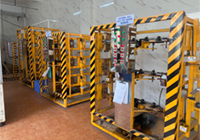
A glossy certificate means nothing if the factory floor doesn't live by it. Quality isn't an inspection event; it's a culture. To lower risk in fire door hardware procurement, you need visual proof that the door hardware supplier maintains strict material traceability.
•Raw Material Validation: How do they ensure the steel or brass matches the spec before cutting?
•In-Process Gauging: Are dimensions checked during manufacturing, or only at the end?
•Pre-Shipment Lifecycle Testing: For a UL fire rated door hardware supplier, this means verifying that every batch meets the rated endurance standards, not just the initial test sample.
An ISO 9001 framework provides a good baseline, but you want a commercial door hardware manufacturer that pairs this with a hands-on obsession for consistency.

Sales teams can sell capacity that the production floor doesn't have. This disconnect is a primary target of any supply chain risk management audit. A technically excellent hardware supplier becomes a liability if they can't scale.
Dig into their scheduling logic. Can they triage an urgent order without collapsing the rest of the queue? A trustworthy OEM door hardware manufacturer won't just promise the stars; they'll show you realistic lead times and flag potential bottlenecks weeks in advance. Predictability is worth more than a small discount.
An RFQ that says "standard finish" is a ticking time bomb for commercial door hardware procurement. Vague inputs generate vague outputs, leading to wrong back-sets, mismatched handing, or incorrect fire labels. These errors stall installations and crush margins.
The fix is low-tech and high-impact: obsessively detailed specifications. This means locking down ANSI/BHMA grades, exact BHMA finish codes, fire-rating hour requirements, and even packaging instructions. When you and a reliable door hardware supplier share an exact language, the supply chain friction disappears.


There's a stark difference between an order-taker and a solutions partner. Technical support is a safety net for commercial hardware sourcing. You need a team on the other end that catches specification errors before they go into production.
A qualified UL fire rated door hardware supplier should actively help you navigate the maze of compliance. They provide installation templates, product data sheets, and engineering judgments without being chased. They don't just sell you a hinge; they ensure it works with the fire-rated assembly you're using.
Some buyers hedge risk by splintering orders across dozens of small suppliers, but this often backfires by multiplying the administrative load and quality variables. Strategic supply chain risk management is about depth, not breadth.
Consolidating your spend with a true commercial door hardware manufacturer simplifies your life. You aren't juggling ten different points of failure. Instead, you have one source providing consistent metallurgy, uniform threading, and a single point of accountability. The goal is a partnership that shortens the diagnostic process when challenges arise.

Use this checklist to pressure-test a potential door hardware supplier. Don't just ask the questions; demand to see the evidence.
Risk Category | The Critical Question |
Market Alignment | Is this their core business, or are we a side hustle for them? |
Fire-Rated DNA | Can they walk us through their fire-door testing chain-of-custody? |
Scalability | Can they absorb a 30% volume spike without lead times collapsing? |
Floor Controls | What quality stops exist between raw stock and the shipping dock? |
Data Transparency | Are technical documents instantly available, or a constant hunt? |
Visibility | Do we get proactive status alerts, or do we have to chase updates? |
Partnership View | Are they structured to grow with our future project pipeline? |

At D&D Hardware, we've spent 18 years peeling the friction out of commercial hardware sourcing. We recognize that a smooth procurement cycle doesn't start with a product; it starts with a process you can trust.
We support global clients by functioning as a seamless extension of their procurement arm. Our operation runs on an ISO 9001 backbone, but our rigor is measured by daily, verifiable consistency on the factory floor. We provide comprehensive OEM door hardware manufacturer solutions and in-depth technical support for UL fire rated door hardware supplier needs. We don’t just fill containers; we provide a stable, reliable throughput that helps you sleep at night.

Unverified quality. Sourcing hardware that looks right but lacks the material backbone or fire certification destroys budgets through rework and liquidated damages.
Look beyond the sales pitch. Ask about their raw material inventory depth, their typical backlog, and their defect resolution protocol. Structure and clarity indicate stability.
Rarely. A low price on a fire-rated item is often a lagging indicator of skipped testing or substituted metals. A UL fire rated door hardware supplier charges for the engineering assurance, not just the alloy.
Balance is key. Using too many suppliers creates chaos in documentation. A strategic, consolidated partnership with a reliable door hardware supplier delivers efficiency and leverage that multiple vendors cannot.
Volatility in the supply of commercial door hardware is a given, but the risk it poses to your projects is optional. By shifting your focus from tactical price negotiation to strategic supply chain risk management, you swap fragility for resilience.
For those managing fire door hardware procurement, the chemistry with your commercial door hardware manufacturer is the hidden ingredient in project success. The right partner delivers consistent quality and technical clarity, insulating your project schedule from the unexpected. Apply these vetting disciplines, and you’ll move from reactive firefighting to predictable, profitable project execution.