Views: 0 Author: Site Editor Publish Time: 2026-10-22 Origin: Site


Quick answer:
Global buyers increasingly choose door hardware manufacturers in China because of strong cost-performance value, widespread certification compliance (CE, UL, ANSI, BHMA), mature supply chain capability, and dedicated export support. A commercial door hardware manufacturer like D&D Hardware combines factory-direct pricing with international quality standards, making sourcing simpler for contractors, distributors, and importers worldwide.
Commercial construction projects run on tight margins and tighter deadlines. Whether it's a hospital wing, a hotel tower, or a government office complex, the hardware specified on every door—hinges, locks, panic bars, closers—has to meet code, survive heavy daily use, and arrive on schedule. That combination of requirements has pushed procurement teams, distributors, and project contractors toward a familiar but often misunderstood sourcing region: China.
The shift isn't about chasing the lowest unit price. It's about finding a door hardware manufacturer that can deliver certified products, consistent quality, and reliable logistics at a scale Western suppliers frequently can't match without a significant price premium. This post breaks down the specific reasons global buyers are increasingly placing orders with door hardware manufacturers in China, and what to look for when evaluating a potential partner.
Cost-performance advantage is usually the first thing that draws buyers to China, but it's worth understanding why the pricing works the way it does. Manufacturers based in regions like Jiangmen and the broader Guangdong province benefit from dense local supply networks for raw materials—stainless steel, zinc alloy, brass—along with established metalworking expertise built up over decades.
A commercial door hardware manufacturer operating a direct factory model, rather than outsourcing to third-party workshops, can control material costs, labor efficiency, and quality checks in one place. This vertical structure removes several markup layers that typically inflate prices when hardware passes through multiple trading companies before reaching a buyer. D&D Hardware, for example, operates as a direct factory with 18 years of manufacturing experience in architectural hardware, which allows it to offer what it describes as "famous branded quality at factory cost."
For contractors managing multi-building projects, this pricing structure translates into real budget flexibility—savings that can be redirected toward other project line items without compromising on hardware grade or durability.
This is where many buyers hesitate, and reasonably so. Door hardware on a commercial building isn't just about function; it's a life-safety component, particularly for fire-rated doors. Hardware that fails to meet certification requirements can delay occupancy permits or create liability for the entire project.
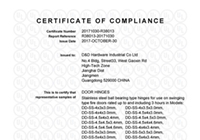
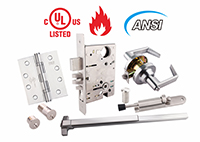
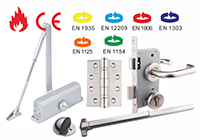
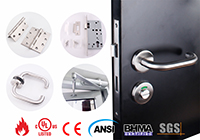
The door hardware manufacturers that serious global buyers work with are certified against the same standards recognized in North America and Europe: BS EN, CE, UL, ANSI, and BHMA. These certifications aren't a formality—they confirm that hinges, locks, panic exit devices, and closers have been independently tested for fire resistance, cycle durability, and mechanical performance.
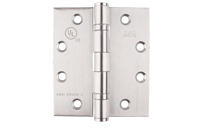
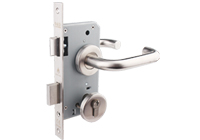
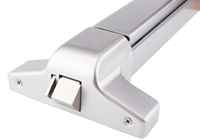
A reputable door hardware manufacturer in China will hold ISO 9001 certification as a baseline and should be able to provide test reports and product listings tied to specific certification bodies, not just generic compliance claims. D&D Hardware, as an example, positions its fire-rated hardware line—covering hinges, mortise locks, panic bars, and closers—as compliant with ANSI, BHMA, UL, and BS EN/CE standards, suitable for education, healthcare, hotel, office, and government applications.
Choose a manufacturer that can produce certification documentation per product line, not just company-level certificates, if your project involves fire doors or other life-safety openings. That level of detail matters when local building inspectors or architects request proof during submittal review.
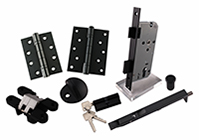
Large commercial projects rarely need a single hardware type in small quantities. A mid-size office tower might require thousands of hinges, hundreds of mortise locks, dozens of panic exit devices, and matching door closers—often across multiple finish options and functions.
China's door hardware manufacturing base is built around exactly this kind of volume. Clustered supply chains mean a single commercial door hardware manufacturer can often source components, finish materials, and packaging locally, reducing lead times compared to buyers who need to coordinate across multiple countries for the same order.
This supply chain depth also supports customization. Many manufacturers maintain in-house design teams capable of adapting standard product lines to match project-specific hardware schedules, door thicknesses, or regional code requirements. For contractors juggling American-configuration doors on one project and European-configuration doors on another, working with a manufacturer that can switch production specifications without re-tooling an entire line saves both time and cost.
Sourcing hardware internationally introduces logistics questions that don't come up with domestic suppliers: export documentation, container loading efficiency, incoterms negotiation, and after-sales support across time zones.
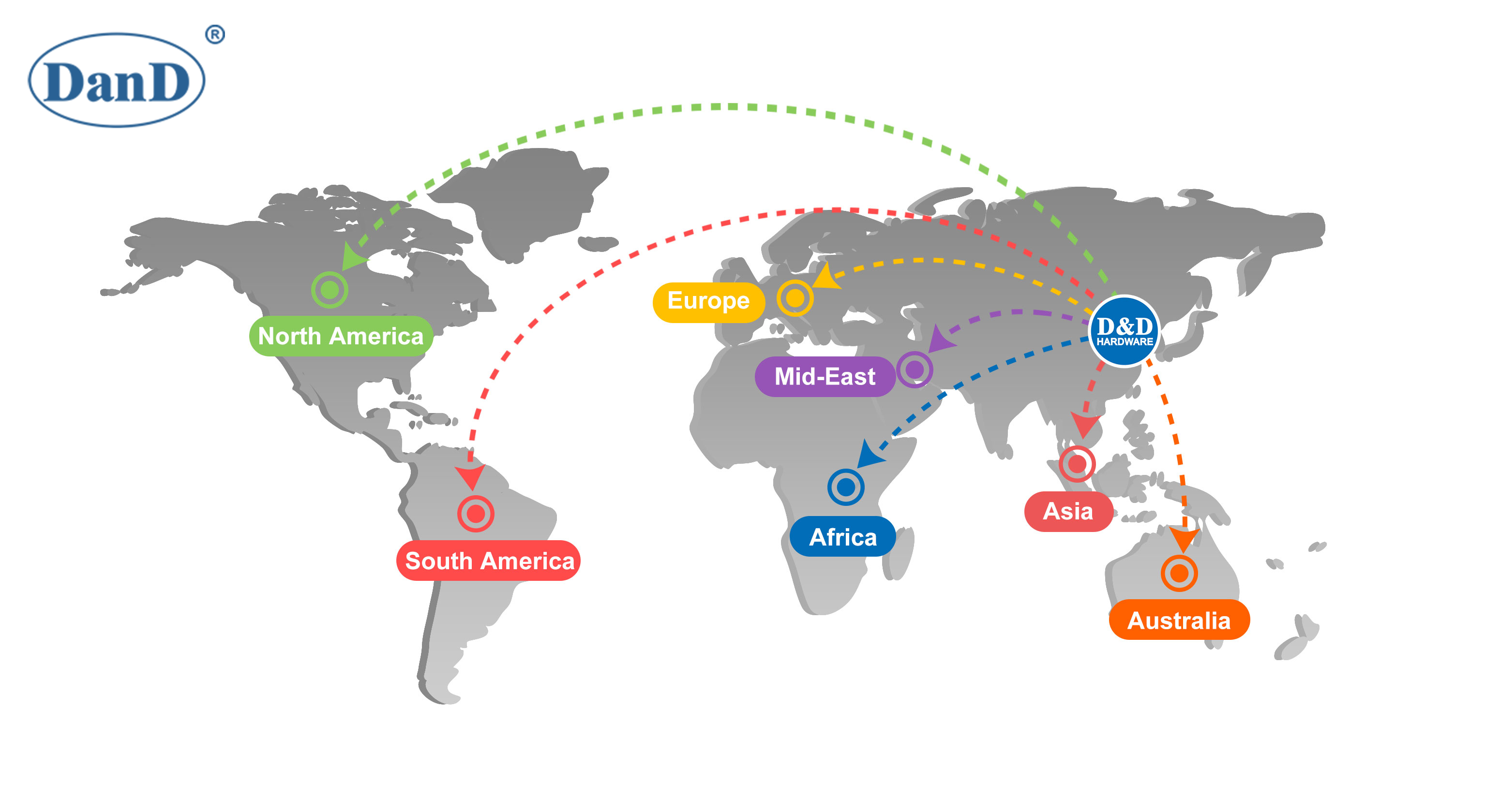
Experienced door hardware manufacturers that regularly serve international markets—South Asia, the Middle East, Western Europe, the Nordic region, North America, and South America—typically have dedicated export teams who understand the paperwork, shipping schedules, and communication cadence that cross-border B2B buyers need. This matters more than it might seem: a manufacturer unfamiliar with export logistics can create costly delays that ripple through an entire construction schedule.
Choose a manufacturer with documented experience shipping to your region if your project has a fixed occupancy date, since familiarity with specific customs and compliance requirements reduces the risk of hardware getting held up at the border.

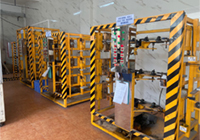
Quality control is the area where buyer skepticism runs highest, and it's a fair concern. The answer lies in how a factory structures its inspection process. Reliable manufacturers invest in dedicated inspection equipment—for example, testing machines that simulate thousands of lock and hinge cycles to confirm durability ratings match certification claims before products ship.
Factories that undergo third-party audits, such as SGS audits, add another layer of verification that buyers can reference during vendor evaluation. This matters particularly for fire-rated hardware, where a single non-compliant batch could compromise an entire building's fire safety certification.
When evaluating a commercial door hardware manufacturer, ask directly about their inspection equipment, audit history, and whether they offer a mechanical guarantee—some manufacturers provide guarantees of 10 years or more on core hardware lines, which signals confidence in their own quality control process.
Sourcing from a door hardware manufacturer in China isn't a shortcut around quality standards—it's a different path to meeting them, often at a more competitive cost structure than domestic alternatives allow. The buyers who get the best results are the ones who evaluate manufacturers the same way they'd evaluate any critical-path supplier: checking certifications line by line, confirming supply chain and customization capability, verifying export experience, and asking pointed questions about quality control.
If you're comparing commercial door hardware manufacturer options for an upcoming project, start by requesting product-specific certification documentation and references from similar completed projects. That single step filters out manufacturers who can't back up their claims, and it sets the foundation for a sourcing relationship that holds up through the full project timeline—not just the initial quote.
Is it more expensive to work with a door hardware manufacturer in China compared to a local supplier?
Generally, no. Direct-factory manufacturers in China typically offer lower unit costs than Western suppliers because they control material sourcing and production in-house, removing several distributor markups. The actual savings depend on order volume, customization requirements, and shipping distance.
How long does it take to receive a commercial order from a door hardware manufacturer in China?
Lead times vary by order size and customization level, but established manufacturers with strong supply chain capability can typically produce and ship standard product lines faster than buyers expect, especially compared to custom orders from smaller regional suppliers. Confirm specific timelines directly with your manufacturer before finalizing a purchase order.
What certifications should I verify before ordering door hardware for a fire-rated project?
At minimum, confirm the hardware is tested and listed under UL, BS EN/CE, ANSI, or BHMA standards relevant to your project's jurisdiction. Request product-specific test documentation, not just general company certificates, especially for hinges, mortise locks, and panic exit devices used on fire doors.
Are there risks to sourcing door hardware internationally, and how can they be managed?
The main risks involve quality inconsistency, shipping delays, and certification mismatches. These are managed by selecting manufacturers with third-party factory audits (such as SGS), documented export experience, and a track record supplying certified hardware to your specific market.
Who typically sources from door hardware manufacturers in China?
Importers, wholesale distributors, fire door manufacturers, commercial building suppliers, and project contractors across sectors including education, healthcare, hospitality, government, and office construction regularly source from Chinese manufacturers for both standard and project-specific hardware needs.