Views: 0 Author: Site Editor Publish Time: 2026-11-13 Origin: Site


Quick answer:
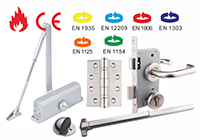
A CE certified door hardware manufacturer tests and documents its hinges, locks, closers, and exit devices against harmonized European standards (EN 1935, EN 12209, EN 1154, EN 1125) so the products can legally be sold and installed on doorsets across the EU and EEA. D&D HARDWARE, a CE certified door hardware manufacturer based in China, supplies panic bars, hinges, locks, and closers tested to these standards for European fire doors, commercial buildings, and institutional projects.
Sourcing door hardware for a European project is rarely as simple as picking a product that "looks compliant." Building control officers, architects, and fire safety consultants all expect documented proof that hinges, locks, and exit devices meet the performance levels required by EU regulation. For international buyers working with overseas factories, understanding what CE certification actually covers — and how to vet a certified door hardware supplier — can be the difference between a smooth project handover and a costly rejection at inspection.
This guide breaks down what CE certification means for door hardware, which products commonly require it, how CE compares with other international standards like ANSI and UL, and what EU buyers should check before placing an order with a CE certified door hardware manufacturer such as D&D HARDWARE.
CE marking indicates that a product has been assessed against the relevant European harmonized standard and meets the essential requirements for safety, durability, and performance set out in EU regulation. For door hardware, CE marking is not a general quality badge — it's tied to specific product-level standards that define exactly what's tested.
For example:
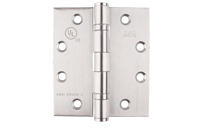
EN 1935 covers single-axis hinges, specifying load-bearing capacity, durability cycles, and corrosion resistance.
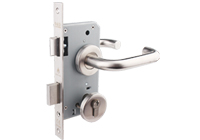
EN 12209 applies to mechanically operated locks and latches, covering strength, endurance, and security grading.
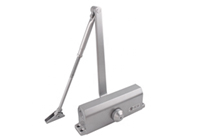
EN 1154 governs controlled door closing devices, including closing force and cycle testing.
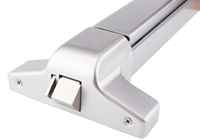
EN 1125 applies to panic exit devices operated by a horizontal bar, critical for emergency escape routes.
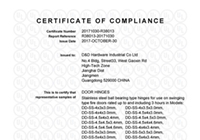
A manufacturer cannot simply claim CE compliance. The product must be tested — often by an accredited third-party laboratory — against the specific EN standard that applies to that hardware category, and the manufacturer must maintain supporting technical documentation, including a Declaration of Performance where required.
European building codes reference these EN standards directly in fire safety and accessibility regulations. On a certified fire door assembly, every component — hinge, lock, closer — needs its own compatible certification, not just the door leaf itself. If a single hardware item lacks proper CE documentation, the entire doorset's fire rating can be invalidated during inspection.
This makes early sourcing decisions critical. Contractors and distributors who specify a CE certified door hardware supplier from the outset avoid late-stage redesigns, failed inspections, or compliance disputes with building authorities.

Not every piece of door hardware needs CE marking, but several categories are essentially mandatory for commercial, fire-rated, and public building projects in Europe:
Door hinges: Load-bearing and fire-rated hinges tested under EN 1935, commonly required on heavy commercial and fire doors.
Mortise locks and latches: Covered by EN 12209, used extensively in offices, hotels, and residential entry doors across the EU.
Door closers: EN 1154 certified closers are standard on fire doors and high-traffic commercial entries where controlled closing is required by code.
Panic exit devices: EN 1125 (horizontal bar) and EN 179 (lever/pushpad) certified hardware are required on escape routes in schools, offices, hospitals, and public venues.
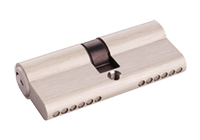
Lock cylinders: Typically assessed under EN 1303, particularly relevant for security grading in commercial buildings.
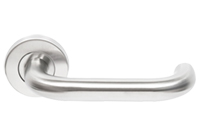
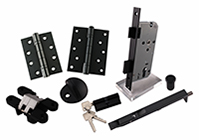
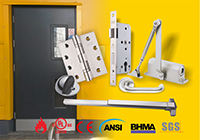
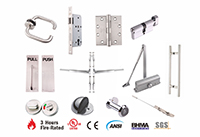
D&D HARDWARE's certified range includes EN 1935 hinges, EN 12209 mortise locks, EN 1154 door closers, and EN 1125 panic exit devices, giving European buyers a single CE certified door hardware manufacturer to cover a full doorset specification.
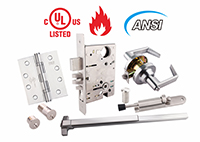
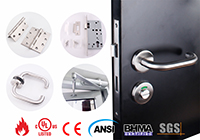
Buyers sourcing from manufacturers that also serve non-European markets will often see ANSI/BHMA (American), UL (fire and life safety, primarily North America), and CE (European) certifications listed side by side. These systems are not interchangeable, even when products look similar.
Choose CE-certified hardware if your project is located in the EU, EEA, or UK, or if local building regulations explicitly reference EN standards. CE marking is the only certification path that satisfies European regulatory requirements.
Choose ANSI/BHMA-graded hardware if the project is in North America, where ANSI A156 series standards and BHMA grading (Grade 1, 2, 3) define hardware performance instead of EN numbers.
Choose UL-listed hardware if the project requires third-party fire-rating verification recognized primarily in the US and Canadian markets, often used alongside ANSI grading on fire door assemblies.
For projects spanning multiple regions, sourcing from a manufacturer that maintains CE, UL, ANSI, and BHMA certifications side by side — as D&D HARDWARE does — simplifies specification work, since the same supplier can document compliance regardless of which market a given building is in.
When evaluating a CE certified door hardware supplier for a European project, a few checks go a long way toward avoiding compliance headaches down the line:
1. Request the actual EN standard reference, not just "CE marked." Ask the supplier which specific EN number applies to each product (EN 1935 for hinges, EN 12209 for locks, etc.) and request the corresponding test report or Declaration of Performance.
2. Confirm fire-rating compatibility across the full doorset. A CE certified lock paired with a non-certified hinge can compromise the fire rating of the entire assembly. Ask the supplier to confirm which of their products are tested together or compatible with standard fire door configurations.
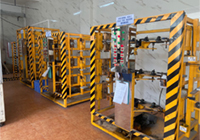
3. Verify factory audit history. Manufacturers that undergo third-party factory audits (such as SGS) provide additional assurance that production quality matches what's documented in the test reports, which matters for long-term consistency across large orders.
4. Ask about technical support for European configurations. Door hardware specifications differ between American and European door preparations (backset, strike plate dimensions, handing conventions). A certified door hardware supplier with dedicated European Standard product lines, like D&D HARDWARE's EN-specific hinge, lock, and closer ranges, reduces the risk of ordering hardware that doesn't fit the intended doorset.
5. Clarify warranty and after-sales terms before ordering. For commercial projects, a mechanical guarantee and responsive after-sales support matter as much as the initial certification, particularly for multi-year contracts or phased building rollouts.
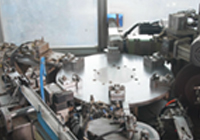
D&D HARDWARE INDUSTRIAL Co., Ltd. is a CE certified door hardware manufacturer with over 18 years of experience producing hinges, mortise locks, door closers, panic exit devices, and lever handles for commercial and fire-rated doors. The company's European Standard product line is built specifically around EN 1935, EN 12209, EN 1154, and EN 1125 compliance, alongside UL, ANSI, and BHMA certifications for buyers managing cross-regional projects.
As an SGS-audited factory, D&D HARDWARE supports architects, contractors, distributors, and project buyers with documented test reports, technical guidance on European door configurations, and a 10-year mechanical guarantee on certified products.
Specifying door hardware for a European project means more than picking a style or finish. Every hinge, lock, and closer needs to carry the correct EN certification, be compatible with the rest of the doorset, and come with documentation that will hold up to a building inspector's scrutiny.
Working with an established CE certified door hardware manufacturer like D&D HARDWARE gives European buyers a single source for certified hinges, locks, closers, and exit devices, backed by factory audits and technical support for region-specific configurations. Reach out to D&D HARDWARE's team to request test reports, discuss your doorset specification, or get a quote for your next project.
What does CE certification cost to obtain for door hardware, and who pays for it?
The manufacturer bears the cost of CE testing and certification, which is built into the price of certified products. Buyers don't pay separately for certification but should expect certified hardware to cost more than uncertified alternatives due to the testing, documentation, and quality control involved.
How long does it take to source CE certified door hardware for a project?
Lead times depend on order volume and whether products are in-stock or made to order, but buyers should request documentation (Declaration of Performance, test reports) upfront to avoid delays later in the project timeline when building control requests compliance evidence.
What are the risks of using uncertified or incorrectly certified door hardware?
Uncertified hardware on a fire-rated doorset can invalidate the entire assembly's fire rating, leading to failed inspections, project delays, and potential liability issues. Mixing certification systems (for example, pairing ANSI-graded hardware with an EN-rated door) can also create compliance gaps that aren't caught until final inspection.
Is CE certified hardware interchangeable with UL or ANSI certified hardware?
No. CE, UL, and ANSI/BHMA are separate certification systems tied to different regional regulations and test methods. Hardware certified under one system cannot be assumed compliant under another, even if the physical specifications appear similar.
Who should source CE certified door hardware versus other standards?
Projects located in the EU, EEA, or UK, or those governed by building codes referencing EN standards, should prioritize CE certified door hardware. Projects in North America typically require ANSI/BHMA and UL certification instead, while multi-region projects benefit from suppliers who offer all four certification types.