Views: 0 Author: Site Editor Publish Time: 2026-10-28 Origin: Site


Quick answer:
Choosing a certified door hardware supplier means verifying UL and CE certifications, confirming fire-rating compliance, reviewing factory testing capabilities, and checking project track record. For commercial building projects, prioritize suppliers who provide documented test reports, consistent product traceability, and support across multiple international standards like ANSI/BHMA and EN.
Commercial building projects carry a level of liability that residential work simply doesn't. A door that fails to self-close during a fire, a lock cylinder that doesn't meet forced-entry standards, or a hinge that corrodes within a year of installation can turn into a costly liability for architects, contractors, and building owners alike. That's why selecting a certified door hardware supplier isn't a box-ticking exercise — it's a decision that affects safety, code compliance, and the long-term performance of the entire building.
For procurement teams and specifiers working across different countries, this task gets more complicated. A UL listed door hardware supplier might meet North American fire codes but fall short of European CE requirements, or vice versa. Understanding what certifications actually mean, and how to verify a supplier's claims, is the first step toward protecting your project from compliance risk and reputational damage.
This guide walks through the criteria that matter most when evaluating a certified door hardware supplier, with a focus on fire-rating standards, manufacturing credibility, and the practical realities of sourcing hardware for commercial, institutional, and industrial buildings.
Certification isn't just a marketing label. It's proof that a product has been independently tested against recognized safety and performance benchmarks. In commercial buildings — offices, hospitals, schools, hotels — door hardware often plays a direct role in life safety systems, particularly where fire doors, panic exit devices, and self-closing hinges are concerned.
Building codes in most jurisdictions require certified hardware for fire-rated door assemblies. Skipping this step, or sourcing from a supplier who can't provide valid documentation, can result in failed inspections, delayed occupancy permits, or worse, hardware that doesn't perform when it matters most.
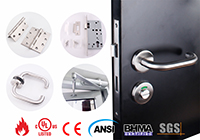
UL (Underwriters Laboratories) certification is the standard most widely recognized across North America. A UL listed door hardware supplier has had its products tested for fire resistance, durability, and mechanical performance under UL's specific test protocols. This typically covers:
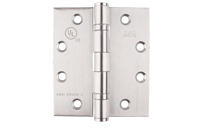
Fire-rated hinges, tested to withstand high temperatures without failing
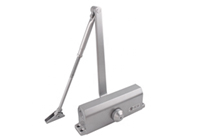
Door closers rated for consistent self-closing performance over thousands of cycles
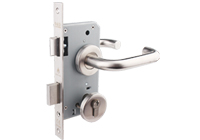
Locks and latch sets verified for fire door compatibility
If your project is in the US or follows ANSI/BHMA grading alongside UL listing, confirming this certification is non-negotiable for any fire-rated door assembly.
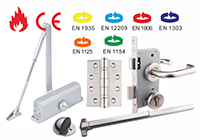
CE marking indicates that a product meets European Union health, safety, and environmental protection standards. A CE certified door hardware manufacturer has tested products against EN (European Norm) standards, which govern areas like fire resistance (EN 1634), hinge durability (EN 1935), and door closer performance (EN 1154).
For projects in Europe, the Middle East, or other regions that reference EN standards, CE certification is typically required for hardware used on fire and escape doors. It's worth noting that CE and UL certifications are not interchangeable — a product certified under one scheme hasn't automatically met the requirements of the other.

Finding a certified door hardware supplier involves more than checking a certificate number on a spec sheet. Here are the factors that separate a reliable, long-term partner from a riskier sourcing decision.
Ask for actual test reports, not just certificates. A legitimate certified door hardware supplier should be able to provide documentation from the testing body (UL, CE-notified bodies, or equivalent) that specifies exactly which products were tested, under what conditions, and what ratings they achieved. If a supplier is vague about this or unwilling to share documentation, treat that as a warning sign.
Large commercial projects, especially those involving multinational developers or mixed-market distribution, often require hardware that satisfies more than one regulatory framework. A supplier capable of producing to UL, CE, ANSI/BHMA, EN, and ISO standards simultaneously gives specifiers more flexibility and reduces the need to juggle multiple vendors for a single project.
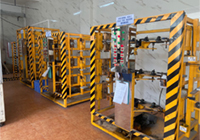
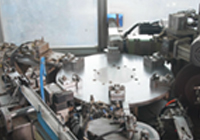
Suppliers who invest in their own inspection equipment and conduct internal testing before products ever reach third-party certification bodies tend to produce more consistent quality. This also usually means faster turnaround on documentation requests and better traceability if an issue arises after installation.
Fire-rated hardware for a hospital corridor has different requirements than exterior doors on a retail storefront. Ask potential suppliers for project references or case studies relevant to your building type. A supplier experienced in institutional, healthcare, or high-rise commercial projects will understand nuances — like combining fire ratings with accessibility requirements — that a general hardware vendor might miss.
Certification matters, but so does the practical reality of getting enough compliant hardware to your site on schedule. Confirm manufacturing capacity, lead times, and whether the supplier can scale output if your project requirements change mid-build.
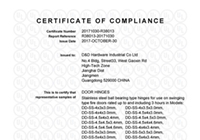
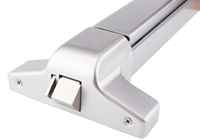
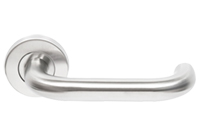
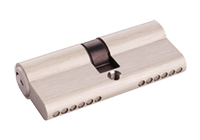
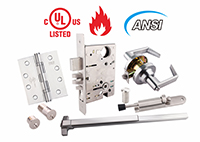
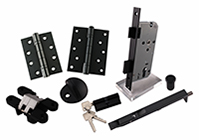
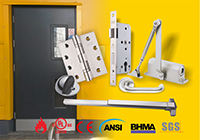
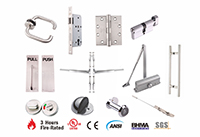
D&D HARDWARE INDUSTRIAL Co., Ltd. (D&D HARDWARE) manufactures commercial door hardware tested and certified under UL, CE, ANSI/BHMA, EN, and ISO standards. The company's certified product range includes fire-rated hinges, mortise locks, panic exit devices, door closers, handles, and lock cylinders, organized to help architects, contractors, distributors, and project buyers identify compliant hardware for different regional markets.
As a UL listed door hardware supplier, D&D HARDWARE provides fire-rated hinges and door closers tested to UL protocols for North American commercial projects. As a CE certified door hardware manufacturer, the company also produces hinges, closers, and lock cylinders tested against EN standards for European and international markets, including EN 1634 fire resistance testing and EN 1935 hinge durability testing.
The company maintains in-house inspection equipment and factory testing processes to support consistent product quality, which it documents through its certificate and inspection equipment resources available to project buyers and distributors.
Not every project needs every certification. The right choice depends on where the building is located, which codes apply, and who the end users are.
Choose UL-listed hardware if your project is in North America and must comply with NFPA fire codes or local building authorities that reference UL listings for fire door assemblies.
Choose CE-certified hardware if your project is in the European Union, UK, Middle East, or any market that references EN standards for fire and escape door hardware.
Choose a supplier certified across multiple standards if your project involves international distribution, multinational developers, or a portfolio of buildings across different regulatory regions.
In each case, request documentation up front rather than after products ship. Verifying certification before placing an order is far easier than resolving a compliance failure after installation.
Specifying door hardware for a commercial building project comes down to balancing safety compliance, product performance, and supplier reliability. A certified door hardware supplier that can document UL and CE testing, demonstrate manufacturing consistency, and support your specific project type reduces risk at every stage, from design through occupancy.
Before finalizing a hardware package, request test reports, ask about in-house inspection processes, and confirm the supplier's experience with projects similar to yours. Taking these steps upfront protects your project timeline, your budget, and ultimately, the safety of the building's occupants.
What's the difference between UL and CE certification for door hardware?
UL certification is recognized primarily in North America and tests products against US fire and safety codes. CE certification applies to the European Union and tests products against EN standards. The two are not interchangeable, so the right certification depends on where your project is located and which building codes apply.
Why does fire-rated door hardware need separate certification from the door itself?
Fire doors are tested as complete assemblies, but the hardware components, like hinges, closers, and locks, must also carry independent certification confirming they can withstand the same fire exposure conditions without failing. Using uncertified hardware on a certified fire door can invalidate the assembly's overall fire rating.
Can one supplier provide hardware certified to multiple standards?
Yes. Some manufacturers, including D&D HARDWARE, produce hardware tested and certified under UL, CE, ANSI/BHMA, EN, and ISO standards. This allows specifiers working on multinational or mixed-market projects to source from a single supplier rather than coordinating multiple vendors.
What documentation should I request from a certified door hardware supplier?
Ask for official test reports from the certifying body, not just a certificate number. Reports should specify the exact products tested, testing conditions, and the ratings achieved, giving you a verifiable record for project compliance files.
Who typically needs to verify door hardware certification on a project?
Architects, general contractors, and procurement teams typically handle certification verification during the specification and purchasing stages, often in coordination with the project's fire safety consultant or code compliance officer.