Views: 0 Author: D and D Hardware Publish Time: 2026-08-18 Origin: D and D Hardware


Global sourcing has quietly become the default way commercial door hardware gets bought. Contractors, distributors, door manufacturers, and project purchasing teams all lean on international suppliers now — not because it's trendy, but because overseas manufacturers often bring broader product capability, deeper OEM experience, and more flexible production than what's available locally.
That said, treating global sourcing as “find a factory, get a quote, place an order” is where a lot of buyers get into trouble.

For anyone sourcing fire door hardware specifically, there's an extra layer of complexity. Certification, technical documentation, production consistency, logistics timing, and long-term supply reliability all have to be worked out before a purchasing relationship is worth committing to — and this matters even more when the scope includes UL fire rated commercial door hardware, where a wrong assumption about certification can derail an entire project.
A workable global sourcing strategy really comes down to one question:
Which manufacturing partner offers the right mix of product capability, compliance support, production reliability, and long-term supply value — not just the lowest quote?
This guide walks through how procurement teams can approach global fire door hardware sourcing with more structure and less guesswork.

•Define the target market before shortlisting products or suppliers.
•Separate what the project actually requires from what a supplier says they can do.
•Lock down certification requirements at the very start of sourcing — not after samples arrive.
• Judge manufacturers on real production capability, not just export experience.
•Consolidate related hardware categories with one qualified manufacturer where it makes sense.
• Treat logistics as part of the sourcing decision, not an afterthought.
•Build a supply model that can grow with future projects, not just the first PO.
The goal isn't to “find an overseas supplier.” It's to build a supply channel you can actually rely on for the next five years, not just the next shipment.
Start with the target market and project requirements, identify the certifications the application actually needs, evaluate manufacturers on production and technical capability rather than sales pitch, compare total sourcing cost instead of unit price alone, and set up a supply arrangement that can support repeat orders and future projects.
For buyers who need UL fire rated door hardware supplier relationships, certification capability and manufacturing consistency should be checked before commercial terms are even discussed.

A lot of sourcing conversations start the wrong way around — with “who's cheapest?” instead of “what does this project actually need?”
A more useful starting question is: what does the target market require, in terms of fire rating, product standard, door application, finish, performance grade, documentation, and installation format? A distributor supplying North American commercial projects is working against a different rulebook than a buyer supplying elsewhere, and conflating the two leads to products that look right on paper but fail inspection later.
The sequence that tends to work is:
Market → Application → Product Specification → Certification → Supplier
not:
Supplier → Catalog → Price
It sounds like a small reordering. In practice, it changes almost every decision downstream, from which factories even make the shortlist to how quotes get compared.

For fire door hardware, certification isn't something to confirm after a product is picked — it needs to shape the selection from day one.
Before contacting any manufacturer, buyers should already know the required fire rating, the applicable certification standard, the hardware category involved, the door application, and what documentation the project will demand at closeout. For projects needing UL fire rated hardware sourcing, it helps to map out — category by category — which components actually require UL-listed solutions and which don't.
Skipping this step is how buyers end up choosing a product on price or appearance and then discovering, mid-project, that it doesn't meet the compliance requirement. A certification-first approach also makes supplier comparisons more honest, because every manufacturer is being measured against the same technical bar instead of whatever they happen to offer.

Global sourcing gets a lot more manageable once buyers stop treating each hardware category as its own separate purchase.
A typical commercial fire door project might need hinges, concealed hinges, locks, door closers, exit devices, panic hardware, handles, cylinders, and various accessories. Sourcing all of that from one qualified manufacturer — where the manufacturer's actual capability supports it — cuts down on supplier communication, documentation overhead, shipment coordination, and the kind of quality drift that happens when five different factories are each making one small piece of the same door assembly.
For distributors in particular, this kind of consolidation also tends to produce a more consistent product line, which matters when customers are comparing finish and fit across an entire building.
For buyers working on commercial fire door projects, UL hardware shouldn't be sourced piecemeal. It works better as a full category.
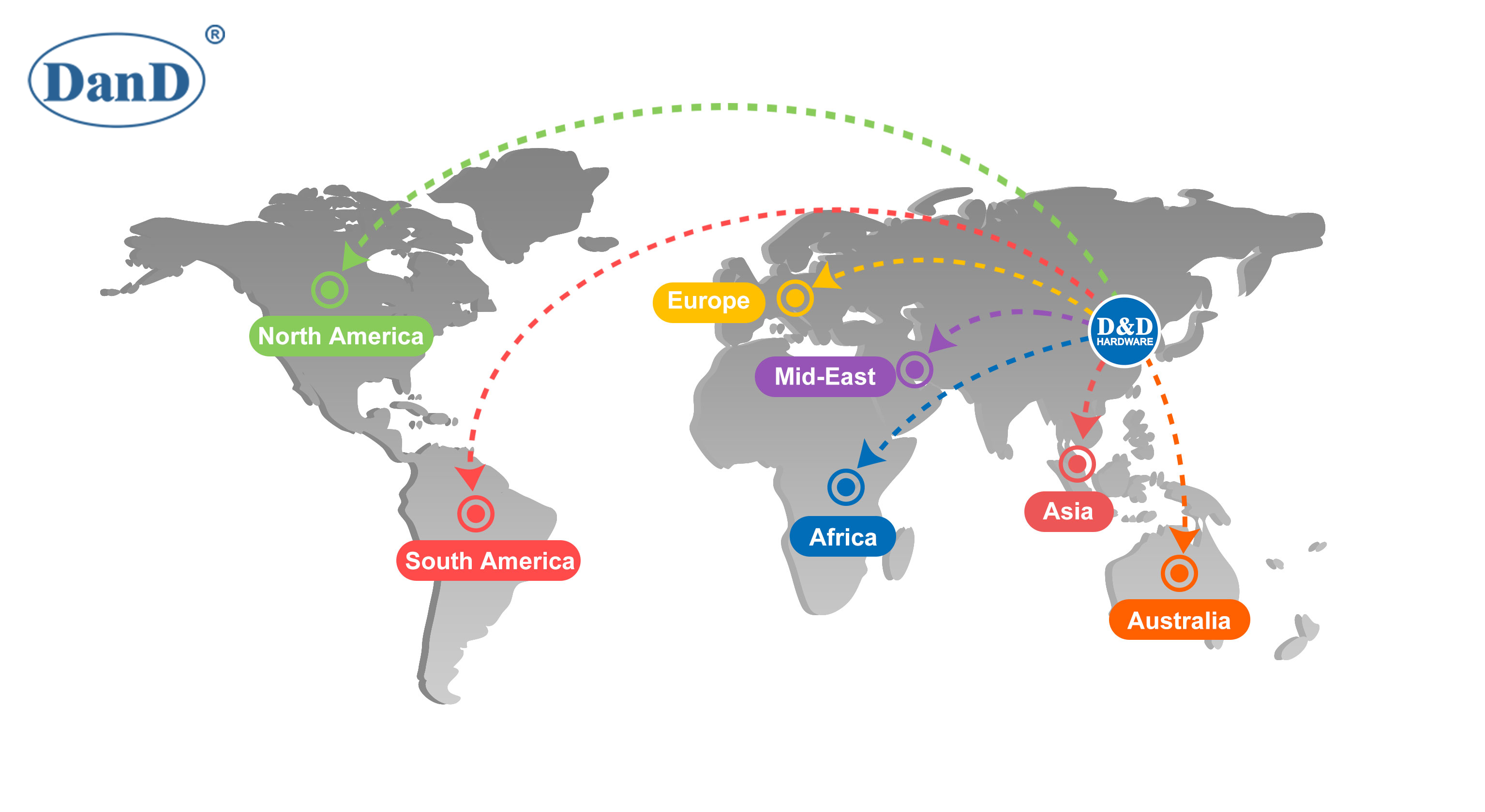
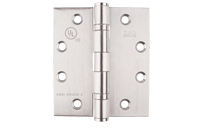
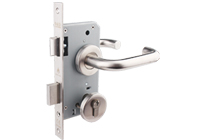
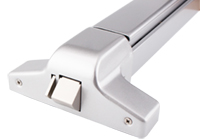
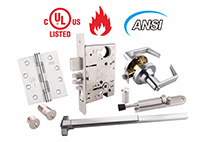
D&D Hardware's UL Series covers several product lines relevant to this kind of project:
Product | Certification | |
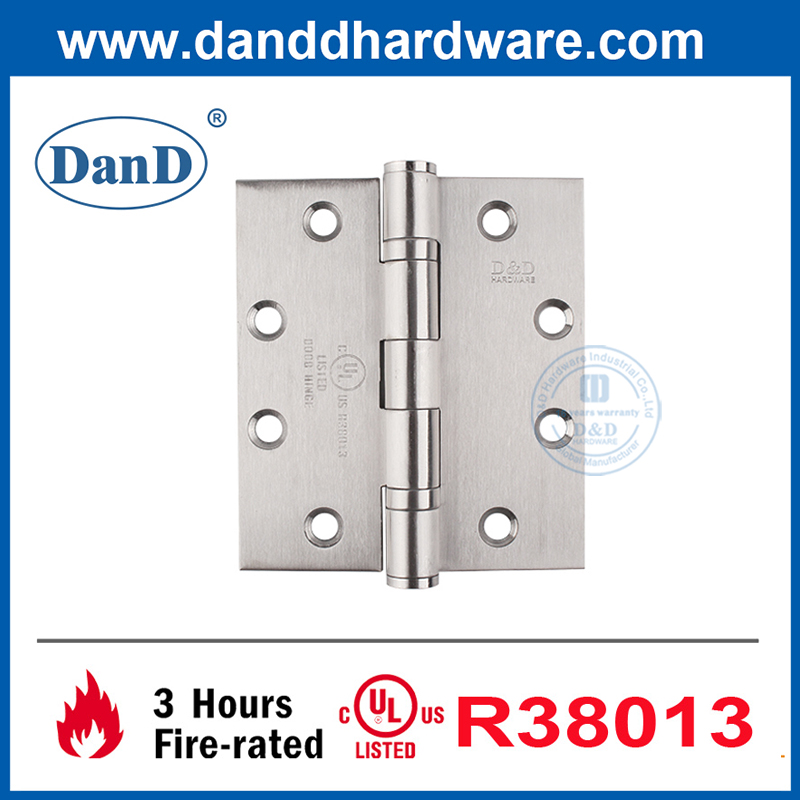
| UL/cUL, UL 10C Fire Rated, 3 Hours, File No. R38013, ANSI/BHMA Grade 1 & Grade 2 | |
| UL 10C Fire Rated, File No. R38013 | |
| UL 10C Fire Rated, 3 Hours, File No. R40901 | |
| UL 10C Fire Rated, 3 Hours, File No. R40717 | |
| UL 10C Fire Rated, 3 Hours, File No. R40486 | |
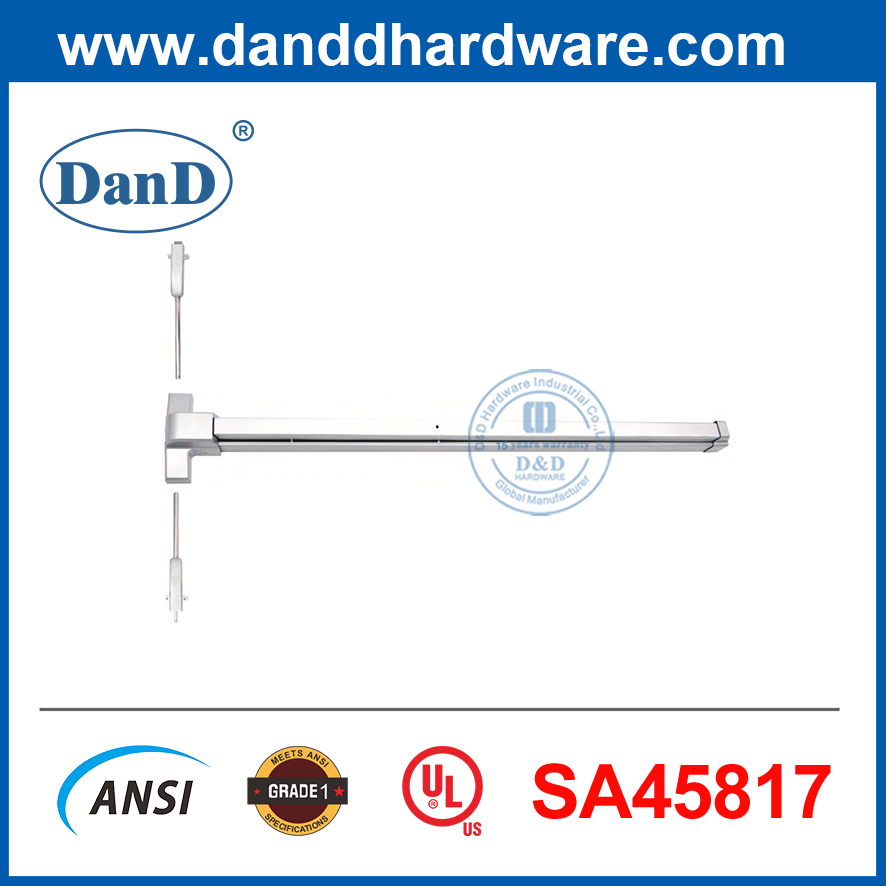
| UL305, File No. SA45817 |
For global buyers, having several UL fire rated commercial hardware categories available through one manufacturing source simplifies both product planning and supplier management considerably. More to the point, it lets a buyer build an actual UL hardware sourcing program instead of picking up certified products opportunistically, project by project.

A company can have plenty of international customers without having the manufacturing depth a given buyer actually needs. Those two things get confused constantly in sourcing conversations, and it's worth separating them explicitly: trading capability versus manufacturing capability.
When evaluating a potential fire rated hardware manufacturer, it's worth looking past the sales deck at production facilities, manufacturing processes, quality management systems, production capacity, in-house engineering, product development track record, and inspection procedures. A strong export sales team is useful, but it isn't a substitute for a factory that can actually hold tolerance and consistency across a large order — or across the next five orders.
Unit price is only one line in the real cost of global sourcing. A fuller picture looks more like:
Product Cost + Packaging + Freight + Documentation + Inspection + Inventory + Risk
A lower quote doesn't automatically mean better value — not if it comes with a higher defect rate, longer lead times, extra inspection requirements, more complicated logistics, or hardware that needs reordering more often than it should. Buyers who compare quotations line by line, without accounting for what happens after the order ships, tend to end up paying for the “cheap” option twice.

Commercial projects rarely need every piece of hardware delivered on one date — staged delivery is closer to the norm.
That means sourcing decisions have to account for production lead time, shipping schedules, partial shipments, packaging requirements, warehouse capacity, and how all of that lines up with the actual installation schedule on site. A manufacturer that can coordinate production and shipping around a construction timeline is worth more than one that can only confirm a single final delivery date and leave the rest to chance.
International sourcing introduces communication risk that domestic sourcing mostly avoids. A misread spec sheet or an assumption about finish can turn into the wrong product, a missed deadline, or a round of costly revisions.
It helps to standardize communication around product specifications, drawings, quantities, finish codes, certification documents, packaging instructions, and delivery schedules — in writing, every time, rather than relying on verbal confirmation. The strongest supplier relationships in this space aren't built on constant back-and-forth messaging. They're built on information that's clear enough the first time that it doesn't need to be repeated.
One structure that tends to hold up well for commercial buyers is splitting suppliers into two tiers.
Tier 1 — Strategic manufacturers, who supply the core products ordered regularly and need to offer stable quality, real manufacturing capability, reliable production scheduling, and genuine technical support.
Tier 2 — Project-specific sources, brought in for special finishes, customized products, or one-off specifications that don't justify a long-term relationship.
This keeps the supplier network flexible without letting it sprawl into something unmanageable.
Every sourcing relationship starts by answering one question — can this supplier actually deliver? But that's not the question that determines whether the relationship is worth keeping.
The better question is whether the supplier can grow with the business: larger orders, new product categories, OEM development, private label programs, new markets, project-specific customization. Manufacturing capability and partnership potential matter more here than any single quote, because the first order is rarely the expensive mistake — the fifth reorder from an unreliable supplier is.

Sourcing Factor | What to Evaluate |
Target Market | What standards and applications does the project require? |
Certification | Which fire-rated certifications actually apply? |
Product Portfolio | Can multiple categories be sourced from one qualified supplier? |
Manufacturing | Does the supplier actually manufacture, or just resell? |
Quality | Are production and inspection processes documented and controlled? |
Technical Support | Can the supplier provide usable documentation, not just a data sheet? |
Total Cost | What does the complete procurement cost look like, end to end? |
Logistics | Can supply timing match the project schedule? |
Communication | Are specifications managed in writing and confirmed both ways? |
Future Capability | Can this supplier support the business as it grows? |
D&D Hardware works with global buyers from a manufacturing-first position rather than a trading-company one. With more than 18 years in commercial door hardware production, the company supports contractors, distributors, door manufacturers, and project buyers with UL fire rated commercial door hardware, ISO 9001-managed quality systems, multiple commercial hardware categories under one roof, OEM manufacturing, private label services, technical documentation support, project-based supply coordination, and established international export experience.
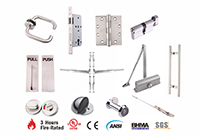
The UL Series gives buyers access to a broader fire rated hardware portfolio — UL/cUL hinges, concealed hinges, mortise locks, door closers, fire exit hardware, and panic hardware — through a single manufacturing source. That makes it easier to evaluate more than one product at a time and build a coordinated commercial fire door hardware procurement strategy instead of sourcing category by category from different vendors.

Start with market requirements, product specifications, applicable certifications, manufacturing capability, total sourcing cost, logistics, and the supplier's long-term potential — in that order.
Not necessarily. But consolidating compatible categories with a qualified fire rated hardware manufacturer usually simplifies procurement and improves supply coordination.
Certification requirements shift depending on market and application. Identifying them early keeps buyers from selecting products that look right but can't actually satisfy the project's compliance requirements.
Rarely. Total procurement cost — quality consistency, logistics, documentation, and supply reliability — usually matters more than the number on the initial quote.
Yes. A manufacturer with real OEM and private label capability can help distributors and brands develop their own product lines while keeping a single, consistent manufacturing source behind them.
A workable global sourcing strategy for fire door hardware takes more than finding an overseas factory with a competitive price. It means starting with market requirements, locking down certification needs early, verifying actual manufacturing capability, consolidating compatible product categories where it makes sense, planning logistics around the real project schedule, and choosing supplier relationships built to support growth — not just the next order.
For commercial projects that require UL fire rated door hardware, D&D Hardware offers a full UL Series product portfolio backed by manufacturing depth, ISO-managed quality systems, OEM capability, and project-oriented supply support.
The point of global sourcing was never just to cut purchasing cost. It's to build a supply channel that's reliable, scalable, and technically matched to what the project actually needs.