Views: 0 Author: D and D Hardware Publish Time: 2026-10-19 Origin: D and D Hardware


Before placing a bulk fire door lock order, confirm the approved hardware schedule, verify the exact product listing, compare complete supply scopes, and agree how changes and deliveries will be controlled. A low unit price offers little saving if the locks arrive with the wrong function or do not match the door preparation.

For contractors, door manufacturers, distributors, and project procurement managers, this fire door lock procurement checklist follows the order from quotation through handover. It focuses on mechanical locks and the records needed to keep large commercial building fire door hardware aligned with the approved specification.

A large project may use similar-looking doors for corridors, stairwells, service rooms, and tenant entrances. Their lock functions and hardware sets can differ. Group quantities by approved hardware set and model, then retain the opening references behind each group. Ordering a single total without that breakdown makes later revisions difficult to trace.
Issue the same dated procurement package to every supplier. It should include the door schedule, hardware schedule, relevant drawings, and specification. Where those documents disagree, raise a written clarification with the responsible project team before releasing the affected items.

For each lock group, provide the following information:
·Opening references, hardware set, quantities, and delivery phase.
·Required mechanical lock function, handing where applicable, and approved operating requirements.
·Door material and thickness, backset, lock case dimensions, faceplate, strike, and preparation drawings.
·Lever trim, cylinder and keying requirements where included, finish, and fixing accessories.
·Required fire rating, listing requirements, approved model, and submittal reference.
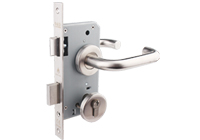
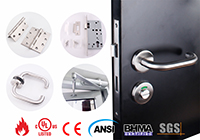
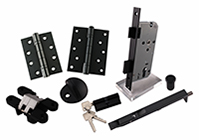
State whether the price must include a complete lockset or only the lock body. Cylinders, trim, strikes, and fixing packs are common sources of quotation gaps. Confirm each included component instead of relying on the product photograph.
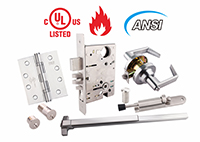
For UL fire rated mortise lock procurement, ask for evidence that identifies the exact model being offered. A certificate carrying a manufacturer’s name is not enough to establish that every product in its catalog is covered. Match the proposed model and configuration to the applicable listing information and installation instructions.
UL 10C concerns positive-pressure fire testing of door assemblies. UL Solutions’ door and hardware application guide explains how listed components relate to the assembled opening; its Product iQ database provides certification information. Use those resources to check the supplier’s evidence, then retain the relevant records with the project submittal.
D&D Hardware identifies its UL 10C fire-rated door lock products under File No. R40901, with a stated three-hour fire rating. Request the current listing documents for the proposed mortise lock model and confirm the permitted application before approval. The file number is a verification starting point, not a blanket approval for every configuration.

A UL listed mortise lock does not establish compliance of the complete opening by itself. Suitability still depends on the approved door assembly, the hardware configuration, installation requirements, and applicable project requirements. Where the documents leave a question unresolved, obtain written clarification from the responsible designer or authority having jurisdiction before purchase.

Build a comparison sheet around the approved specification. Record the offered model, function, dimensions, finish, listing evidence, included components, quantity, and exclusions. Keep proposed alternatives in a separate column so a lower-priced substitute is not mistaken for a quotation against the specified product.
Then compare the commercial terms: minimum quantities by model or finish, sample charges, packaging, freight basis, payment terms, warranty conditions, and split-shipment costs. Ask when the lead time begins. A production period counted from sample approval is different from one counted from the purchase order date.
For example, a quotation for 600 lock bodies cannot be compared directly with a quotation for 600 complete locksets that include trim, cylinders, strikes, and fixings. Resolve the scope difference before negotiating the unit price.
A fire door lock supplier checklist should test the factory’s ability to reproduce the approved product across the entire order. Ask the commercial door hardware manufacturer to explain how model codes, finishes, inspection records, and packing labels are linked to the purchase order.
Request a realistic production plan for the required quantity and finish mix. Agree which inspections will be recorded, how nonconforming items will be handled, and how shortages or transit damage should be reported. Where OEM packaging or private labeling is required, approve the artwork separately and confirm that required certification markings remain identifiable.
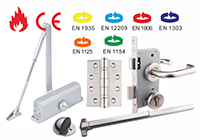
D&D Hardware manufactures commercial door hardware, including fire-rated mortise locks, hinges, and door closers. For a coordinated supply package, identify the specific models required for each hardware set rather than assuming products from one manufacturer are automatically approved together.

Before bulk production, agree whether a sample or first article is needed and who will approve it. Check the supplied function, handing, dimensions, finish, trim, strike, and fixings against the approved documents. Door manufacturers should resolve preparation compatibility before machining the full door batch.
Record the approved sample code, drawing revision, and approval date on the order. A sample fit check helps identify mismatches; it does not replace listing verification or project approval. If a proposed change affects the product configuration, return it to the appropriate reviewer before production proceeds.
Ready to prepare a comparable quotation? Send D&D your current hardware schedule, preparation drawings, lock quantities, and required delivery phases. Ask for a model-by-model quotation showing included components, listing documents, and any deviations from the specification.
Give each procurement package a revision number. When the schedule changes, identify the affected openings, old and new requirements, quantity difference, and production status. Obtain written confirmation of the cost and delivery effect before updating the purchase order.
For instance, changing 40 service-room locks after production release should trigger an order amendment tied to those openings. A general email asking the factory to “use the latest schedule” leaves uncertainty about which items have changed. Hold unresolved groups while allowing separately approved groups to proceed when the project team authorizes it.

Agree shipment quantities by building, floor, or hardware group, with required arrival dates and site destinations. Specify carton labels that show the purchase order, model, finish, quantity, and destination. Agree a batch or shipment reference that connects received goods to the supplier’s records.
At receipt, reconcile cartons and quantities against the packing list, then check product identity, visible condition, included accessories, and relevant markings against the approved order. Record discrepancies before mixing the shipment with accepted stock. Replacement goods should be checked against the same approved specification.
Keep the final model register, approved drawings, listing records, receiving reports, and agreed spare quantities for handover. These records support later maintenance and repeat orders without forcing the buyer to identify an installed lock from a photograph.

· The current schedule and opening quantities match the purchase order.
· Models, functions, handing, finishes, and door preparations are confirmed.
· Listing evidence identifies the proposed products and permitted application.
· Lock bodies, trim, cylinders, strikes, and fixings are clearly included or excluded.
· Submittals and any required sample approvals are complete.
· Alternatives and specification deviations have written approval.
· Lead-time triggers, payment, freight, warranty, and delivery phases are agreed.
· Inspection, labeling, revision control, receiving, and replacement procedures are recorded.
Can procurement begin before every opening is approved?
Yes, if the project team authorizes a partial release and the approved models and quantities are clearly separated. Keep unresolved openings on hold and identify any commercial effects of ordering them later.
Can a different UL listed lock replace the specified model?
Only after its function, dimensions, listing scope, and assembly compatibility have been reviewed through the project’s substitution process. A UL mark alone does not establish equivalence.
What should buyers retain for repeat orders?
Keep the exact model and configuration, finish, keying reference where relevant, approved drawing revision, listing evidence, and original order reference. Confirm current availability and listing details before ordering replacements.