Views: 0 Author: D and D Hardware Publish Time: 2026-09-29 Origin: D and D Hardware


A mortise lock order can meet the budget and still fail the project if its function, door preparation or documented listing does not match the approved opening. The procurement team should work from the door schedule and hardware set, not from a photograph of a similar lock. Before pricing, identify which openings require a fire rated lock, which function each opening needs, and who will approve any alternative.

This guide belongs to the UL Fire Rated Commercial Door Hardware Procurement Center. It deals with the handoff from specification to purchasable lock set. A door assembly's listing, the project documents and the authority having jurisdiction determine what can be used; a lock's own certification does not approve an otherwise incompatible opening.

Give each opening a row with the door number, location, fire rating, lock function, inside and outside operation, trim, cylinder and keying notes. A classroom lock, for example, does not behave like a storeroom lock simply because the cases look alike. The outside lever may be key controlled for a classroom; a storeroom function typically remains locked outside while permitting inside operation. Entry and dormitory or exit functions introduce different operating expectations.
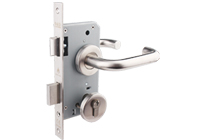
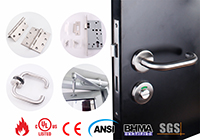
D&D's American mortise lock range includes DDAL04 Entry, DDAL05 Classroom, DDAL07 Storeroom and DDAL13 Dormitory/Exit, DDAL19 Bathroom, DDAL20 Dormitory. Use those names to start a function discussion, then obtain the actual function description and project approval for the chosen model. Avoid a broad “office lock” line in the purchase order when several different functions appear in the same building. Exit operation and any accessibility or egress requirements should be resolved by the project designer.


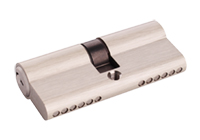
Send the lock drawing to the door factory before it cuts or reinforces the leaf. Compare door thickness and material, case dimensions, backset, faceplate, lever spindle, cylinder arrangement and the strike preparation in the frame. Confirm handing or reversible components where relevant. For a pair of doors, check the complete meeting-stile arrangement and its approved hardware set rather than assuming the lock alone resolves the opening.
The most expensive mismatch often appears after doors arrive prepped on site. A sample lock and strike, or an approved preparation drawing acknowledged by both the hardware and door teams, can prevent a batch of incorrect cutouts. Record the drawing revision on the purchase order. If the door manufacturer changes the preparation, pause lock release until both sides agree on the update.
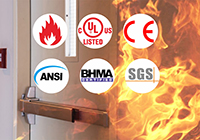
D&D Hardware manufactures fire door hardware and identifies UL 10C, up to a three hour fire rating, under file R40901 for its relevant mortise lock range. That reference should lead to model-level checking, not a blanket claim that every lock configuration is suitable for every rated door. Request the current listing information and compare the model, rating and installation conditions with the proposed order. UL Product iQ can be used to check certification records; keep the evidence with the approved submittal.

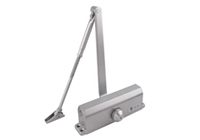
The assembly also matters. Confirm that the door and frame listing, latch arrangement, required closer and any other opening components permit the proposed configuration. A fire label on the door and a UL reference on the lock are separate pieces of evidence. Installation instructions, fasteners and any required accessories form part of the approval and should reach the installer with the product.

Fire resistance and mechanical durability answer different questions. If the specification calls for an ANSI/BHMA grade, obtain the relevant model-level performance evidence; do not infer it from a UL 10C fire test. Compare material, finish, lever and cylinder choices against the traffic and maintenance needs of the opening. A stainless case or lever appearance alone does not establish a grade or a complete fire door assembly rating.
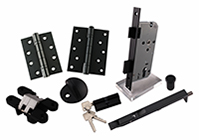
The commercial comparison should also include what ships with each quoted item: lock case, faceplate, strike, lever trim, cylinder if specified, fasteners and instructions. Two quotes with different inclusions are not equivalent. Check minimum order, lead time, spare parts and freight after the technical scope is aligned.
A usable approval package links each door or hardware set to a manufacturer model and function. Include a dimensioned drawing, function description, relevant listing evidence, finish and trim details, strike and cylinder information, and installation instructions. Identify any deviations from the specification on a separate line for review. Do not hide a proposed substitution within a product catalog.
Once approved, save the submittal revision and the sample identification with the purchase order. The purchasing team can then verify delivered cartons against the exact approved model. This is particularly useful when procurement and installation are handled by different companies or the same job receives several staged shipments.

D&D is a fire door hardware manufacturer, so its role can extend from the initial model discussion to drawing confirmation, production planning and repeat supply. For a door factory program or a multi-phase project, agree in writing on function, case and strike preparation, finish, trim, packaging label and document revision. Ask how a design change or component substitution will be communicated before later production.
Manufacturer coordination does not remove the need for project approval. Its practical benefit is a single documented reference for the lock that was approved, manufactured and reordered. If the next batch must fit doors already prepared, confirm the same dimensions and mating components before the new production release.
The following answers cover issues that commonly delay commercial fire door lock orders.
Does a UL 10C mortise lock fit every labeled fire door?
No. The precise model, listing conditions, door assembly, preparation and project requirements must align.
Is the UL file number enough to approve every function in a product family?
No. Use file R40901 as a verification reference and confirm the exact model and configuration in current documentation.
Can the door factory prepare the leaf from a product photograph?
No. It needs the approved dimensioned case, faceplate, spindle and strike preparation details, including revision information.
Should cylinders and lever trim be included in the quote?
State explicitly whether they are included. Check their compatibility, function and any applicable requirements before comparing prices.
What should D&D receive for an accurate project quotation?
Send the door schedule, functions, rated openings, door and frame details, finish, trim and cylinder requirements, quantities, destination and delivery dates.
What is the final procurement decision?
Approve a specific lock for a specific opening, with a defined function, matched door preparation and documented listing scope. Then buy against the approved drawing and submittal revision. This keeps UL fire rated mortise lock procurement connected to the installed fire door assembly and gives D&D a clear manufacturing reference for the first delivery and future orders.