Views: 0 Author: D and D Hardware Publish Time: 2026-10-22 Origin: D and D Hardware


D&D Hardware is a commercial door hardware manufacturer supplying mortise locks and supporting OEM and private-label requirements for global brands. For buyers developing a fire door lock range, the starting point is a producible specification, applicable certification and an agreed process for keeping repeat orders consistent.

An OEM UL fire rated mortise lock program should settle three issues before launch: which configuration is covered by the listing, which changes are feasible, and how production will match the approved sample. These decisions affect distributor acceptance, project submittals and the cost of correcting an unsuitable order.

Working directly with a UL mortise lock manufacturer gives a brand a clear route for discussing construction, dimensions and production changes. At D&D, OEM discussions can cover product specifications, branding and packaging. The available scope should be confirmed for the selected model before artwork, tooling or launch dates are approved.
Start with the target market and intended door application. Provide the lock function, door material and thickness, handing, backset, faceplate, strike, trim and cylinder requirements. Include drawings where available. A familiar external appearance does not establish that two locks fit the same door preparation or operate in the same way.

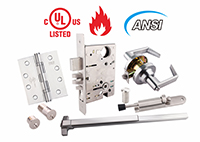
D&D identifies UL 10C and UL File No. R40901 for its relevant fire-rated door lock products, with a stated fire rating of up to 3 hours. Request the current model-specific documentation and match it to the quoted mortise lock configuration. Do not apply a family-level claim to every product option.

UL 10C addresses positive-pressure fire testing of door assemblies. A UL listed mortise lock does not, by itself, establish compliance of the complete opening. Buyers must also confirm compatibility with the specified door assembly and applicable installation requirements. Fire performance should be evaluated separately from any requested durability or security classification.
For private label fire door locks, settle the permitted product identification and certification markings before production. A customer logo does not authorize a different UL label. Changes to components, dimensions, trim or construction require review for their effect on listing applicability; additional evaluation may be necessary.

The sample should represent the configuration the brand intends to purchase. Approve the drawing revision, function, dimensions, materials, finish and accessory combination together. Record any differences between a development sample and the proposed production version so an attractive sample does not become an ambiguous purchasing reference.
Before bulk production, agree on inspection points for dimensions, latch and deadbolt operation, handing, finish appearance and package contents as applicable. Ask what incoming, in-process and final inspection records are available. Confirm how batches can be identified and how nonconforming units will be contained, corrected or replaced.
A quality-system certificate can support supplier qualification, but buyers still need to understand the controls used for their lock. Require written review of substitutions and engineering changes. Repeat orders should reference the approved specification revision rather than relying on a product photograph or an old quotation.
A useful OEM commercial door hardware quotation separates the product price from development and order conditions. Confirm the minimum order quantity by model and finish, sample charges, any tooling cost, packaging requirements, payment terms and delivery terms. Establish who owns customer-funded tooling and what rights apply to drawings or custom components.
Ask when the production lead time begins: after deposit, sample approval, artwork approval or another agreed milestone. Include inspection and shipping time in the launch schedule. For mixed orders, confirm whether minimum quantities and delivery dates apply to each SKU. These details make competing offers easier to compare. For example, a lower unit price may exclude the strike, trim, cylinder or retail packaging expected by your sales team. Compare equivalent configurations and document what each carton contains. Agree how sample discrepancies or inspection failures affect shipment approval, and identify the contact responsible for resolving technical questions. A clear quotation should leave both teams working from the same scope.

Branding extends beyond the visible logo. Agree on model names, barcodes, carton labels, installation instructions and spare-part identification. Keep the brand SKU linked to the manufacturer’s model and approved configuration so distributors and project teams can trace technical questions to the correct product.
Forecasts, reorder quantities and service parts should be discussed before launch. Define how discontinuations, component shortages and proposed alternatives will be communicated. Exclusivity also needs a written scope covering the product, territory, duration and purchase conditions; customized packaging alone does not establish exclusive rights.

D&D’s fire rated lock manufacturing offer starts with the requirements of the brand and the selected mechanical lock model. Send your target market, drawings or door preparation, required functions, estimated annual volume, first-order quantity, finish and branding brief. Identify the certification documents your customers will request.
Ask D&D to review the proposed configuration, customization scope and quotation assumptions before you commit to launch. This gives procurement and technical teams a shared basis for sample approval, commercial negotiation and repeat orders.
Can D&D manufacture mortise locks under our brand?
D&D supports OEM and private-label requirements. Confirm the available product marking, packaging and customization options for the chosen model, including any certification identification requirements.
Can every part of a UL listed lock be customized?
No. Proposed changes must be reviewed against the approved construction and listing scope. Confirm feasibility and any evaluation requirements before approving the revised sample.
What should we request before a first bulk order?
Request the model-specific certification information, approved drawing and sample reference, inspection requirements, packaging artwork, commercial terms and agreed change-control process. Record unresolved items before releasing production.