Views: 0 Author: D and D Hardware Publish Time: 2026-08-21 Origin: D and D Hardware


PROCUREMENT & MANUFACTURING SOLUTIONS
Most commercial hardware buyers don't start out looking for a manufacturer. They start out looking for a product — a UL fire rated hinge for one project, a lock set for another. The sourcing model only becomes a real decision once the product list grows and the supplier list grows with it. That's the point where a one-stop OEM door hardware manufacturer stops being a nice-to-have and starts being the difference between a portfolio you control and a portfolio you're constantly patching together.

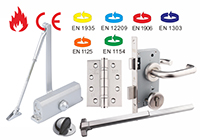
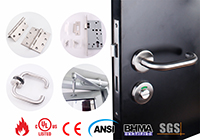
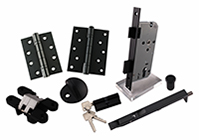
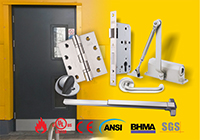
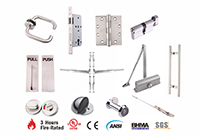
A full commercial door hardware line covers a lot of ground: hinges, concealed hinges, mortise locks, closers, exit devices, panic hardware, cylinders, handles, and the accessories that go around them. Sourced one category at a time from separate factories, each of those relationships comes with its own minimum order quantity, its own production calendar, its own quality baseline, its own packaging rules, and its own paperwork.
None of that is a problem in isolation. It becomes a problem at scale, when a purchasing team is reconciling ten supplier relationships to keep one product catalog consistent. An OEM commercial door hardware supplier that can cover multiple categories removes that reconciliation work by design — one factory, one quality standard, one communication line, instead of ten.

One-stop OEM sourcing works best when it's planned around where the product line is going, not just where it is today. A distributor that enters the market needing a single UL fire rated hinge will, within a year or two, usually find customers asking for the fire rated lock, the closer, and the exit device that go with it.
If the original factory already manufactures those categories, the buyer extends an existing relationship instead of opening three new ones. That single decision — picking a manufacturer with real category depth from the start — is often what separates a supplier relationship from a manufacturing platform.
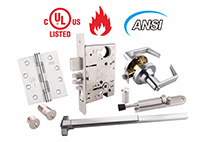
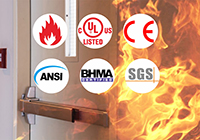
For any brand or distributor selling into North American commercial construction, UL fire rated door hardware isn't an optional line extension — it's usually the reason the OEM conversation started in the first place. D&D Hardware's UL Series was built around that reality, with certified coverage across the categories that most commercial fire door assemblies require:
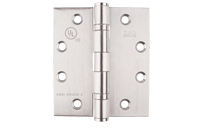
•UL/cUL door hinge — UL 10C fire rated, 3-hour rating, ANSI/BHMA Grade 1 & Grade 2, File No. R38013
•Concealed hinge — UL 10C fire rated, File No. R38013
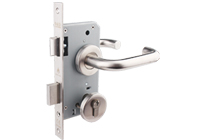
•Door lock — UL 10C fire rated, 3-hour rating, File No. R40901
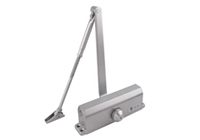
•Door closer — UL 10C fire rated, 3-hour rating, File No. R40717
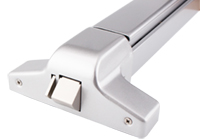
•Fire exit hardware — UL 10C fire rated, 3-hour rating, File No. R40486
•Panic hardware — UL305, File No. SA45817
The value of this range isn't the product count on its own. It's that a buyer can build a coordinated, UL listed commercial door hardware portfolio through one certified manufacturer rather than stitching together fire ratings from five different factories with five different testing histories.

UL/cUL door hinge

Concealed hinge

Door lock
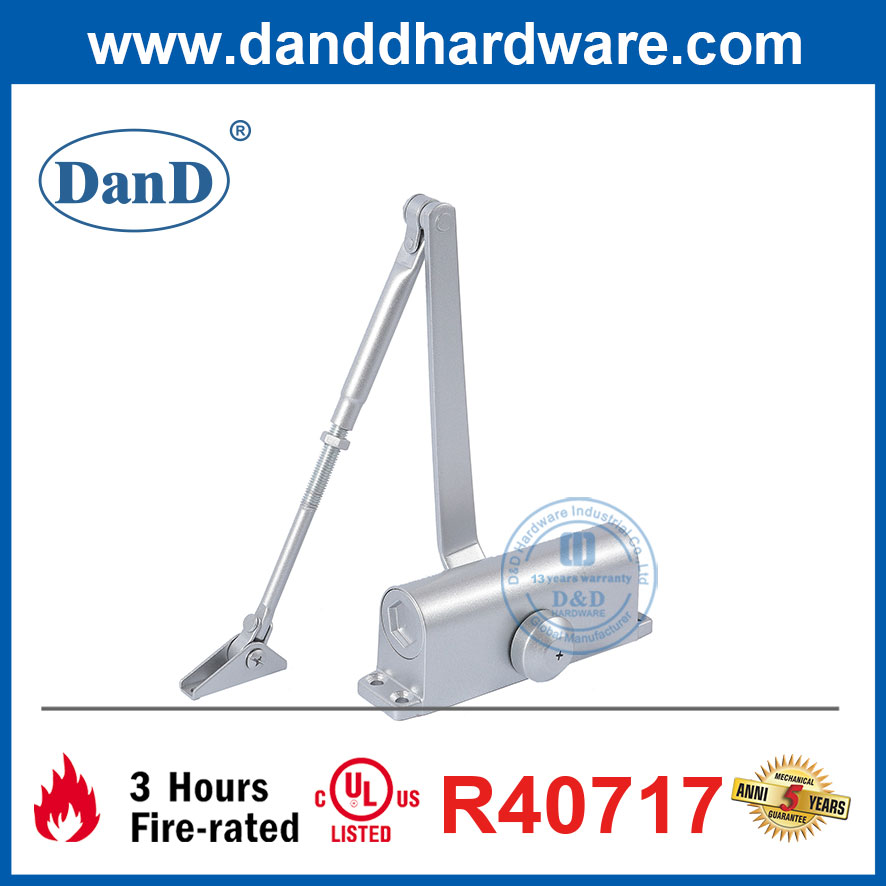
Door closer

Fire exit hardware
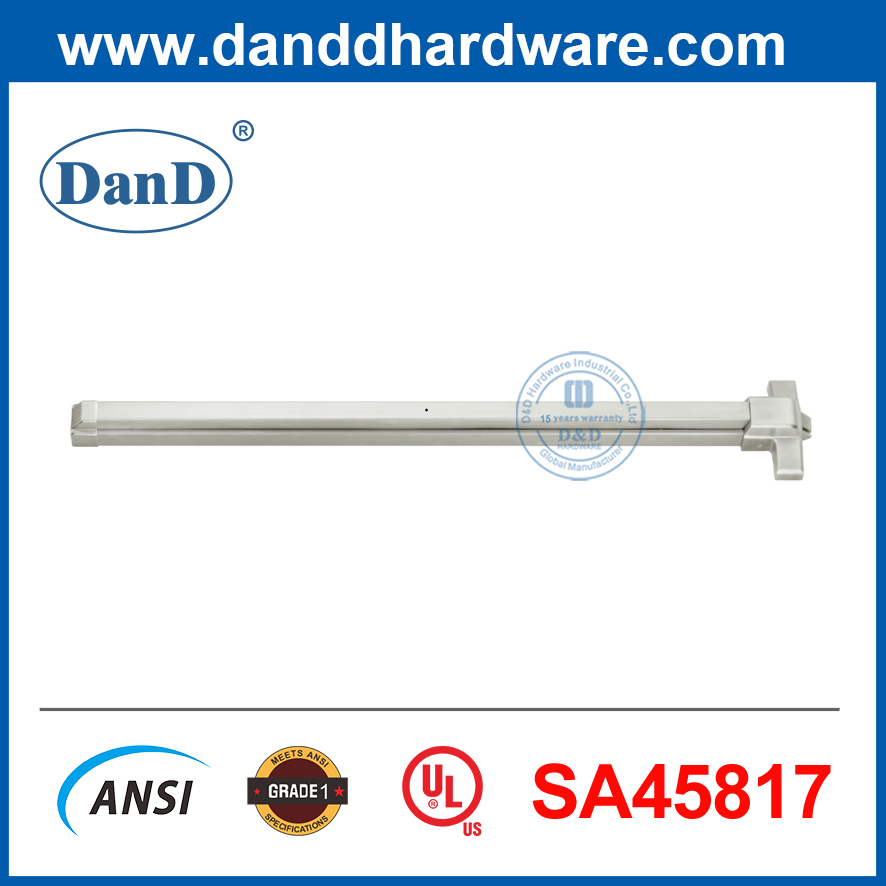
Panic hardware
A logo swap is the smallest part of what OEM manufacturing can offer, and treating it as the whole offer is where a lot of buyers under-evaluate a supplier. A real OEM fire door hardware program can flex on:
•Product modification and custom dimensions
•Finish options
•Packaging and carton customization
•Product and brand labeling
•Installation instructions written for the buyer's market
•Documentation customized to the buyer's certification and compliance needs
For an established brand entering a new market, this is often where the real engineering work happens — adapting an existing design to a different code environment, door type, or customer expectation, not just printing a new nameplate on an unchanged part.

The same manufacturing base supports different buyers in different ways, and a capable OEM commercial door hardware supplier should be able to hold all of them at once without one client's requirements bleeding into another's:
•Distributors typically want private label door hardware to stand apart from competitors carrying the same generic products.
•Door hardware brands often want to widen their catalog without building or financing their own factory.
•Door manufacturers need compatible hardware that ships and installs alongside their own door systems.
•Project suppliers need custom commercial door hardware built to the specification of one specific job.
A single manufacturing foundation, run under one quality system, can serve all four without forcing any of them to compromise.
Centralizing on one manufacturing partner mainly pays off in how much friction it removes from product development. With multiple suppliers, even a minor spec change can mean re-briefing several separate teams. With one OEM partner, the same change moves through a single, repeatable sequence:
•Buyer requirement is defined
•Technical discussion between buyer and factory
• Product development
•Sample production
•Testing and approval
•Mass production
•Quality inspection
•Delivery
That sequence is the same whether the product is a single custom lock or a full fire door hardware set — the structure is what keeps a growing SKU list from turning into a coordination problem.

Commercial buyers reordering six months apart expect the second batch to match the first — same dimensions, same materials, same finish, same packaging, same functional performance. That kind of consistency isn't guaranteed by a good working relationship; it's built into how a factory runs.
D&D Hardware manufactures under an ISO 9001 quality management system, which gives OEM buyers a documented basis for repeat-order consistency rather than an informal assurance. For a distributor or brand whose own reputation rides on every shipment, that documentation matters as much as the product itself.
For commercial door hardware, the paperwork is part of the product. OEM buyers routinely need specifications, technical drawings, certification files, installation instructions, packaging information, and product imagery on hand to answer their own customers' questions — and for UL fire rated hardware OEM programs, having the certification file number ready is often what closes a specification review. A manufacturer that keeps this documentation organized and accessible saves the buyer from scrambling every time a customer asks for proof.
Packaging requirements — custom cartons, brand and product labels, installation inserts, barcode systems, individual unit packaging — multiply the same fragmentation problem as product sourcing when they're split across suppliers. Under one OEM relationship, packaging and branding requirements can be standardized across every product category at once, which is where a private label fire door hardware manufacturer earns its keep: the brand experience stays consistent even as the catalog grows.
Most OEM programs start small — a pilot order, a handful of SKUs. The ones that matter grow fast. Before committing to a manufacturing partner, it's worth confirming the factory can support prototypes, initial production runs, repeat orders, larger volumes, additional SKUs, and future product development — not just the order in front of you today.
The right question isn't whether a factory can make the current product. It's whether the same factory can still be the right partner two years and twenty SKUs from now.
Evaluation Area | What Buyers Should Verify |
Product range | Can the manufacturer cover multiple commercial hardware categories under one roof? |
Manufacturing capability | Is production done in-house, or is the supplier reselling other factories' output? |
OEM depth | Can products be modified in dimension, material, and function, not just relabeled? |
Certification | Which UL fire rated door hardware categories are actually certified, and under which file numbers? |
Quality system | Is there a documented quality management system such as ISO 9001? |
Development support | Can the factory build samples and iterate on a design before committing to volume? |
Packaging and branding | Can cartons, labels, and inserts be customized for private label door hardware programs? |
Documentation | Are technical drawings, specs, and certification files available on request? |
Capacity | Can the supplier scale from a pilot order to recurring commercial volume? |
Communication | Is there a single point of contact managing the OEM relationship end to end? |
Use this checklist when comparing OEM door hardware manufacturers, not just product catalogs.

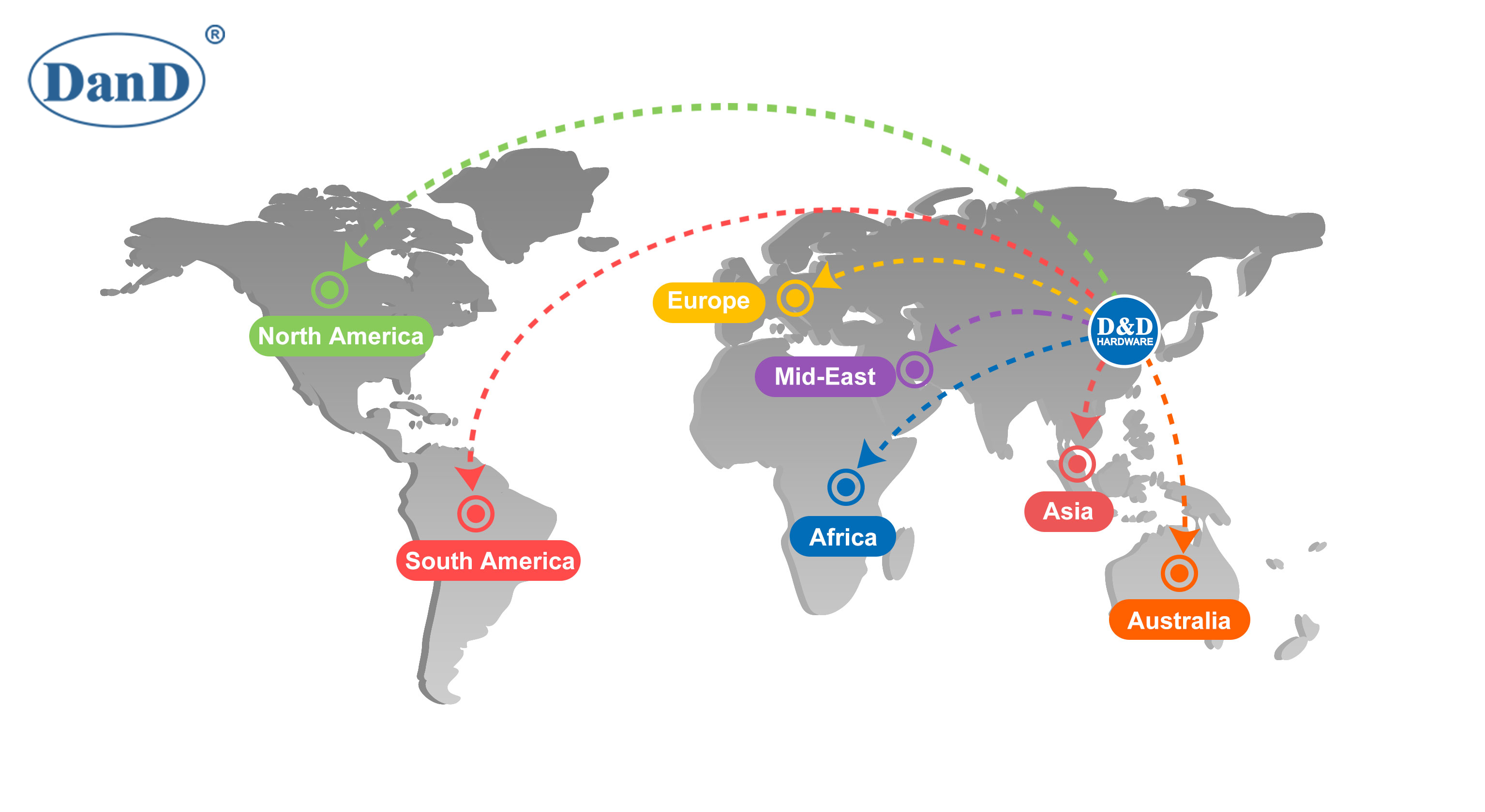
D&D Hardware combines commercial door hardware manufacturing with OEM and project supply under one roof. With more than 18 years of manufacturing experience, we work with distributors, commercial hardware brands, door manufacturers, and project buyers across:
• Commercial door hardware manufacturing
• UL fire rated door hardware manufacturer capability across hinges, locks, closers, exit devices, and panic hardware
• OEM manufacturing and product customization
• Private label programs
• ISO 9001 quality management
• Technical documentation and certification support
• Production coordination and international supply experience
Our UL Series — UL/cUL hinges, concealed hinges, door locks, door closers, fire exit hardware, and panic hardware — gives buyers a single certified manufacturing base to build a broader commercial fire door hardware portfolio on, instead of assembling one from separate factories with separate track records.
This model tends to make the most sense for a business that is:
•Building its own hardware brand
•Expanding an existing commercial product range
•Sourcing across multiple hardware categories at once
•Requiring UL fire rated products for code-compliant projects
• Looking for customized packaging or private label door hardware
•Planning recurring, not one-time, orders
•Looking for a long-term manufacturing partner rather than a transaction
It's a poor fit for a one-time purchase of a highly specialized product with no expectation of repeat business — in that case, a single-category supplier may simply be faster.
It's a sourcing model where a single manufacturer supports product development, customization, production, quality control, packaging, and ongoing supply — rather than the buyer coordinating each of those stages across separate vendors.
Yes. A manufacturer with genuine production capability across hinges, locks, closers, exit hardware, and panic hardware can support a full commercial hardware product development plan under one relationship.
Yes, provided the specific product and configuration hold current certification. Buyers should confirm the UL file number for each product and its intended application before specifying it.
Private label is mainly about selling under the buyer's brand. OEM manufacturing goes further, into the product's specification, materials, packaging, and manufacturing requirements — private label door hardware is often just one output of a broader OEM relationship.
It cuts down supplier fragmentation and lets a distributor grow its product line through one manufacturing relationship instead of opening a new supplier account for every new category.
Send us your product list and target categories, and we'll come back with what we can manufacture, what's already UL listed, and where customization is possible — the first step toward a one-stop commercial door hardware supply relationship built for where your business is headed, not just where it is today.