Views: 0 Author: D and D Hardware Publish Time: 2026-07-28 Origin: D and D Hardware


UL 10C is an American standard for positive pressure fire tests of door assemblies, including the locks installed within them. A UL 10C certified door lock has been independently verified to maintain its structural and functional integrity under realistic fire conditions — including the pressurized smoke and heat that fire creates. For contractors, specifiers, and building owners sourcing fire-rated door hardware, UL 10C certification is one of the most important compliance benchmarks available.
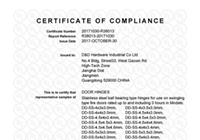
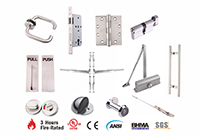
D&D Hardware's insert-type locks carry a UL 10C 3-hour fire resistance rating under File No. R40901 — one of the highest ratings achievable under this standard.

UL 10C (the Standard for Positive Pressure Fire Tests of Door Assemblies) is published by Underwriters Laboratories and governs how door assemblies — including their hardware — perform when exposed to fire under positive pressure conditions.
Unlike earlier fire door standards that tested assemblies under neutral or slightly negative pressure, UL 10C replicates a critical real-world phenomenon: as a fire grows inside a building, hot gases expand and create positive pressure differentials between compartments. This pressure forces smoke and flames through gaps around the door leaf, frame, and hardware.
Key parameters tested under UL 10C include:
Exposure to a standardized time-temperature curve per ASTM E119
Maintenance of a positive pressure differential (at least 0.01 inches of water column) across the door assembly during the test
Evaluation of the door's ability to prevent the passage of smoke and flame for the rated duration
Functional integrity of all hardware components — including the lock — at the end of the test period
A lock that fails under positive pressure may allow the door to bow, unlatch, or gap — compromising the entire fire barrier. This is why UL 10C-certified locks are specified for life-safety applications.
Positive pressure fire testing reflects how fires actually behave in enclosed structures.
When a fire burns in a compartment, gases heat rapidly and expand. If the fire door is between the fire compartment and an adjacent space, the fire side of the door experiences higher pressure than the egress side. This pressure differential — even a small one — drives hot gases, smoke, and eventually flame through any unsealed gap or weakened joint.
Standard fire tests conducted without this positive pressure differential can underestimate real-world performance. A door assembly that holds up under neutral pressure may fail when subjected to the pressurized conditions of an actual fire event.
Under the UL 10C positive pressure protocol:
The test furnace is pressurized to simulate actual fire conditions.
The door assembly — including the lock body, strike plate, and all hardware — is mounted in the test frame and exposed to the full test temperature curve.
Throughout the test, the pressure differential is maintained and monitored.
Any gap formation, flame passage, or hardware failure constitutes a test failure.
For locks specifically, this means the latch mechanism, lock body, and all moving components must remain functional and structurally intact without allowing the door to open or gap under load.

Fire resistance ratings — 20-minute, 45-minute, 1-hour, 1.5-hour, 3-hour — indicate how long a tested assembly can resist fire exposure before failing. The required rating for any given door depends on the type of wall or barrier it serves.
A 3-hour fire resistance rating is the highest commonly specified rating for fire-rated door assemblies. It is required in:
Fire walls and fire barrier walls separating high-risk occupancy areas
Openings in walls that must provide 3-hour fire resistance (such as those between buildings or between hazardous storage and occupied areas)
Commercial, industrial, and institutional projects with the most stringent local or national fire codes
1
A UL 10C door lock with a 3-hour rating means the lock body has withstood a full three-hour positive pressure fire test without permitting the door to unlatch, gap, or otherwise breach the fire barrier. That is a fundamentally different level of assurance compared to a 20-minute or 45-minute rated component.
For project specifiers, selecting a 3-hour rated UL 10C door lock ensures compatibility with the most demanding fire-rated wall assemblies and eliminates the risk of under-specifying hardware for a critical opening.
Many contractors and procurement managers assume that any commercial door lock is suitable for a fire-rated door. This is incorrect. Ordinary locks — even high-quality commercial mortise locks — have not been tested to perform under fire and positive pressure conditions. The differences are substantial.
Feature | Ordinary Commercial Lock | UL 10C Certified Door Lock |
|---|---|---|
Fire resistance testing | None | Tested to full UL 10C protocol |
Positive pressure exposure | Not evaluated | Mandatory test condition |
Rating duration | N/A | Up to 3 hours |
Third-party certification | Not required | Required (e.g., UL File No.) |
Compliance with fire codes | Not guaranteed | Designed for code compliance |
Material and construction | Standard commercial grade | Engineered for thermal stability |
Latch integrity under heat | Not verified | Verified under test conditions |
An ordinary lock may warp, expand, seize, or allow the latch to retract under the thermal stress of a fire, causing the door to swing open or create a gap. A UL 10C door lock is specifically engineered and independently tested to resist these failure modes.
Practically, this means:
Components are manufactured from materials that retain integrity at elevated temperatures
The lock geometry accounts for door leaf expansion under heat
The latch and deadbolt mechanisms are tested to remain engaged under positive pressure load
The assembled product carries a traceable certification file number
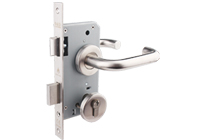
D&D Hardware's insert-type fire door lock holds a UL 10C 3-hour fire resistance rating under UL File No. R40901. This certification means the product has been independently tested and listed by Underwriters Laboratories — not self-declared — for use in fire-rated door assemblies requiring up to a 3-hour rating.

The insert-type design is particularly relevant for commercial fire door applications. Insert-type locks are integrated directly into the door preparation and work in conjunction with a compatible door and frame system. When specifying fire-rated door hardware, the lock, door, and frame must all carry compatible fire ratings — and the lock's UL 10C listing ensures it will not be the weak link in that assembly.
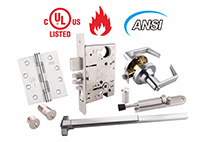
D&D Hardware is an ISO 9001 certified factory with over 18 years of manufacturing experience in certified architectural hardware, supplying CE, UL, ANSI, and BHMA certified products to commercial building projects across North America, Europe, the Middle East, and Asia.
Explore D&D Hardware's UL 10C door lock range at www.danddhardware.com.
Understanding where UL 10C certification is mandated helps specifiers and project managers determine the correct lock specification for their opening.
UL 10C door locks are typically required in:
Commercial office buildings — particularly in fire-rated corridor and stairwell doors
Healthcare facilities — where fire compartmentalization is critical to occupant safety
Educational institutions — in fire barrier walls and exit enclosures
Hotels and hospitality projects — especially in escape route and staircase doors
Government buildings — where compliance with IBC (International Building Code) is mandatory
Industrial facilities — particularly where hazardous materials are stored adjacent to occupied areas
1
In the United States, the International Building Code (IBC) and NFPA 80 (Standard for Fire Doors and Other Opening Protectives) govern the selection of fire-rated door hardware. Both reference UL 10C listing requirements for locks installed in listed fire door assemblies.
Before specifying or purchasing a UL 10C door lock, it is essential to verify the certification is current and genuine.
Steps to verify a UL 10C listing:
Request the UL File Number from the manufacturer or supplier. D&D Hardware's insert-type lock carries File No. R40901.
Search the UL Product iQ database at iq.ul.com to confirm the file is active and covers the specific lock model.
Check the scope of listing — confirm it includes the required fire rating duration (e.g., 3-hour) and the specific product type.
Request test reports or certificates directly from the manufacturer.
1
Specifiers sourcing a UL 10C door lock from China should be particularly diligent in verifying that the listing is held by the factory producing the product, not a third-party name on a certificate. D&D Hardware's UL listing is tied directly to its manufacturing facility and product line.
Q: Can a UL 10C door lock be used on a door with a lower fire rating, such as 90-minute?
A: Yes. A 3-hour UL 10C certified lock can be used on door assemblies with lower fire resistance ratings. The lock's higher rating does not create a conflict — it simply means the lock exceeds the minimum requirement for lower-rated openings.
Q: Is UL 10C the same as UL 10B?
A: No. UL 10B covers fire tests of door assemblies without the positive pressure requirement. UL 10C is the more stringent standard, requiring that the assembly be tested under a positive pressure differential that simulates real fire conditions. Most current building codes in the United States require UL 10C compliance for fire-rated door hardware.
Q: What is an insert-type lock in the context of UL 10C certification?
A: An insert-type (or mortise-insert) lock is a lock body designed to be installed within a mortise pocket machined into the door edge. The lock interfaces with the door frame strike and is enclosed within the door construction. For fire door applications, the insert-type design allows the lock to be part of a tested and listed door assembly, with the UL 10C certification covering the lock as an assembly component.
Q: Does D&D Hardware supply UL 10C door locks for OEM or private label projects?
A: Yes. D&D Hardware offers OEM and ODM manufacturing services for certified door hardware. The UL 10C listed insert-type lock can be supplied under custom branding arrangements. Contact D&D Hardware at sales@danddhardware.com for project-specific enquiries.