Views: 0 Author: D and D Hardware Publish Time: 2026-08-11 Origin: D and D Hardware


A UL 10C door lock is certified to withstand positive-pressure fire conditions under U.S. standards, while a CE/EN 1634 fire-rated lock is tested under European neutral-pressure protocols. Both certifications confirm fire performance, but they apply to different markets, test methodologies, and building code requirements. Choosing the wrong standard for your project can result in failed inspections, code non-compliance, and serious liability exposure.

This guide breaks down exactly what separates these two certification systems—so procurement managers, contractors, and fire door manufacturers can source the right hardware the first time.

A UL 10C door lock is a mortise lock that has been independently tested and listed by Underwriters Laboratories (UL) to perform under positive-pressure fire conditions. "Positive pressure" means the test simulates real fire dynamics, where fire pressure pushes flames and gases toward the door—the most demanding real-world fire scenario.
To achieve UL 10C listing, a door lock must:
Maintain structural and functional integrity during fire exposure
Withstand hose stream testing after the fire test
Comply with ANSI/BHMA A156.13 Grade 1 mechanical performance standards
Be tested as part of a complete door assembly, not as a standalone component
UL 10C is the required standard for most U.S. commercial construction projects, including schools, hospitals, office buildings, and government facilities. Building codes such as NFPA 80 reference UL 10C compliance directly.


Important: UL 10C supersedes the older UL 10B standard, which used neutral-pressure testing. Most U.S. jurisdictions now mandate UL 10C for fire door assemblies.
CE/EN 1634 is the European fire performance standard for door and shutter assemblies, developed by the European Committee for Standardization (CEN). A fire-rated door lock bearing CE marking and tested to EN 1634 has been evaluated under neutral-pressure fire conditions—where pressure differentials across the door are controlled during testing.
Key requirements under EN 1634 include:
Fire resistance classifications: E (integrity), EW (integrity + limited radiation), and EI (integrity + insulation)
Testing of the complete door assembly, including lock, hinges, closer, and seals
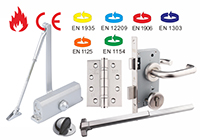
Compliance with EN 12209 for mortise lock mechanical performance
CE marking, confirming conformity with European construction product regulations
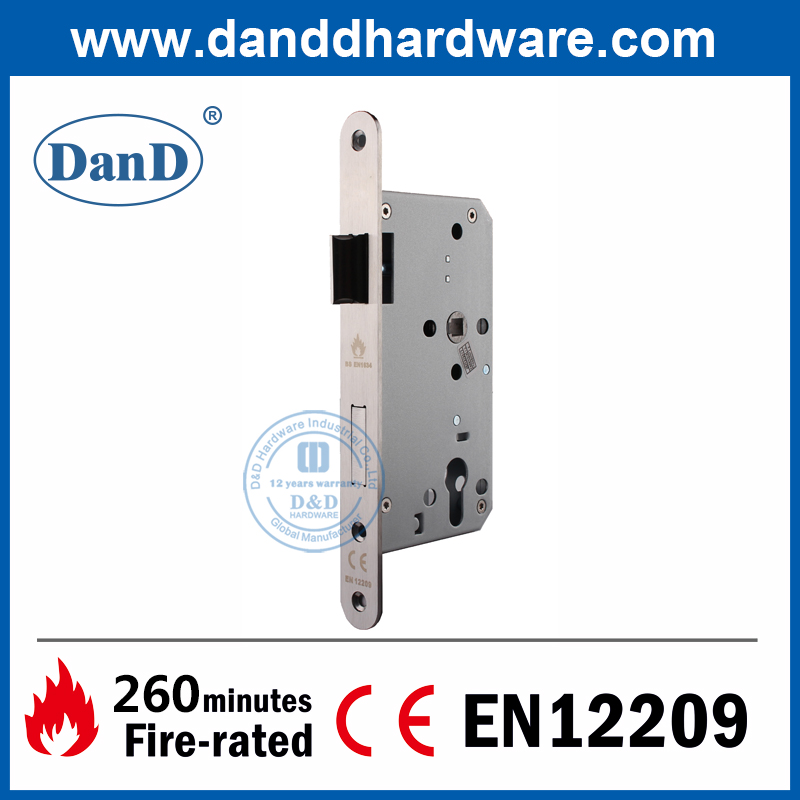
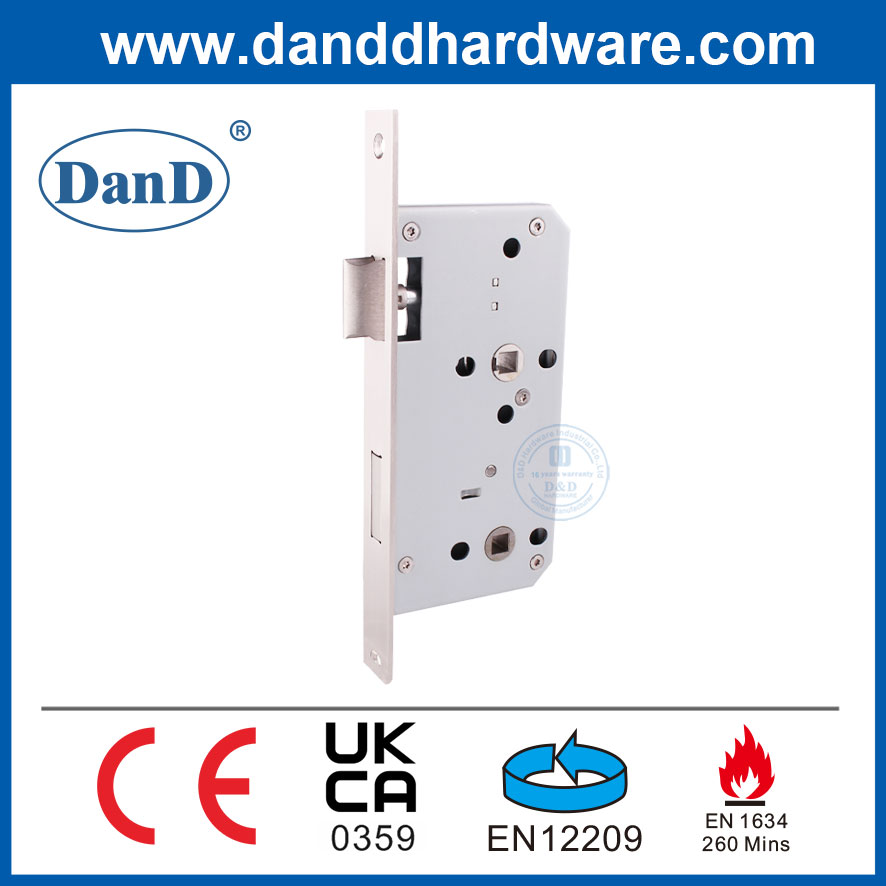

CE/EN 1634-rated hardware is required across Western Europe, Scandinavia, the Middle East, and many markets that adopt European construction standards.
Feature | UL 10C (USA) | CE/EN 1634 (Europe) |
|---|---|---|
Governing Body | Underwriters Laboratories (UL) | European Committee for Standardization (CEN) |
Pressure Test Condition | Positive pressure | Neutral pressure |
Mechanical Lock Standard | ANSI/BHMA A156.13 Grade 1 | EN 12209 |
Primary Markets | USA, Canada | EU, UK, Middle East, and European-standard markets |
Fire Rating Durations | 20 min, 45 min, 60 min, 90 min, 3 hr | 30, 60, 90, 120, 180, 240 minutes |
Building Code Reference | NFPA 80, IBC | EN 1634, local EU building regulations |
Hose Stream Test | Required | Not required |
CE Mark Required | No | Yes |


For fire door locks specifically, UL 10C is generally considered the more stringent standard due to positive-pressure testing. Positive-pressure conditions more accurately replicate what happens during a real building fire: pressurized smoke and hot gases are driven toward the door assembly, testing whether the lock—and the entire assembly—can hold.
The hose stream test required under UL 10C adds a further layer: after surviving fire exposure, the door assembly must withstand a direct water stream without collapse or excessive deformation. CE/EN 1634 does not include this requirement.
That said, neither standard is universally "better"—they are optimized for their respective regulatory environments. A project in Frankfurt requires CE/EN 1634 compliance. A project in Chicago requires UL 10C. Specifying the wrong certification, regardless of its inherent rigor, will fail inspection.

Selecting between a UL 10C door lock and a CE/EN 1634 lock comes down to four decision criteria:
Project Location: U.S. and Canadian projects require UL 10C listed hardware. European and Middle Eastern projects typically require CE/EN 1634 compliant hardware.
Local Building Code: Always verify the applicable fire code. NFPA 80 governs U.S. fire door assemblies; EN 1634 governs European assemblies.
Required Fire Rating Duration: Confirm the specified fire rating (e.g., 60-minute, 90-minute, 3-hour) and ensure the lock is tested and listed for that duration.
Complete Assembly Compatibility: Both UL 10C and EN 1634 certifications apply to the full door assembly—lock, hinges, closers, and seals must all be compatible and certified together.
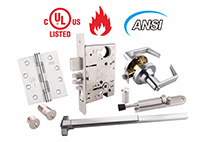
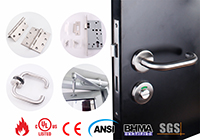
D&D Hardware supplies both UL 10C listed mortise locks and CE/EN 12209 fire-rated locks, manufactured in China to international standards. All products are backed by an SGS-audited factory with over 18 years of commercial door hardware experience. Explore D&D's full range of certified door locks or contact the team at sales@danddhardware.com.
Not all products labeled "UL 10C" are genuinely listed. Counterfeit or misrepresented certifications are a documented risk in the commercial hardware supply chain. To verify that a UL 10C door lock is legitimately listed:
Search the UL Product iQ database at iq.ul.com using the manufacturer name or product model number
Request the UL Listing Report from the supplier—this document identifies the tested configuration, rated durations, and applicable door assemblies
Confirm the certifying entity is UL itself, not a third-party lab using UL-adjacent branding
Check for a valid UL label on the physical product, which includes a holographic element and traceable serial number
For CE/EN 1634 hardware, request the Declaration of Performance (DoP) document, which details the tested characteristics and the notified body that conducted assessment.
Q: Can a UL 10C listed door lock be used on a CE-marked fire door assembly?
A: No. UL 10C and CE/EN 1634 certifications apply to their respective regulatory systems and are not interchangeable. A UL-listed lock installed on a CE-certified door assembly will not satisfy European building code requirements, and vice versa. Each component in a fire door assembly must comply with the same standard framework.
Q: Does a UL 10C door lock need to be installed with a UL-listed hinge and door closer?
A: Yes. UL 10C certification covers the complete door assembly as tested. This means the mortise lock, hinges, door closer, panic device (if applicable), and door seals must all be UL-listed and compatible with the specific assembly configuration. Mixing non-listed components can void the fire rating of the entire assembly.
Q: What is the difference between UL 10C and UL 10B for door locks?
A: UL 10B tests door assemblies under neutral-pressure conditions, while UL 10C uses positive-pressure conditions that better simulate active fire dynamics. Most current U.S. model building codes—including the International Building Code (IBC) and NFPA 80—now require UL 10C for fire door assemblies. UL 10B compliance alone is generally insufficient for modern U.S. commercial projects.
Q: Can a China-based manufacturer supply genuinely UL listed door locks?
A: Yes. Several ISO 9001-certified manufacturers in China produce UL 10C listed mortise locks that have been independently tested and listed by UL. Buyers should verify listing status directly through UL's Product iQ database and request factory audit documentation—such as an SGS audit report—before placing orders.

UL 10C door locks are required for U.S. commercial fire door assemblies. They are tested under positive-pressure conditions, must meet ANSI/BHMA Grade 1 performance, and must pass hose stream testing.
CE/EN 1634 locks are required for European and European-standard markets. They are tested under neutral-pressure conditions and must carry CE marking and comply with EN 12209.
The correct standard is determined by project location and local building code—not by personal preference or perceived rigor.
Always verify certifications through official databases (UL Product iQ for UL-listed products; manufacturer's DoP for CE-marked products) before procurement.
For projects requiring both UL 10C listed and CE/EN 1634 certified hardware across multiple regions, working with a manufacturer who holds both certifications reduces sourcing complexity and ensures consistent quality. Contact D&D Hardware to discuss your project specifications.
For further information about door hinges or any of our services, please click to Contact us Now:
Contact: David Jian
Mobile No.: 0086-139 2903 7292
Email: sales@danddhardware.com