Views: 0 Author: D and D Hardware Publish Time: 2026-08-05 Origin: D and D Hardware


A UL 10C door lock certification confirms that a fire rated door lock has been independently tested to withstand positive-pressure fire conditions — the most rigorous fire-door standard used in U.S. commercial construction. Purchasing a lock from a supplier who falsely claims this certification puts your project, your occupants, and your liability exposure at serious risk.
This guide explains exactly how to verify whether a UL 10C door lock certification is genuine, what red flags to watch for when sourcing from a China-based supplier, and which steps separate credible manufacturers from counterfeit sellers.

UL 10C is an American standard that governs positive pressure fire tests of door assemblies. A door lock bearing a valid UL 10C certification has been evaluated by Underwriters Laboratories (UL) — an independent, accredited testing body — and confirmed to maintain both structural and functional integrity under realistic fire and pressurization conditions.
For most modern commercial buildings in the United States, UL 10C is the required standard for fire-rated openings. It is more stringent than UL 10B, which only addresses neutral-pressure conditions. If your project specifications call for a fire rated door lock, and the lock is only UL 10B listed, it does not meet code.
Key facts about UL 10C:
Tests are conducted under positive pressure, simulating real fire conditions where smoke and heat are actively pushed through door gaps
Locks must maintain functional operability (i.e., the lock must still work) after exposure
Certification applies to the specific product model tested — not a manufacturer's entire product line
UL 10C compliance is required in conjunction with ANSI/BHMA A156.13 Grade 1 performance standards for commercial-grade mortise locks

The demand for certified fire rated door hardware — particularly from lower-cost manufacturing regions — has created a market for fraudulent or misrepresented certifications. Common deceptive practices include:
Using expired certificates — a lock may have been certified years ago under a discontinued model or specification
Applying a UL mark to uncertified products — some suppliers print or engrave a UL logo without ever having obtained legitimate certification
Claiming "UL 10C equivalent" or "tested to UL 10C standards" — these phrases are not the same as being UL Listed or UL Classified
Presenting certificates that belong to a different product model — a supplier may hold certification for one product and apply it across an entire range
Fabricating PDF certificates — digital documents are easy to alter; a certificate that looks official may be entirely counterfeit
Procurement managers sourcing UL 10C door lock suppliers in China face particular exposure to these risks, where the volume of hardware manufacturing makes verification steps easy to skip and costly to overlook.
The only authoritative source for UL certification status is UL's official Product iQ database (iq.ul.com). Any UL Listed or UL Classified product is searchable there by:
Manufacturer name
Product category
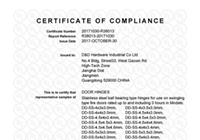
UL file number (typically formatted as "R" or "E" followed by digits), D&D UL Door Lock File NO.R40901

Search for the specific lock model the supplier is offering. If the product does not appear in the UL database under that manufacturer's name, the certification claim is unverified — regardless of what the supplier's paperwork says.
Quick check: Ask the supplier for their UL File Number. Then verify it yourself on iq.ul.com. A legitimate UL 10C door lock listing will show the exact model numbers covered under that file.
UL certification is model-specific. A certificate for Model A does not automatically extend to Model B, even if the two locks look identical. When reviewing supplier documentation:
Confirm the exact model number on the certificate matches the product being quoted
Check that the scope of the listing includes the relevant fire rating duration (e.g., 20-minute, 45-minute, 60-minute, 90-minute)
Verify whether the lock is listed for use on wood-core, hollow metal, or both door types, depending on your project requirements
UL certifications require ongoing compliance and periodic renewal audits. A certificate that was valid in 2019 may no longer be active today. On the supplier's certificate:
Locate the issue date and expiration date (or renewal date)
Cross-reference the certification status in the UL Product iQ database, which reflects current listing status in real time
Be cautious if a supplier cannot provide documentation more recent than 12–18 months old
Verified certification on paper does not always translate to consistent production practice. For high-volume procurement or critical projects, request:
A copy of the supplier's most recent UL follow-up service audit — UL conducts periodic factory inspections on certified manufacturers to confirm ongoing compliance
An SGS, Bureau Veritas, or equivalent third-party factory audit report — these confirm manufacturing consistency, quality management systems, and production capability
ISO 9001 certification, which demonstrates that the factory operates under a documented quality management system
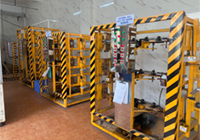
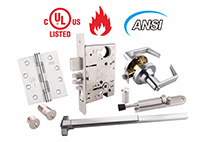
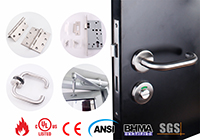
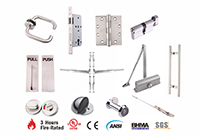
D&D Hardware, for example, is an SGS-audited factory with over 18 years of manufacturing experience and holds CE, UL, ANSI, and BHMA certifications across its product range — all verifiable through third-party records. (danddhardware.com)
Every legitimate UL Listed product must carry specific physical markings applied during manufacture. On a genuine UL 10C fire rated door lock, look for:
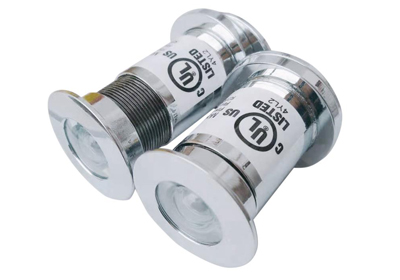
The UL Listing Mark — a registered trademark that appears as "UL" within a circle, accompanied by the word "LISTED" or "CLASSIFIED"
The product category and control number (matching the UL file)
The manufacturer's name or trademark as it appears in the UL database
Where applicable, the fire rating duration marked on the lock body or packaging
If these markings are absent, incomplete, or appear to be printed (rather than stamped, cast, or engraved into the product), treat the certification claim with significant skepticism.
A supplier confident in their UL 10C certification will be able to answer the following questions without hesitation:
"What is your UL file number for this product?"
"Can you provide the UL certificate showing the specific models covered?"
"When was your most recent UL follow-up inspection?"
"Is this lock certified under UL 10C specifically, or UL 10B?"
"Does the certification cover the fire rating duration required by my project specs?"
Evasive or inconsistent answers — or an inability to produce a UL file number — are meaningful red flags.

Watch for these warning signs when evaluating a UL 10C door lock supplier, particularly when sourcing from China:
The supplier offers a UL 10C lock at a price significantly below the market average for certified hardware
Documentation refers to "UL-standard testing" or "UL-compliant design" rather than "UL Listed"
The UL certificate shows a different company name than the supplier you are dealing with
The product does not appear in UL's Product iQ database under any search term the supplier provides
The supplier cannot answer basic questions about which specific models are covered by the certificate
Physical samples show no UL markings, or markings appear to be applied as stickers or printed labels
Q: What is the difference between "UL Listed" and "UL Certified" for a fire rated door lock?
A: "UL Listed" means the product has been evaluated against a specific UL standard and found to comply — it is the most common designation for hardware products. "UL Certified" is a newer mark UL uses for certain product categories and markets. For fire rated door locks, you should specifically look for a product that is UL Listed under UL 10C in the UL Product iQ database. "UL Certified" alone, without a corresponding fire-test standard, does not confirm fire rating compliance.
Q: Can a China-based supplier hold a legitimate UL 10C door lock certification?
A: Yes. UL conducts testing and issues certifications to manufacturers worldwide, including factories in China. A Chinese manufacturer can hold a fully legitimate UL 10C listing provided the specific product model has been evaluated at a UL-accredited testing facility and the factory has passed UL's follow-up service program. The verification process is the same regardless of where the manufacturer is located: search the UL Product iQ database using the supplier's UL file number and confirm the listing is current and model-specific.
Q: How often does UL audit certified manufacturers?
A: UL's Follow-Up Services program involves periodic unannounced inspections of certified manufacturing facilities — typically conducted quarterly or semi-annually, depending on the product category and risk level. These inspections verify that production continues to match the certified design. Suppliers who hold active UL certifications should be able to reference recent audit activity.

When procuring fire rated door locks for commercial projects, the verification steps above are non-negotiable. The consequences of installing non-compliant hardware range from failed inspections and delayed certificates of occupancy to serious life-safety liability in the event of a fire.
For buyers sourcing UL 10C door lock hardware from China, working with an established, audited manufacturer — one that can provide a verifiable UL file number, current factory audit reports, and model-specific certification documentation — is the most reliable way to reduce procurement risk.
D&D Hardware Industrial Co., Ltd. is a UL, CE, ANSI, and BHMA certified commercial door hardware manufacturer based in Jiangmen, China, with over 18 years of factory experience and SGS-audited production facilities. Their certified door lock range includes UL 10C fire rated mortise locks suitable for hospitality, healthcare, education, and government applications. View certified door hardware at danddhardware.com