Views: 0 Author: Site Editor Publish Time: 2026-11-04 Origin: Site


Quick answer:
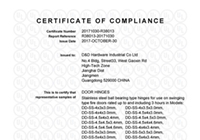
Before ordering from a UL listed door hardware supplier, B2B buyers should verify current UL certification numbers, confirm the specific hardware categories covered (hinges, locks, closers, exit devices), check fire rating compatibility with door assemblies, and request factory audit or test reports. D&D HARDWARE, a certified door hardware supplier, provides documented UL listings across its fire-rated product lines to help buyers meet code compliance requirements.
Sourcing door hardware for a commercial build isn't like ordering office supplies. One wrong component can jeopardize a fire rating, fail an inspection, or expose a project to liability long after the building opens. For architects, contractors, and distributors working on institutional or commercial projects, choosing the right UL listed door hardware supplier is one of the most consequential procurement decisions in the entire build.
This matters more than ever as fire codes tighten and insurance underwriters scrutinize compliance documentation more closely. A supplier's catalog might look impressive, but certification is what actually protects your project, your license, and your client relationships. Below, we break down exactly what to verify before placing an order, and why these checks matter for anyone sourcing certified door hardware at scale.
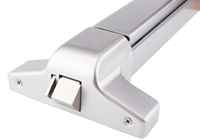
UL (Underwriters Laboratories) listing confirms that a product has been independently tested and meets specific safety and performance standards, most critically for fire resistance and durability under stress. For door hardware, this typically applies to hinges, locks, panic exit devices, and door closers used in fire-rated door assemblies.
Fire-rated doors are only as reliable as the hardware installed on them. A door assembly can carry a 90-minute fire rating, but if the hinges or latch mechanisms aren't UL listed for that same rating, the entire assembly can fail inspection or, worse, fail in an actual fire event. Building codes in the U.S. and many other markets require UL-listed components specifically because hardware failure under heat and pressure is a documented risk.
For B2B buyers, this isn't a nice-to-have. It's a liability issue. Specifying or installing non-certified hardware on a fire-rated door can void the door assembly's listing entirely, regardless of how well the door itself performs.
Not every supplier that claims "UL compliant" products actually holds valid, current listings for the specific items you're ordering. Here's what to check before signing a purchase order.
Ask for the exact UL file number tied to each product line you're sourcing, not a general claim of compliance. A legitimate certified door hardware supplier should be able to provide documentation you can cross-reference independently. If a supplier hesitates to share specific file numbers, treat that as a red flag.
UL listings are granted per product category and sometimes per model, not as a blanket company-wide certification. A supplier might hold valid UL listings for door closers but not for the specific hinge style or exit device you need. Confirm that the exact SKU or product line you're ordering carries the certification, not just a related product in the same family.
Hardware fire ratings need to align with the rated door assembly, commonly 60, 90, or 180 minutes depending on the application. Mismatched ratings between the door, frame, and hardware are one of the most common reasons fire-rated assemblies fail inspection. Request documentation showing which assembly ratings each hardware component supports.
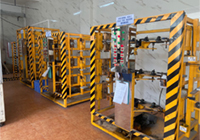
Beyond the UL listing itself, ask whether the manufacturer undergoes regular factory inspections to maintain that listing. UL requires periodic follow-up inspections to ensure ongoing compliance, not just a one-time test. A transparent supplier will share this information readily, since it demonstrates ongoing quality control rather than a single certification obtained years ago.
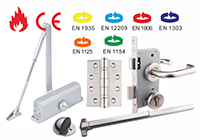
If your project spans multiple markets, confirm whether the supplier also holds relevant regional certifications, such as CE or EN standards for European projects, alongside UL listings for North American work. Suppliers who serve international B2B buyers typically organize their certified door hardware by standard, making it easier to specify the right product for each jurisdiction.

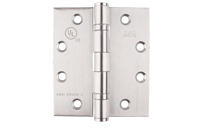
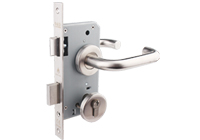
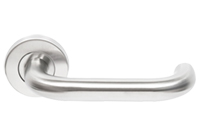
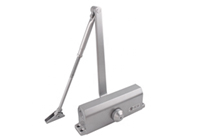
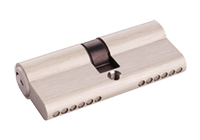
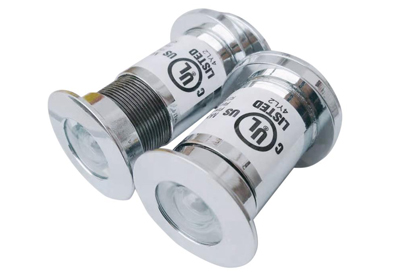
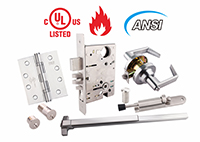
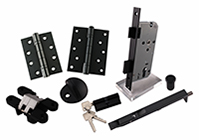
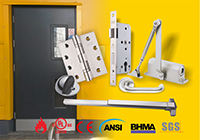
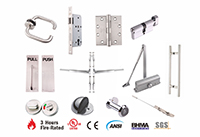
D&D HARDWARE INDUSTRIAL Co., Ltd. positions its certified door hardware line around exactly these buyer concerns. The company organizes its UL listed door hardware by product category, including fire-rated hinges, mortise locks, door closers, and lock cylinders, with certification documentation available for each line. This structure helps architects, contractors, and distributors identify compliant hardware quickly instead of digging through generic catalogs.
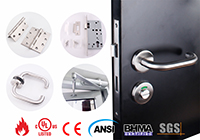
Beyond UL listings, D&D HARDWARE also maintains certifications aligned with CE, ANSI/BHMA, EN, and ISO standards, which matters for buyers managing projects across different regions or working with mixed-standard specifications. For B2B buyers who need to document compliance for inspectors, insurers, or project owners, having a supplier that organizes certification by product and standard reduces the administrative burden considerably.
Choose a supplier like D&D HARDWARE if your priority is sourcing hardware with traceable, verifiable certification across multiple standards. If your project only requires a single regional certification and a narrower product range, a smaller local supplier might suffice, but verifying their documentation remains just as essential.
Skipping certification verification doesn't just risk a failed inspection. It can delay occupancy permits, trigger costly hardware replacement after installation, and create liability exposure if an incident occurs and the hardware's compliance is later challenged. Given that hardware is a relatively small line item in most commercial construction budgets, the downside risk of cutting corners here is disproportionately high.
Sourcing hardware for fire-rated door assemblies isn't a place to make assumptions. Before placing your next order, request specific UL file numbers, confirm fire rating alignment with your door assembly, and ask for factory audit documentation. These few extra steps during procurement can save weeks of rework and protect your project from compliance failures down the line.
If you're currently specifying hardware for a commercial or institutional project, review D&D HARDWARE's certified door hardware catalog to compare UL listed options by product category and fire rating before finalizing your order.
What does it mean when door hardware is "UL listed"?
UL listed means the specific product has been independently tested by Underwriters Laboratories and meets established safety standards for its category, commonly fire resistance ratings for hinges, locks, closers, and exit devices used on rated door assemblies.
How much does certified door hardware typically cost compared to non-certified options?
Certified hardware generally carries a higher upfront cost due to testing, documentation, and quality control requirements. However, this cost is offset by avoiding inspection failures, rework, and potential liability from using non-compliant components on fire-rated doors.
How long does it take to source UL listed hardware for a project?
Lead times vary by supplier and order volume, but working with a supplier that maintains ready documentation and in-stock certified lines, such as D&D HARDWARE's organized product categories, typically shortens the specification and approval process compared to suppliers who need to source certification paperwork on request.
What are the risks of using non-certified hardware on a fire-rated door?
Non-certified hardware can void the entire door assembly's fire rating, cause inspection failures, delay occupancy permits, and create liability exposure if the hardware fails to perform during an actual fire event.
Are there alternatives to UL certification for international projects?
Yes. Projects outside North America often require CE or EN certification instead of, or alongside, UL listings. Buyers managing multi-region projects should confirm which standards apply to each jurisdiction and select a supplier, like D&D HARDWARE, that documents compliance across multiple certification systems.