Views: 0 Author: Site Editor Publish Time: 2026-03-02 Origin: Site


Fire doors save lives. They contain smoke and flames during emergencies, giving people critical time to escape. But they only work when they close properly—and that's where door closers come in.
If you're specifying hardware for fire-rated doors, you've probably encountered BS EN 1154. This European standard sets strict requirements for automatic door closers, including specific timing rules for delayed action models.
One question comes up repeatedly: What's the maximum delay allowed from fully open to fully closed on a delayed action closer fitted to a fire door?
The answer isn't just a number—it's a safety requirement that could determine whether a door performs its life-saving function when it matters most.
BS EN 1154 is the European standard that governs controlled door closing devices. Published by the British Standards Institution (BSI) and recognized across Europe, it establishes performance criteria for door closers used on fire doors and smoke doors.
The standard covers several key areas:
Closing force: Measured in power sizes from 1 to 7, indicating how heavy a door the closer can manage
Durability: Closers must withstand at least 500,000 test cycles
Closing speed: How quickly the door moves from open to closed
Safety: Requirements for pinch-point protection and controlled movement
Fire safety officials, architects, and building managers rely on BS EN 1154 to ensure door closers meet minimum safety thresholds.
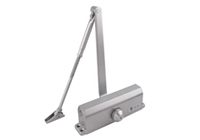
A delayed action door closer is a hydraulic door closer that holds the door open for a short period after being opened, then closes automatically.
This feature serves a practical purpose. It allows people with mobility challenges, those carrying packages, or anyone managing equipment to pass through without rushing. The door stays open long enough for safe passage, then closes on its own.
Common applications include:
Hospital corridors where staff move equipment
School hallways with high foot traffic
Office buildings where accessibility is prioritized
Commercial spaces requiring ADA compliance
The delay function makes daily use more convenient—but when installed on fire doors, it must still meet strict safety requirements.
According to BS EN 1154, the maximum time allowed from fully open (at 90 degrees) to fully closed is 15 seconds for delayed action closers on fire doors.
This 15-second limit includes:
The delay period (when the door is held open)
The closing sweep (as the door travels from open to nearly closed)
The latching action (the final push to secure the door)
Why 15 seconds? Fire safety research shows that longer delays compromise compartmentation. Smoke and flames can spread rapidly—every second counts. A door that takes too long to close reduces the effectiveness of fire barriers.
Understanding how the 15-second requirement works means looking at the complete closing cycle.
When you open a fire door equipped with a delayed action closer, it remains fully open for a preset time. This delay typically ranges from 3 to 10 seconds, depending on the closer's adjustment.
During this phase, the door stays at approximately 90 degrees (or the maximum opening angle). Hydraulic mechanisms inside the closer control this hold.
After the delay expires, the door begins moving toward the closed position. The closing sweep should be smooth and controlled—fast enough to ensure timely closure, but not so fast that it becomes a hazard.
BS EN 1154 requires adjustable closing speeds in this phase, allowing installers to fine-tune performance based on door weight and usage patterns.
The final few degrees of travel are critical. The door must have enough momentum to engage the latch or lock mechanism. If it closes too slowly here, it may not latch properly, leaving the fire door ajar.
This is why EN 1154 specifies increased closing force in the latching zone (from 0 to 15 degrees).
Fire doors exist to compartmentalize buildings. They divide spaces into sections, preventing fire and smoke from spreading freely.
When a fire door remains open too long:
Smoke enters escape routes, reducing visibility and causing inhalation injuries
Heat radiates into adjacent areas, accelerating fire spread
Structural damage extends beyond the fire's origin point
Evacuation becomes more dangerous
A delayed action closer that exceeds 15 seconds undermines the door's purpose. Even a few extra seconds can compromise safety.
Regulatory bodies understand this. Building inspectors check closing times during fire door surveys. Non-compliant closers must be replaced or adjusted.
If you're responsible for fire door maintenance, here's how to check if your delayed action closer meets BS EN 1154:
1. Identify the closer model
Look for a label or stamp on the closer body. It should reference BS EN 1154 or show a CE mark indicating European compliance.
2. Use a stopwatch
Open the door to 90 degrees and release it. Start timing immediately. The door should fully close and latch within 15 seconds. Run the test multiple times to ensure consistency.
3. Check adjustment settings
Most hydraulic closers have adjustment valves. If the door exceeds 15 seconds, the delay may be set too long. Consult the manufacturer's instructions for proper adjustment procedures.
4. Inspect for wear
Older closers lose hydraulic pressure over time. If adjustments don't correct the timing, the closer may need replacement.
5. Document results
Keep records of your testing. Many jurisdictions require regular fire door inspections with written evidence of compliance.
Several factors can cause a delayed action closer to exceed the 15-second limit:
Incorrect adjustment: Over-tightening the delay valve extends the hold time beyond safe limits.
Hydraulic fluid leaks: Damaged seals allow fluid to escape, reducing closing force and speed.
Improper installation: Closers mounted at the wrong angle or with incorrect arm configurations may not function as designed.
Door misalignment: Warped doors, loose hinges, or binding frames add resistance that slows closing.
Temperature extremes: Hydraulic fluid viscosity changes in very cold or hot conditions, affecting performance.
Regular maintenance catches these issues before they become safety hazards.

Not all door closers are created equal. When selecting a delayed action closer for fire doors, consider these factors:
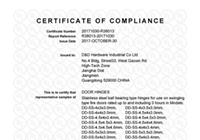
CE marking and EN 1154 certification: Verify the closer meets European standards. The manufacturer should provide test certificates.
Power size: Match the closer to the door's width and weight. Undersized closers won't close properly; oversized ones create safety hazards.
Adjustable timing: Look for models with clearly marked adjustment points for both delay and sweep speeds.
Durability rating: Fire door closers should handle high-cycle use—aim for products tested beyond the 500,000-cycle minimum.
Environmental conditions: If the door is exterior or in an area with temperature fluctuations, choose a closer rated for those conditions.
At D&D Hardware, we manufacture hydraulic door closers that comply with BS EN 1154, including models with delayed action specifically engineered for fire door applications. Our products undergo rigorous testing to ensure they meet the 15-second closing requirement while providing smooth, reliable operation.
Proper installation is critical for compliance. Follow these guidelines:
Mount the closer according to manufacturer specifications
Use the correct template for drilling
Ensure all fasteners are tight but not over-torqued
Set the initial adjustments to mid-range, then fine-tune during testing
Never disable or remove closing mechanisms to make doors "easier" to use
After installation, test the complete closing cycle. Make small adjustments incrementally—hydraulic valves are sensitive, and over-adjustment can damage the closer.
Fire door closers require regular inspection:
Monthly: Visual check for obvious damage or fluid leaks
Quarterly: Test closing time and adjust if needed
Annually: Full inspection including all mounting hardware, arm connections, and hydraulic function
Document all maintenance activities. If a closer fails testing, replace it immediately. Fire doors with non-functional closers are a serious life safety violation.
Fire doors are only effective when all components work together. The delayed action closer must close the door within 15 seconds, but other factors matter too:
Intumescent seals must be intact
Hinges need proper lubrication
Latches should engage fully
Door gaps must remain within specification
Think of the fire door as a system. The closer is one piece—an important piece, but not the only one requiring attention.
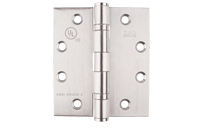
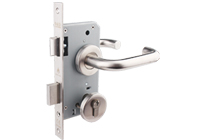
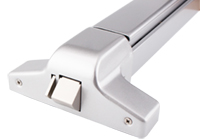
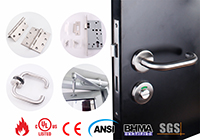
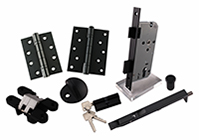
Choosing compliant fire door hardware doesn't have to be complicated. D&D Hardware has over 17 years of experience manufacturing door closers, hinges, locks, and exit devices for fire-rated applications.
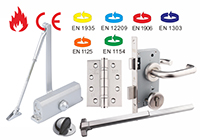
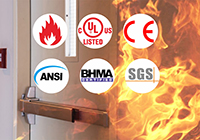
Our products carry CE certification and comply with BS EN 1154, BS EN 12209, and other relevant European standards. We also manufacture to ANSI/BHMA and UL standards for projects requiring American compliance.
Whether you're specifying hardware for a new building or replacing non-compliant closers in existing structures, our technical team can help you select the right solution.
Contact us at sales@danddhardware.com or visit www.danddhardware.com to explore our complete range of commercial door closers.