Views: 0 Author: Site Editor Publish Time: 2026-03-09 Origin: Site


A door that drags across the floor. One that swings open on its own. A gap that's wider on one side than the other. These are classic signs that a door hinge needs adjustment—and if your door uses concealed hinges, you might be wondering whether that's even possible.
The good news? Yes, concealed hinges can be adjusted. In fact, many modern concealed adjustable hinges are specifically designed to make fine-tuning quick and easy. This guide explains how adjustment works, what types of concealed hinges support it, and what to look for when sourcing from a door hinge factory.
Concealed hinges—also called hidden hinges or invisible hinges—are mounted inside the door and frame, so they remain out of sight when the door is closed. Unlike traditional butt hinges, which are visible along the door edge, concealed hinges offer a clean, minimal appearance that works well in both residential and commercial settings.
They open a full 180° and are typically single-action hinges. Depending on the model, they can be made from stainless steel or zinc alloy and are available in a range of sizes to support different door weights—from lightweight cabinet doors up to heavy-duty swing doors exceeding 200 kg.
Common applications include:
Interior and exterior timber doors
Metal and aluminum doors
Fire-rated doors
Hotel, office, and government building doors
1
Standard concealed hinges offer little to no post-installation adjustment. Once installed, what you see is what you get.
3D adjustable concealed hinges are different. These allow movement in three separate axes after installation, giving installers and maintenance teams the ability to fine-tune alignment without removing the hinge or dismantling the door.
Here's how each axis of adjustment works:
Adjustment Type | Direction | Range |
|---|---|---|
Horizontal (Side) | Left / Right | +/- 2mm |
Vertical (Height) | Up / Down | +/- 2mm |
Depth (In/Out) | Forward / Backward | +/- 2mm |
These small but precise adjustments make a significant difference. A 2mm horizontal shift, for example, can correct an uneven gap between a door leaf and its frame—something that's immediately visible and hard to ignore in a finished space.
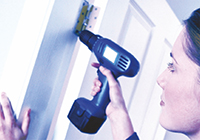
Most 3D adjustable hinges are adjusted using a simple Allen wrench. No need to remove screws, fill holes, or rehang the door from scratch.
Not all concealed hinges offer the same level of adjustment. Here's a breakdown of the main types:
Hinge Type | Adjustability | Best For |
|---|---|---|
Standard Concealed Hinge | None | Low-traffic interior doors |
2D Adjustable Concealed Hinge | Horizontal + Vertical | External doors, door tube wells |
3D Adjustable Concealed Hinge | Horizontal + Vertical + Depth | Interior/exterior swing doors |
Invisible Spring Hinge Closer | Adjustable closing rate | Self-closing timber, metal, aluminum doors |
Concealed Hinge with Nylon Links | None | Wood or metal doors requiring added strength |
For most commercial and high-traffic applications, a 3D adjustable concealed hinge is the recommended choice. The casting zinc alloy construction provides durability, and the wide range of finishes makes them suitable for design-conscious projects.

Doors shift. Buildings settle. Humidity causes timber to expand and contract. Even a perfectly installed door can drift out of alignment over time.
With a traditional surface-mounted hinge, re-alignment usually means removing the door, repositioning the hinge plates, filling old screw holes, and re-drilling—a time-consuming process that can damage both the door and the frame.
Concealed adjustable hinges eliminate much of that effort. A few turns of an Allen key can correct vertical drop, horizontal shift, or a door that sits too close to or too far from the frame. For facilities teams managing large numbers of doors in hotels, offices, or public buildings, that efficiency adds up quickly.
There's also a fire safety dimension to consider. Concealed hinges used on fire-rated doors must maintain tight, consistent seals. Poor alignment creates gaps that compromise a door's fire resistance rating. Using an EN1935 and EN1634 certified 3D adjustable hinge—like those tested to withstand up to 200,000 cycles and fire-resistant for up to 132 minutes—ensures that both performance and compliance can be maintained over the long term.
Before making any adjustments, identify which axis needs correcting. Here's a quick reference:
Door drops at the latch side → Vertical adjustment (raise the hinge side)
Uneven gap along the top or bottom → Vertical adjustment
Gap wider on one side → Horizontal adjustment
Door rubs against the frame or stop → Depth adjustment
1
Tools needed: Allen wrench (size varies by manufacturer)
Open the door to access the hinge body
Locate the adjustment screws (typically marked or recessed into the hinge body)
Use the Allen wrench to make small turns—no more than a quarter turn at a time
Close the door and check the gap at the top, bottom, and latch side
Repeat until the door hangs evenly and operates smoothly
Tighten any locking screws once the correct position is achieved
For doors heavier than 80 kg, it's worth checking that the correct number of hinges are installed. Standard practice is three hinges per door, though heavier doors may require additional support.
If you're procuring concealed hinges for a project—whether residential, commercial, or fire-rated—these are the key factors to evaluate:
Load capacity: Match the hinge capacity to the door weight. Concealed hinges are typically rated at 50 kg, 80 kg, 100 kg, 120 kg, or 200 kg per hinge.
Material: Stainless steel offers superior corrosion resistance for exterior and high-humidity environments. Zinc alloy is commonly used for interior applications and supports a wider range of finishes.
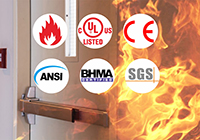
Certification: For fire-rated applications, look for EN1935 (cycle testing) and EN1634 (fire resistance) compliance. Commercial projects in North America should check for ANSI/BHMA or UL certification.
Adjustability: For any project where long-term maintenance matters, 3D adjustable hinges are worth the additional investment.
Finish options: A door hinge factory with an in-house design team can often supply custom finishes to match specific project requirements.
Can all concealed hinges be adjusted after installation?
No. Standard concealed hinges have no post-installation adjustment. Only hinges specifically designed as 2D or 3D adjustable models can be fine-tuned after fitting. Always confirm the hinge type before purchasing.
How much can a 3D concealed hinge be adjusted?
Most 3D adjustable concealed hinges offer a range of +/- 2mm in each direction (horizontal, vertical, and depth). While this sounds small, it's sufficient to correct most common alignment issues caused by building settlement or seasonal movement.
Are adjustable concealed hinges suitable for fire doors?
Yes, provided the hinge carries the appropriate fire certification. Look for EN1634-compliant hinges if the door is required to meet a specific fire resistance duration. Some 3D adjustable concealed hinges are tested to resist fire for up to 132 minutes.
How many concealed hinges does a door need?
Standard practice is three hinges per door. Heavier doors—particularly those exceeding 100 kg—may require additional hinges to distribute the load correctly and maintain alignment.
What's the lifespan of a quality concealed hinge?
A well-manufactured concealed hinge tested to EN1935 can withstand up to 200,000 open/close cycles. For most residential doors, that translates to decades of reliable operation.
Can concealed hinges be used on exterior doors?
Yes. Concealed hinges made from stainless steel or zinc alloy with appropriate weather-resistant finishes are suitable for exterior applications. Heavy-duty models rated up to 200 kg are available for large or high-traffic exterior doors.
Adjustable concealed hinges offer a practical combination of aesthetics and long-term functionality. The clean sight lines they provide make them a popular choice across commercial and residential projects alike, while the 3D adjustment capability reduces the time and cost associated with ongoing maintenance.
When specifying concealed hinges for a project, prioritize certified products from an established door hinge factory with a documented testing and quality management process. The right hinge, properly installed and maintained, should require minimal intervention—and when adjustment is needed, a few turns of an Allen wrench should be all it takes.
For a full range of concealed door hinges, including 3D adjustable models for both timber and metal doors, explore the product range at D&D Hardware.