Views: 0 Author: D&D Hardware Publish Time: 2026-04-09 Origin: D&D HARDWARE


Navigating the intersection of life safety and fire protection can feel like a complex maze. Architects, contractors, and facility managers frequently run into a highly specific but critical question during the building design process: does a fire door automatically require panic hardware?
The short answer is no, but the complete answer carries heavy implications for building compliance and occupant safety. Fire-rated doors and panic hardware actually serve two entirely distinctly different purposes. One is designed to prevent the spread of deadly flames and smoke throughout a facility, while the other exists to allow a large crowd of people to escape a building rapidly during an emergency.
When building codes require these two safety functions to overlap, the hardware rules become incredibly strict. Using the wrong type of exit device on a fire door can void the door's fire rating, lead to failed building inspections, and put lives at risk.

This guide breaks down exactly when you need to install panic hardware on a fire-rated door. You will learn how to identify the correct components, understand the crucial differences in hardware safety ratings, and ensure your commercial space remains fully compliant with international building codes.
To understand how these components work together, we first need to look at what they achieve individually. Building codes treat fire containment and emergency egress as separate safety strategies that occasionally intersect.
A fire door assembly is heavily tested to withstand fire for a specific duration, usually ranging from 20 minutes to three hours. These doors must self-close and positively latch. If a fire breaks out, the closed and latched door acts as a physical barrier, compartmentalizing the building so fire and toxic smoke cannot spread into hallways or stairwells.
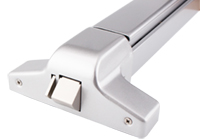
Panic hardware, commonly known as a crash bar or push bar, allows people to open a door quickly without any special knowledge or effort. You simply push your body weight against the bar, the latch retracts, and the door opens. This prevents crowd crushing at the exits during a panicked evacuation.
A fire door only requires panic hardware if the door serves an area that mandates panic hardware based on its occupancy type and occupant load.

According to major building codes like the International Building Code (IBC) and the NFPA 101 Life Safety Code, panic hardware is generally required for doors serving:
Assembly occupancies (like theaters, restaurants, or auditoriums) with an occupant load of 50 or more people.
Educational occupancies (like schools and universities) with an occupant load of 50 or more people.
High-hazard occupancies, regardless of the number of people inside.
Certain electrical rooms containing high-voltage equipment.
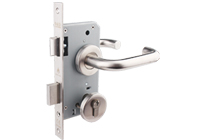
If your fire door is located in one of these specific areas, it must be equipped with a fire rated panic exit device. If the fire door is just an office stairwell door serving 20 people, standard fire-rated locking hardware (like a heavy-duty mortise lock) is perfectly acceptable, and a push bar is not legally required.
When you combine a fire door with panic hardware, you cannot just use a standard commercial push bar. You must use specialized "fire exit hardware."
Standard panic bars often feature a mechanism called "dogging." Using a hex key or cylinder lock, a building manager can retract the latch and lock the push bar in the depressed position. This allows the door to become push-pull, so people can easily walk in and out during normal business hours without unlatching the door every time.
However, fire doors must always be able to positively latch to stop a fire from spreading. If a fire door is mechanically dogged open, it cannot latch, rendering its fire rating completely useless. Because of this, a fire rated panic bar will never feature mechanical dogging.
If you need a fire door to remain unlocked for high-traffic periods, you must use electrical dogging tied directly to the building's fire alarm system. If the alarm triggers, the electrical power cuts off, the latch releases, and the door secures itself automatically.


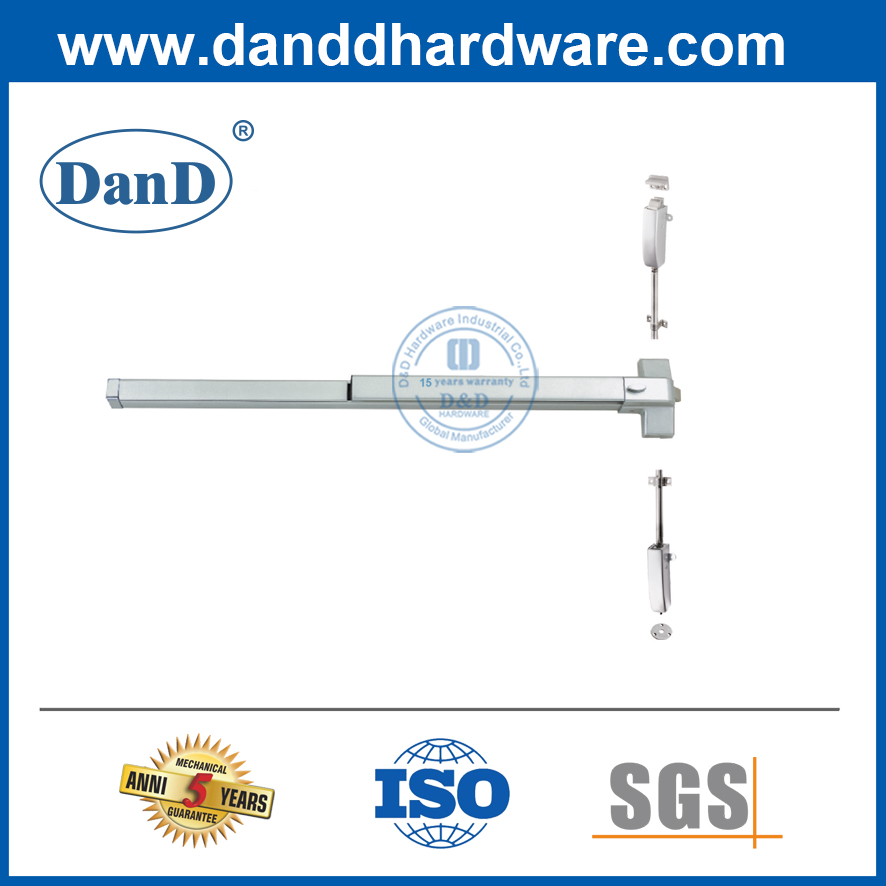
Selecting the proper fire exit hardware requires attention to material durability, cycle testing, and strict safety certifications. Commercial environments experience heavy wear and tear, so your hardware must be built to last while maintaining its fire-resistance capabilities.
For maximum durability and fire resistance, stainless steel 304 and heavy-duty steel are the industry standards. These materials resist corrosion, handle severe temperature fluctuations, and maintain their structural integrity during a fire.
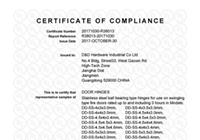
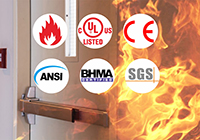
Never install hardware that lacks proper third-party testing. High-quality fire exit devices should carry a UL 10C certification, proving they can withstand fire for up to three hours. Additionally, look for ANSI/BHMA Grade 1 certification. This rating guarantees the panic bar has survived a rigorous 500,000-cycle test, ensuring it will perform flawlessly in high-traffic environments.
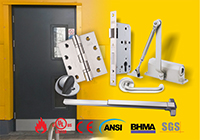
Working directly with an experienced manufacturer ensures you get the exact hardware required for your specific application. A reputable fire rated panic bar manufacturer will provide products that meet international standards (including CE, UL, and ANSI) and offer a variety of configurations, such as rim exit devices and vertical rod exit devices, to suit single and double door setups.

No. Standard panic hardware is not tested for fire endurance and usually contains mechanical dogging features, which are strictly banned on fire doors. You must use specifically labeled "fire exit hardware."
Check the physical hardware for a permanent certification label or stamp. Fire exit hardware will have a visible label from a recognized testing laboratory (like UL or Intertek) stating that it is "Fire Exit Hardware" and listing its fire rating duration.
A rim exit device mounts on the surface of the door, with the latch protruding from the side into a strike plate on the door frame. A vertical rod exit device features rods that extend to the top and bottom of the door, latching directly into the floor and the upper door frame. Vertical rods are highly effective for double doors without a center mullion.
Understanding building codes is the first step toward creating a safer commercial space. While not every fire door requires panic hardware, those that do must be equipped with strictly tested and certified fire exit devices. Prioritizing correct installations ensures that your building can effectively compartmentalize a fire while simultaneously allowing occupants a fast, safe escape route.
If you are outfitting a new commercial project or upgrading an existing facility, you need hardware you can trust. D&D Hardware is an ISO 9001 certified manufacturer with over 13 years of experience providing complete door opening solutions. With a wide selection of UL Listed, ANSI Grade 1, and CE certified fire exit hardware, their team can help you navigate complex building codes and secure your property. Review your door schedules today and ensure every fire-rated exit is equipped with the safest hardware available.
David Jian:
Email:sales@danddhardware.com
Tel / WhatsApp / Wechat:+86-13929037292