Views: 0 Author: D and D Hardware Publish Time: 2026-09-14 Origin: D and D Hardware


On a construction budget, hinges, closers, and mortise locks are rounding errors, and they get bought that way: fast, by whoever holds the door schedule that week.
For a developer or building owner the exposure does not end at handover. That closer is still on the stairwell door in year nine, and the facilities team is hunting a replacement for an assembly that must stay certified. With UL fire rated commercial door hardware, procurement decisions are operational decisions in disguise.

Table of Contents
· Owner-side procurement is judged across the asset's operating life, so continuity outweighs unit price.
· Issue a building-level hardware standard before any RFQ goes out.
· Record certification at line-item level: UL standard, file number, rating, grade, model.
· The handover file is a procurement asset; it decides how easily hardware can be reordered.
Developers and building owners should procure fire door hardware against a building-level standard rather than door by door. That standard fixes which openings need rated hardware, which categories are consolidated, and which UL file numbers are approved. Suppliers are then judged on whether they can hold that specification across the first order, later phases, and small replacement quantities.

A general contractor buys to a programme: hardware arrives before the door manufacturer's slot, clears submittal review, and gets fitted ahead of the fire inspection. After handover, that contractor's interest in the closer on level four is over. Our fire door hardware procurement guide for general contractors covers that side.
An owner's position is the reverse. The hardware must be maintained, adjusted, and eventually replaced, by a facilities team that never saw the original specification. Across a portfolio, a standard never written down gets reinvented on every asset. The question is not what a hinge costs but whether it will still be procurable in the same finish, under the same file number.
Variant proliferation rarely begins with a product decision. It begins with three people buying hardware at three different times, each from a different revision of the door schedule, and the project finishes with eleven hinge types nobody chose. The remedy is a short issued document recording rated openings, consolidated categories, finishes and grades, the certification standard per category, and approved models.
It must be issued before the first RFQ, and whoever handles how project managers specify and procure commercial door hardware needs the same revision your procurement team holds. Suppliers then quote a defined scope, making quotations comparable.
Consolidation pays back where the quotation never shows it: fitting crews learn one routine, the spares list stays short, and replacements come from a recorded model rather than a photograph. Across a portfolio, that shared standard is where bulk ordering strategies for commercial door hardware pay off.
"UL listed" on a product page does not say which standard, which file number, which rating, or which model series. Those are what a consultant or insurance assessor will request, so certification only works as a control once captured per line item.
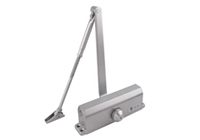
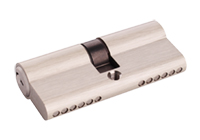
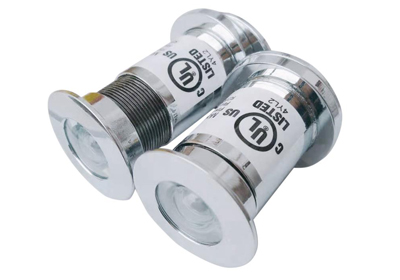
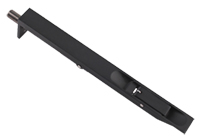
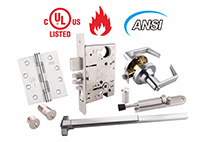
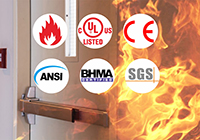
Before a product joins the approved list, record the category, applicable UL standard, file number, rating, grade, exact model, and intended application. Questions buyers should ask door hardware suppliers sets out the request list. D&D Hardware's UL range:
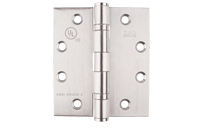
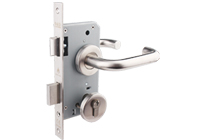
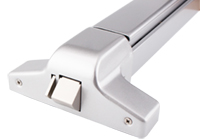
| Product Category | Certification / Rating | UL File No. |
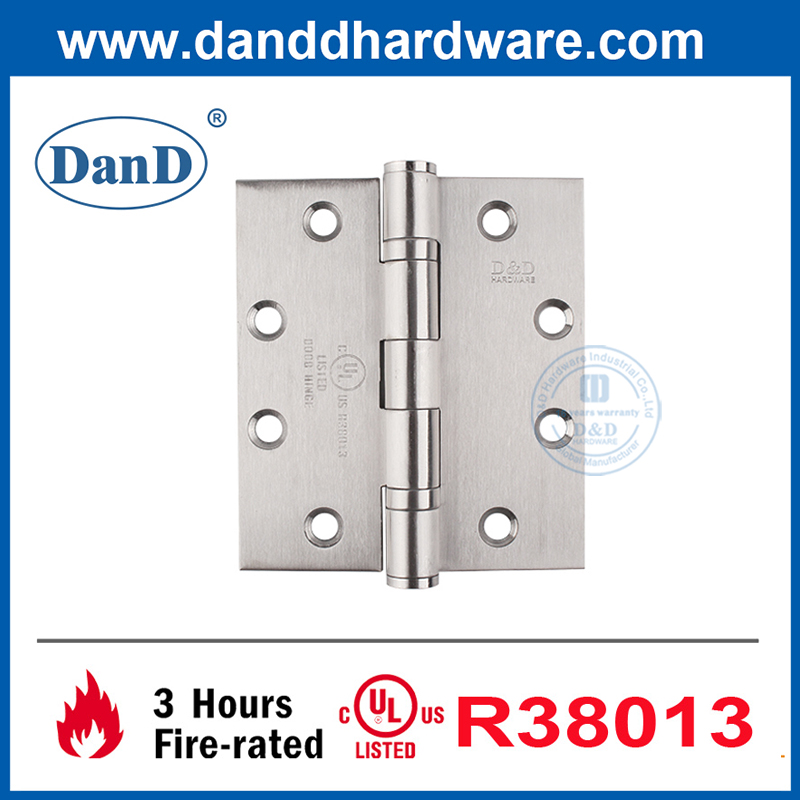 | UL/cUL UL 10C, fire rated 3 hours, ANSI/BHMA Grade 1 and 2 | R38013 | |
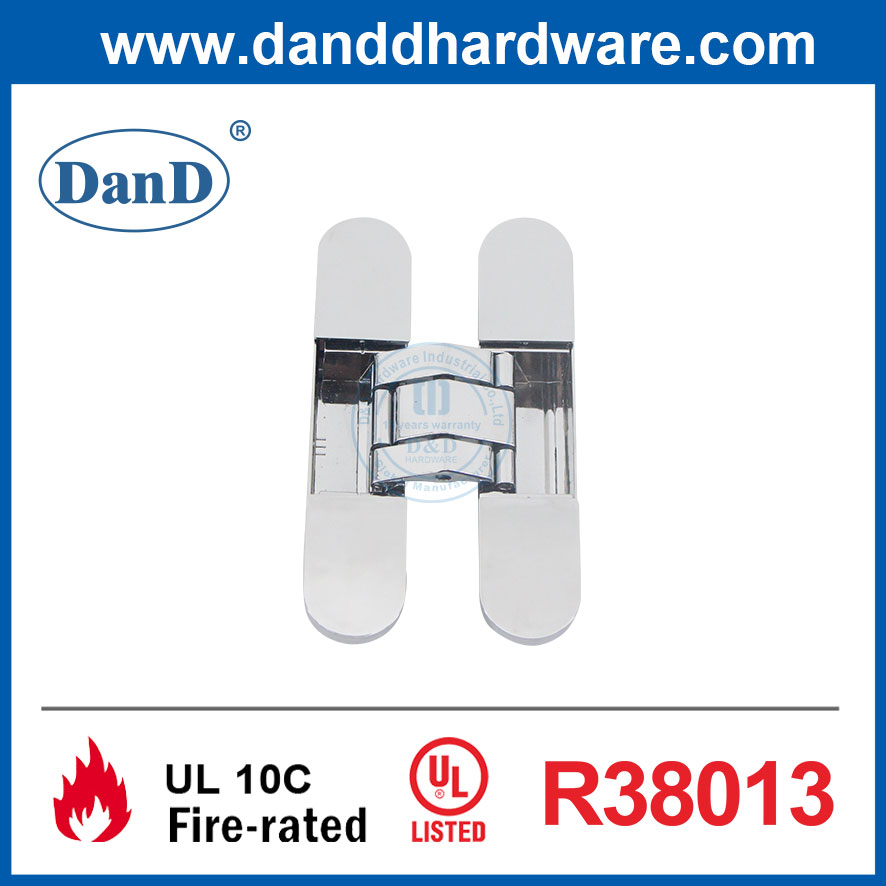 | UL 10C, fire rated | R38013 | |
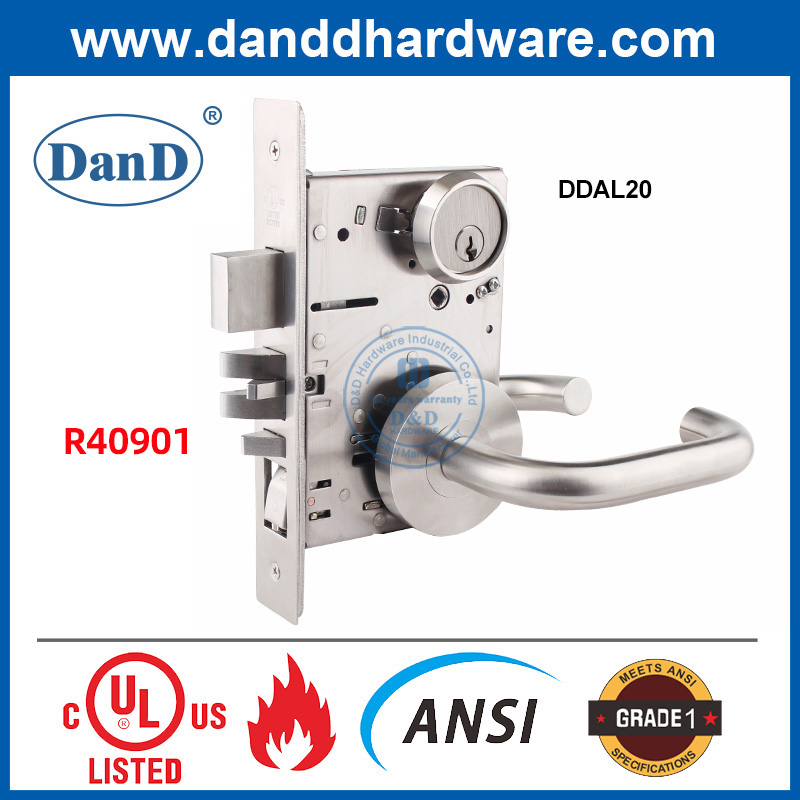 | UL 10C, 3 hours | R40901 | |
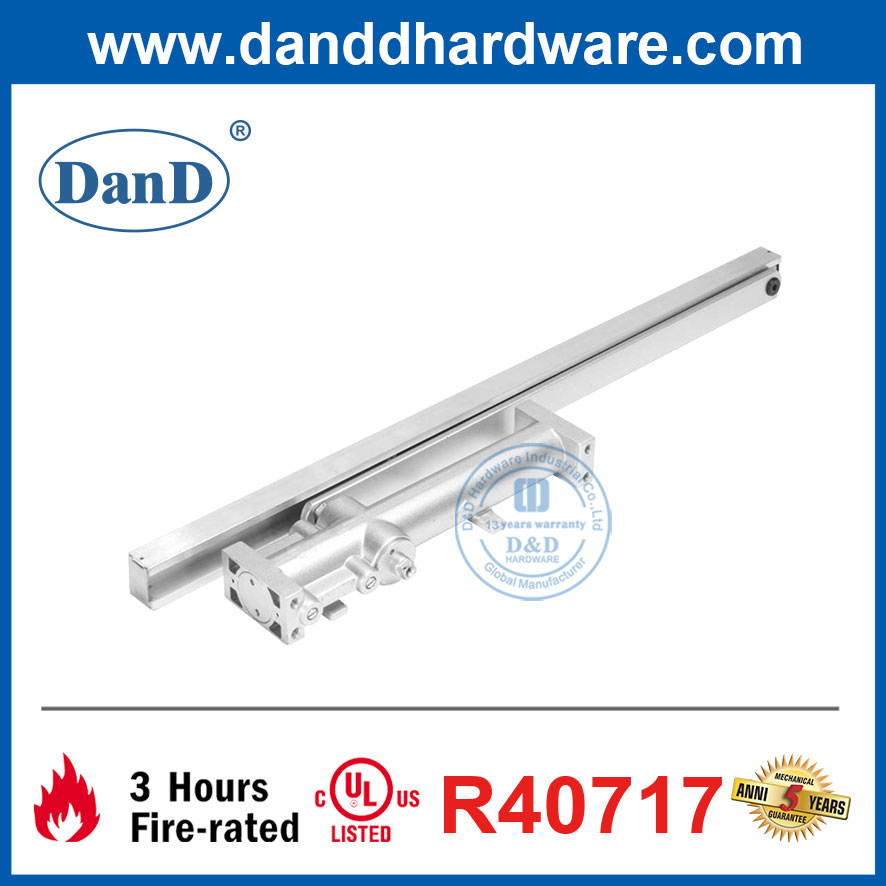 | UL 10C, 3 hours | R40717 | |
 | UL 10C, 3 hours | R40486 | |
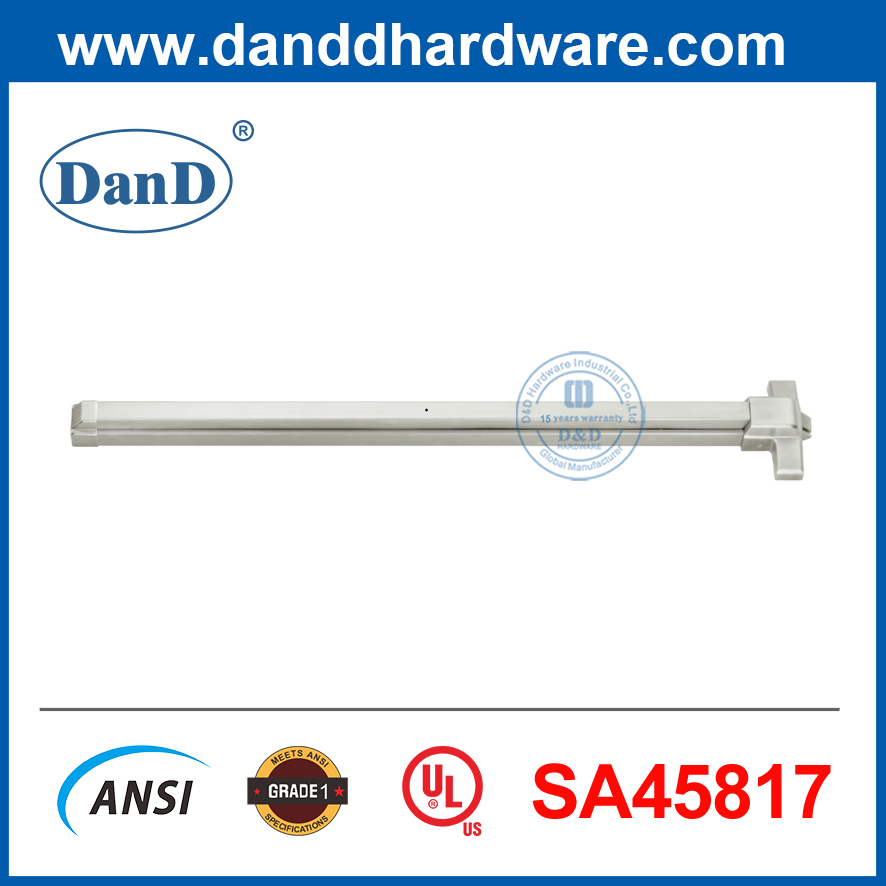 | UL 305 | SA45817 |
A replacement offered under a different file number is a specification change, not a like-for-like swap.
Replacement is the phase nobody prices. Traffic wear, impact damage, a refurbished floor, a new tenant's access requirements: each produces an order for hardware that must match what is installed, inside a rated assembly, in small quantities, and in a hurry.
Without a record, the facilities team measures a closer body and hopes. The usual result is a near-match that quietly alters the preparation, the finish, or the certification basis of the door, a supply chain risk nobody budgeted for.
The countermeasure costs a few hours at project end: a building hardware reference file holding model and series, certification and file number, finish, dimensions, application, supplier contact, and purchase records.

Continuity is testable before the order is placed. Ask whether the same model series stays available on repeat orders, whether specifications hold stable across runs, whether certification documents can be reissued, and whether OEM or private-label packaging is supported. The fire door hardware supplier evaluation checklist and supplier qualification checklist cover the full review.
Procurement Stage | What the Owner Must Confirm |
Development | Rated openings, consolidated categories, applicable certification standard |
Specification | Approved models, finishes, grades, and UL file numbers in one controlled document |
Supplier selection | Repeat-order availability, specification stability, document reissue, OEM support |
Handover and operation | Models and finishes verified, certification filed, replacement route confirmed |
Handover is where the approach holds or collapses. Confirm that delivered models and finishes match the approved schedule, that certification documents sit in the project records rather than an inbox, and that a spare holding is agreed for the categories likely to fail first. Project supply solutions keep labelling tied to those opening references.
Fire door hardware is normally handled as a construction consumable: bought, installed, forgotten until it fails. For an owner it behaves like a specified building system, in service long after the contract closes.
Three conditions have to hold together: a documented certification basis, a limited product portfolio, and a supplier able to support repeat orders. Any two leaves the owner paying for the gap.
D&D Hardware manufactures commercial door hardware for project supply, OEM programmes, and repeat B2B procurement, with a UL range covering hinges, concealed hinges, mortise locks, closers, fire exit hardware, and panic hardware, backed by eighteen years of manufacturing and an ISO 9001 quality system.
A contractor buys to a programme and closes out at handover. An owner buys across the asset's operating life, so documentation and supply continuity outweigh unit price.
Wherever the specification allows, yes. Fewer approved variants means a shorter spares list, faster reorders, and consistent finishes between buildings.
Not always. It must match the recorded specification and certification basis. Without that record, replacement becomes a judgement call rather than a reorder.
Fire door hardware procurement for property developers and building owners is a lifecycle decision inside a construction budget line. Fix the standard before the first quotation, verify the certification record, limit the variants the asset carries, and choose a commercial door hardware supplier on whether it can still deliver the same model in five years.