Views: 0 Author: D&D HARDWARE Publish Time: 2025-12-24 Origin: D&D HARDWARE


You have likely seen them thousands of times in schools, hospitals, theaters, and office buildings. They are the horizontal metal bars running across the middle of heavy commercial doors. Known as panic bars, crash bars, or door push bars, these devices serve a critical life-saving function: allowing people to exit a building quickly during an emergency without fumbling for a lock or handle.
However, business owners and facility managers often face a confusing dilemma regarding these devices. While the primary goal is getting people out safely, you also need to prevent unauthorized people from getting in. Security is just as important as safety, but the two can sometimes feel like they are at odds with one another.
Locking a door equipped with a push bar isn't as intuitive as turning a deadbolt on a residential front door. If you do it incorrectly, you might violate fire codes or create a dangerous trap. Conversely, if you don't secure it properly, your building is vulnerable to theft and intrusion.

This guide clarifies the mechanics of these essential devices. We will explore how to secure them properly, the role of "dogging," and why choosing high-quality hardware from manufacturers like D&D HARDWARE INDUSTRIAL Co.Ltd. is vital for long-term security.
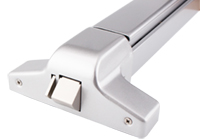
To understand how to lock these doors, you first need to understand what the bar actually does. A push bar is a spring-loaded device. When you press the bar, it retracts a latch bolt (or vertical rods) from the door frame, allowing the door to swing open.
The golden rule of panic hardware is simple: You must always be able to exit.
From the inside, you generally cannot "lock" a panic bar in a way that prevents exit. If the building is occupied, pushing that bar must open the door. Therefore, when we talk about "locking" a push bar door, we are usually referring to two specific actions:
Restricting Entry: Preventing people from opening the door from the outside.
Dogging (Unlocking): Holding the latch retracted so the door operates as a push-pull door without latching (used during business hours).

1
One of the most common questions regarding these devices involves keeping them unlocked during the day. This process is called "dogging."
If you have a high-traffic entrance, you don't want customers to have to physically depress the bar and disengage the latch every time they enter or exit. It creates noise and wears down the hardware.
Most standard panic bars come with a "hex key dogging" feature. Here is how it works:
Locate the hole: Look for a small hole on the push bar assembly.
Insert the key: Insert a hex key (Allen wrench) into the hole.
Depress the bar: Push the bar in fully.
Turn the key: While holding the bar in, turn the key (usually clockwise).
Release: The bar should stay retracted, and the latch should remain inside the door mechanism.
1
The door is now "unlocked" and can be pulled open from the outside or pushed open from the inside without engaging the latch. To "lock" the building at night, you simply reverse the process: insert the key, turn it counter-clockwise, and the latch pops back out. Now, the door automatically latches every time it closes.
Important Safety Note: Mechanical dogging is typically not allowed on fire-rated doors. Fire doors must latch positively every time they close to prevent the spread of fire. If your door has a fire label, you likely will not find a dogging feature, and you should never attempt to force it to stay open with wedges or chains.
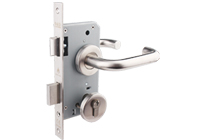
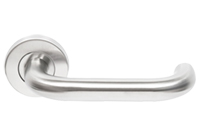
While the push bar handles the inside, the "trim" handles the outside. This is where the actual security locking happens. The exterior handle (lever, knob, or thumb piece) is controlled by a lock cylinder.
There are different functions available depending on your security needs:
Function | Description | Security Level |
|---|---|---|
Night Latch | The key retracts the latch bolt to open the door. The handle is rigid or non-existent. You need a key every time you want to enter. | High |
Classroom Function | The key locks or unlocks the lever handle. If unlocked, anyone can turn the handle to enter. If locked, the handle spins freely or is rigid, preventing entry. | Medium/High |
Passage Function | The handle is always unlocked and the latch is always retractable. | Low (No security) |
Dummy Trim | A rigid handle used only for pulling the door open when the device is "dogged" (unlocked). | Low |
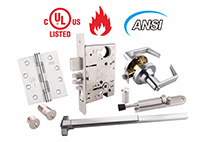
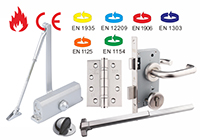
For optimal security, ensure your exterior trim is compatible with the interior device. D&D HARDWARE INDUSTRIAL Co.Ltd. offers a range of trims, including lever handles and escutcheons, designed to work seamlessly with their UL-listed and ANSI-grade panic bars.
Navigating the hardware options can be tricky. Here are answers to the most frequent inquiries regarding securing these doors.
A: No. This is a major safety violation. Even if the building is empty, fire codes usually strictly prohibit modifying an emergency exit with a padlock, chain, or hasp. If there is a fire and a firefighter or someone left inside needs to use that door, a chain could be fatal. Always rely on the integrated locking mechanism of the hardware.
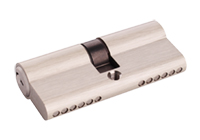
A: This is often an issue with the "tailpiece" of the lock cylinder not engaging with the panic bar mechanism correctly. It could also mean the vertical rods (if equipped) are misaligned. Regular maintenance is required. High-quality products, such as the ANSI Grade 1 devices from D&D HARDWARE INDUSTRIAL Co.Ltd., are built to withstand high-cycle usage and reduce these mechanical failures.
A: Fire doors must latch. To keep them secure but passable, you usually use a "Storeroom" or "Night Latch" function where the door is always locked from the outside (requiring a key to enter) but always free to exit from the inside.
A: While they look similar, a Fire Exit Device is tested and certified to withstand fire conditions. It does not have mechanical dogging (the ability to hold the latch back). A standard Panic Bar allows for dogging but cannot be used on a certified fire door.

The effectiveness of your lock is only as good as the quality of the hardware. A cheap, flimsy panic bar is easier to bypass and prone to jamming.
When selecting door push bars for your facility, look for the following designations:
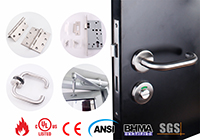
UL Listed: This ensures the product meets rigorous safety standards.
ANSI/BHMA Grade 1: This is the highest standard for durability, capable of withstanding millions of cycles.
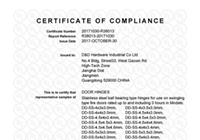
CE Mark: Essential for compliance in European markets and indicates high safety standards.
1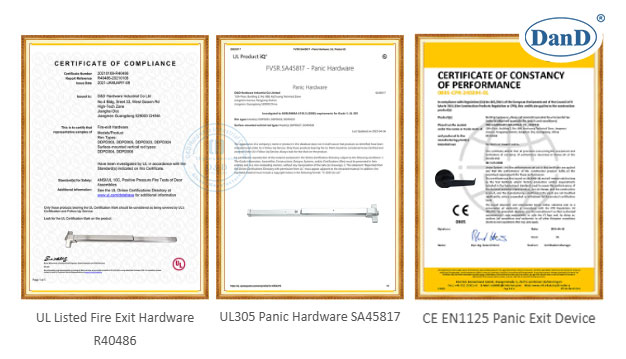
D&D HARDWARE INDUSTRIAL Co.Ltd. has over 17 years of experience manufacturing door hardware that meets these international standards. Their product range includes:
UL Listed Panic Bars: Designed for high-traffic and high-security areas.
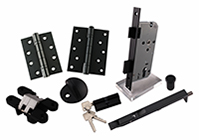
Exterior Trims: Stainless steel lever handles and lock cylinders that resist tampering.
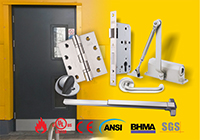
Fire-Rated Hardware: Hinges and devices specifically engineered for fire doors.


By using certified hardware, you ensure that when you "lock" the door, it stays secured against intruders while remaining fully compliant with safety regulations for occupants.
Locking a push bar door is a balance of hardware selection and proper procedure. You rely on the hex key dogging feature for convenience during the day and the exterior cylinder lock for security at night.
If your current hardware is jamming, failing to latch, or lacks the security features you need, it is time for an upgrade. Do not compromise on safety by using makeshift locking methods like chains or wedges.
Assess your doors today. Are they fire-rated? Do you need restricted access from the outside? Once you know your requirements, consult with hardware professionals. Upgrading to robust, certified equipment from manufacturers like D&D HARDWARE INDUSTRIAL Co.Ltd. ensures your building remains a fortress against theft, without ever becoming a trap during an emergency.
For further information about fire rated door hardware or any of our services, please click to Contact us Now:
Contact: David Jian
Mobile No.: 0086-139 2903 7292
Email: sales@danddhardware.com