Views: 0 Author: D&D HARDWARE Publish Time: 2025-12-25 Origin: D&D HARDWARE


Have you ever walked past a commercial building and wondered how those large, horizontal metal bars on the doors actually work? More importantly, if their primary job is to let people out quickly during an emergency, how do you keep unwanted visitors in?
These devices—known as panic bars, crash bars, or door push bars—are a staple in schools, hospitals, theaters, and offices. Their life-saving purpose is clear: allowing mass evacuation without fumbling for keys or knobs. But for facility managers and business owners, the security side of the equation is just as crucial. Balancing safety codes with building security can be tricky, but it's entirely manageable with the right hardware.
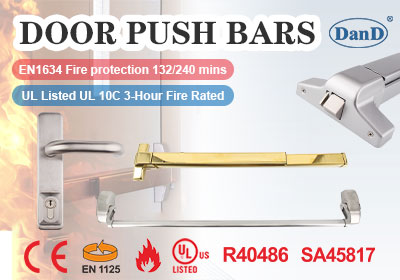
This guide explores the mechanisms behind these devices, the different methods for securing them, and how to choose the right solution for your facility.
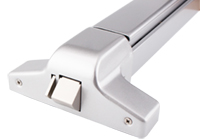
A door push bar is a mechanical device installed horizontally on the interior of an outward-opening door. Its primary function is to facilitate immediate exit. When pressure is applied to the bar (usually by pushing it), an internal mechanism retracts the latch bolt, allowing the door to swing open.
This "single-motion egress" is a requirement for most fire and building codes in commercial spaces. It ensures that in a panic situation—such as a fire or active threat—crowds can push against the door and escape without needing special knowledge or fine motor skills to operate a lock.
However, the "push" function only applies to exiting. From the outside, the door is typically locked to prevent unauthorized entry, unless specific hardware is installed to allow access.

The most common question regarding these devices is how to secure them against external threats while maintaining safety compliance. The method of locking depends heavily on the specific "trim" or exterior hardware installed on the door.
Here is a breakdown of the common locking mechanisms:
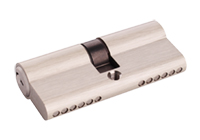
This is the standard for many service doors and side exits. A lock cylinder is installed on the exterior of the door.
How it works: The door remains locked from the outside at all times. To enter, you must insert a key and turn it to retract the latch. Once the key is removed, the door automatically re-locks.
Best for: Employee entrances, maintenance rooms, or doors that should never be left unlocked for the general public.
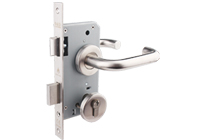
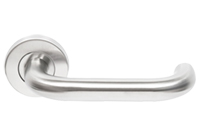
This setup looks like a standard door handle but interacts with the push bar mechanism.
How it works: The handle can be set to "locked" or "unlocked" mode via a key. When unlocked, anyone can turn the handle to enter. When locked, the handle is rigid (or spins freely without engaging the latch), preventing entry.
Best for: Main entrances where you want to allow free access during business hours and restrict access after closing.
For modern facilities with access control systems, electronic locking is the gold standard.
How it works: The door is mechanically locked, but an electronic signal (from a keypad, card reader, or remote buzzer) releases the strike plate or cuts power to a magnet, allowing entry.
Best for: High-security areas, office buildings with badge access, and schools.

This is a critical safety distinction. In almost all jurisdictions, you cannot mechanically lock a panic bar from the inside in a way that prevents exit. Doing so would violate fire codes and endanger lives.
The push bar must always work to open the door from the inside, regardless of the locking status on the outside. This feature is often called "free egress."
However, there is one exception: Dogging.
"Dogging" is a feature that holds the latch bolt retracted, effectively keeping the door unlocked and functioning as a simple push-pull door. This is done using a hex key (Allen wrench) or a cylinder key directly into the push bar itself.
Locked Position (Undogged): The latch is extended. The door latches when closed. You must push the bar to exit.
Unlocked Position (Dogged): The latch is held inside the bar. The door swings freely.
Important: You should never use the dogging feature on fire-rated doors, as fire doors must latch closed to prevent the spread of smoke and flames.
To help you decide which setup is right for your facility, refer to the table below comparing the most common exterior trim functions.
Function Name | Description | Exterior Hardware | Best Application |
|---|---|---|---|
Exit Only | No entry from outside. Hardware is blank or non-existent. | Blank Plate or None | Emergency exits, alley doors. |
Night Latch | Key retracts latch. Key removal re-locks door. | Cylinder Only | Service doors, delivery entrances. |
Classroom | Key locks/unlocks the lever. Lever operates latch when unlocked. | Lever Handle | Schools, lobbies, meeting halls. |
Storeroom | Lever is always rigid. Key must be used to retract latch every time. | Lever Handle | Supply closets, server rooms. |
Passage | Always unlocked. Free entry at all times. | Lever/Knob | Internal distinct zones (non-secure). |

Selecting high-quality door push bars is not just about functionality; it's about liability and longevity. Cheaply made devices can jam during emergencies or fail to secure the building properly.
When sourcing hardware, look for a door push bar Manufacturer that offers:
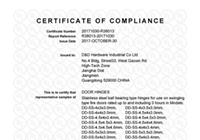
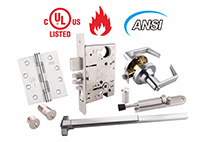
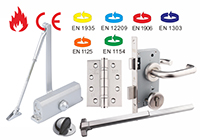
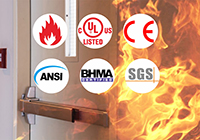
Certifications: Ensure products meet international standards like UL (Underwriters Laboratories) for the US or CE (Conformité Européenne) for Europe.
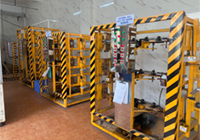
Durability: Look for cycle testing (e.g., tested for 200,000+ uses) to ensure the mechanism holds up in high-traffic areas.
Fire Ratings: If the door is a fire door, the hardware must be fire-rated (often labeled as "Fire Exit Hardware" rather than just "Panic Hardware").
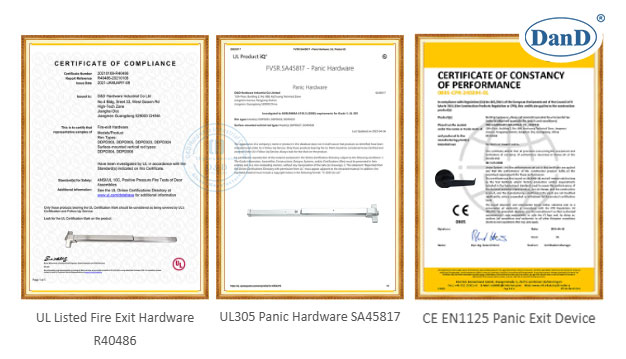
D&D HARDWARE INDUSTRIAL Co.Ltd. is a prime example of a manufacturer that prioritizes these standards. They provide a comprehensive range of panic exit devices designed for commercial applications, including education, healthcare, and government buildings. Their products are rigorously tested to meet ANSI Grade 1 and EN1125 standards, ensuring both top-tier security and uncompromised safety.


No. Never put a padlock and chain on a panic bar if the building is occupied. This is a severe code violation and a major safety hazard. Padlocks should only be used (if allowed by local laws) on doors of abandoned buildings or construction sites where no one is inside.
While they look similar, a "Fire Exit Bar" does not have mechanical dogging (the ability to hold the latch open). Fire doors must latch positively every time they close to stop fire spread. A standard "Panic Bar" can be dogged open for convenience but cannot be used on a fire-rated door.
It is generally better to use a dry lubricant like graphite or a silicone-based spray. Oil-based lubricants like standard WD-40 can attract dust and grime over time, causing the internal mechanism to become gummy and stick, which could lead to failure.
Rim Device: Has a latch that locks into a strike plate on the door frame. Easier to install and maintain. Best for single doors.
Vertical Rod: Has rods that latch at the top and bottom of the door frame. More secure and often required for double doors to ensure both doors are secured independently.
1
Understanding how to lock a door with a push bar is about finding the balance between "keeping people out" and "letting people out." By selecting the right exterior trim—whether it's a night latch for security or a classroom function for flexibility—you can ensure your facility remains secure.
Always prioritize certified hardware from a reputable door push bar Manufacturer like D&D HARDWARE INDUSTRIAL Co.Ltd. to ensure your building meets the highest safety standards. Whether you are retrofitting a school or designing a new office complex, the right hardware choice effectively protects both your property and the people inside it.
For further information about fire rated door hardware or any of our services, please click to Contact us Now:
Contact: David Jian
Mobile No.: 0086-139 2903 7292
Email: sales@danddhardware.com