Views: 0 Author: D and D Hardware Publish Time: 2026-10-11 Origin: D and D Hardware


Learn how to procure UL mortise locks for hotel fire door projects by coordinating door schedules, lock functions, certification, samples, quantities, project phases, and manufacturer supply.
A hotel may contain guest-room entries, corridors, stairs, service spaces and back-of-house openings. Their functions and fire-door requirements are not interchangeable. Buying one “hotel lock” by building-wide quantity can leave the team with the wrong function, an unverified listing or mismatched deliveries.

The better approach is to turn the door schedule into a controlled product specification, then carry that specification from sample approval through repeat supply. This guide follows the decisions a project buyer should make with the fire commercial door hardware manufacturer.

Hotel Door Schedule → Door Classification → Lock Function → UL Model Confirmation → Sample Approval → Quantity Planning → Production & Lead Time → Hardware Coordination → Purchase Order → Delivery & Repeat Supply

Use the door number or hardware-set reference as the purchasing record—not just a total lock count. For each opening, capture its location, fire-door status and rating, door construction and thickness, handing where relevant, finish, cylinder or access-control requirements, target installation phase and quantity.
Separate guest-room access-control openings from corridor, stair and service doors. The building type alone does not determine the correct lock; the scheduled opening and approved hardware set do.
Confirm which doors are fire-rated and which are not, and record the required assembly rating from the project documents. Do not assume every hotel door needs the same fire-rated product—or that a lock listing alone establishes compliance of the complete door assembly. The architect, code consultant or authority having jurisdiction should confirm the applicable requirements.

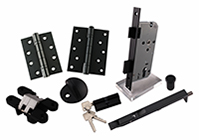
For every hardware set, define how entry and egress should work, whether the door must remain secured, the required lever or trim, cylinder arrangement, access-control interface and any handing or keying requirements. “UL mortise lock for hotel” is not a complete RFQ description.
Send the manufacturer the schedule extract, relevant drawings and a function-by-door matrix. This helps the factory quote the intended configuration rather than guess from a product name.
Ask the manufacturer to identify the exact model and provide the applicable listing reference and supporting documentation. Match model number → listing/standard → rating → file number against the project specification and current certification records. Do not transfer a certification claim from one model to an entire product family without verification.
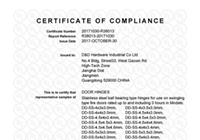
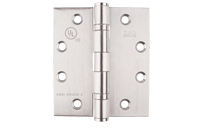
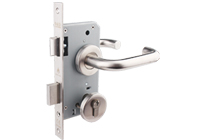
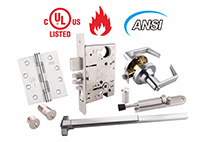
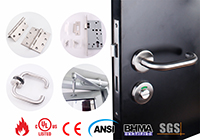
D&D Hardware identifies its UL fire-rated mortise lock as UL 10C, 3 hours, UL File No. R40901. Confirm the current listing, model scope and suitability for the specified door assembly before approval; project requirements and local codes govern.


Review the sample against the proposed model, function, dimensions, finish, trim, cylinder preparation and drawings. Include certification documents in the approval package. Record the approved sample ID and revision, then make them the reference for production and reorders. If any detail changes, request a documented review before manufacture.

Build quantities from the door schedule and hardware sets, then separate mock-up, first installation, main order, later floors or areas, and spares. Add an agreed allowance for replacements only after checking the project’s policy. Provide the manufacturer with both firm release quantities and the forecast balance so production capacity and replenishment can be planned without confusing forecast with a purchase commitment.
Ask the manufacturer to confirm sample timing, production lead time, order split, packaging, inspection and dispatch milestones in writing. Share required-on-site dates—not only the desired ship date—and flag approvals or owner decisions that could hold production. A manufacturer with direct production control can coordinate samples, specification records and phased releases with fewer handoffs.
D&D Hardware states that it has more than 18 years of manufacturing experience and an ISO 9001 quality management system. Buyers should assess manufacturer capability against their project needs, including specification support, repeatability, OEM/private label, labeling and phased supply.
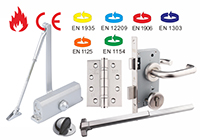
Check the mortise lock against the door, frame, hinges, closer, exit or panic hardware, seals and access-control components shown in the approved set. Resolve interfaces before ordering; fire-door compliance applies to the assembly and its approved configuration, not a shopping list of isolated parts.

State the exact model and function, approved sample/revision, listing reference, finish, door thickness, cylinder and handing details, quantity by phase, packaging/labeling, delivery schedule and hardware-set or project reference. Attach the approved schedule and drawings. Require written approval for substitutions or specification changes.
At delivery, check labels, quantities and documentation against the PO and approved sample. Keep the model, revision, listing documents and order history together. For later releases, reorder against that controlled record and reconfirm availability and lead time; do not rely on an old description alone.
A manufacturer can connect technical clarification, sample approval, production instructions and subsequent orders to one product reference. For hotel buyers managing many openings and phased construction, that continuity can reduce interpretation gaps between quotation and delivery. D&D Hardware manufactures commercial door hardware and states it can support project specifications, samples, certification documentation, OEM/private-label production, customized packaging and repeat supply. Confirm the scope, evidence and schedule for each project in the RFQ and order confirmation.

Does every hotel fire door need a UL mortise lock?
No. Use the approved door schedule and hardware sets to identify openings, functions and required listings. The project design and applicable code determine what is required.
Is “UL 10C, 3 hours” enough to approve a lock?
No. Verify the exact model and current listing scope, then confirm compatibility with the specified door assembly and project requirements. Keep supporting documents with the submittal.
What should a buyer send to a manufacturer for a reliable quote?
Send the door schedule or hardware-set matrix, fire-door requirements, lock functions, dimensions, finish, cylinder/access-control details, quantities by phase and required-on-site dates.
Can the same approved lock be reordered for later hotel phases?
Yes, when the exact model and configuration remain unchanged and are still suitable and available. Reorder using the approved sample/revision and confirm lead time; review any proposed change before release.
What should the purchase order specify?
At minimum: model, function, listing reference, finish, door details, quantity, approved sample/revision, packaging, delivery milestones and project hardware-set reference.
Before releasing the PO, make sure every scheduled opening maps to a defined function, an appropriately verified model and a controlled delivery phase. That is how a hotel project turns a UL mortise lock specification into a repeatable manufacturer-supplied product—not just a line item on a quote.