Views: 0 Author: Site Editor Publish Time: 2026-02-02 Origin: Site


Fire doors are the silent guardians of our buildings. In the event of an emergency, their ability to self-close and securely latch can make the difference between a contained incident and a catastrophic loss. At the heart of this functionality lies a small but critical component: the latch bolt. Specifically, the "throw"—the distance the bolt extends into the strike plate—is a dimension that is rigorously regulated by safety standards.
When specifying fire exit hardware for commercial, industrial, or educational buildings, getting the latch throw dimension correct isn't just about ensuring the door locks; it's about compliance with life safety codes like ANSI/BHMA, UL 10C, and NFPA 80. A throw that is too short may fail to hold the door against the positive pressure of a fire, while incorrect installation can compromise the door's fire rating entirely.
This guide explores the standard dimensions for latch throws on fire exit hardware, why these specific measurements matter, and how different types of hardware—from panic bars to mortise locks—handle this critical specification.
The "latch throw" refers to the distance the latch bolt extends from the faceplate of the door lock or exit device into the strike plate on the door frame (jamb) or the opposing door leaf.
For standard doors, a secure latch prevents unauthorized entry. However, for fire door hardware, the purpose is far more significant. During a fire, air pressure inside a room can change drastically. This "positive pressure" can push against the door with significant force. If the latch throw is insufficient, the door may pop open, allowing smoke and flames to spread to escape routes.
Therefore, the dimension of the throw is determined by the need to keep the door securely closed even when subjected to the thermal warping and pressure differentials of a fire.
The required dimension for a latch throw varies depending on the type of hardware and the material of the door (wood vs. metal). However, there are industry standards that most Fire Exit Hardware Manufacturers adhere to ensure compliance with UL and ANSI/BHMA certifications.
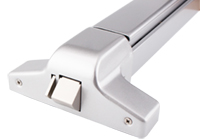
For rim exit devices (panic bars mounted on the surface of the door), the latch bolt engages with a strike mounted on the surface of the frame stop.
Standard Throw: Typically 3/4 inch (19mm).
Why: This length provides enough engagement to secure the door while allowing the unique swinging motion of a rim device to retract smoothly when the bar is pushed.
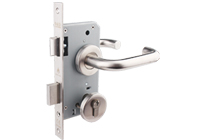
Mortise locks are recessed into the edge of the door. These are common in high-traffic areas requiring high security and durability.
Standard Throw: The industry standard for fire-rated mortise locks is 3/4 inch (19mm).
Requirements: Most fire codes require a minimum throw of 3/4 inch for single doors to ensure the door remains latched during the warping that occurs in a fire. Some older or lower-security non-fire locks may have a 1/2 inch throw, but these are generally not suitable for fire doors unless specifically tested and listed.
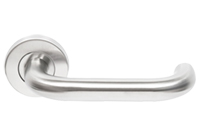
These are the standard knob or lever locks found on many office and residential doors.
Standard Throw: Generally 1/2 inch (12.7mm).
Fire Rating Note: While 1/2 inch is common, many codes for pairs of doors or specific fire-rated applications may require a longer throw or a specific "fire latch" bolt design that features an auxiliary deadlatch to prevent the bolt from being manipulated.
Used on pairs of doors, these devices latch at the top and bottom of the door frame.
Top and Bottom Latch: The throw can vary but is often designed to engage a strike flush with the floor or header. The engagement is less about a horizontal "throw" distance and more about the vertical depth of engagement, which ensures the door stays aligned.

To help clarify the requirements across different hardware types, here is a breakdown of standard specifications found in ANSI/BHMA compliant hardware.
Hardware Type | Standard Latch Throw | Common Application | Fire Rating Compliance Note |
|---|---|---|---|
Rim Panic Device | 3/4" (19mm) | Single doors, Exterior exits | High security; surface mounted strike. |
Mortise Lock | 3/4" (19mm) | High-traffic corridor doors | Required for most 3-hour fire doors. |
Cylindrical Lock | 1/2" (12.7mm) | Office, Storage rooms | Must have auxiliary deadlatch pin. |
Deadbolt | 1" (25mm) | High security (Non-egress) | Not allowed on designated fire/egress doors requiring single-motion exit. |
You may notice a small pin or plunger adjacent to the main latch bolt on fire door hardware. This is the auxiliary deadlatch.
When the door is closed, the main latch extends into the strike hole, but the strike plate depresses this small plunger. This action "deadlocks" the latch bolt, preventing it from being pushed back (loimmied) with a credit card or tool.
From a fire safety perspective, this mechanism ensures that once the door is latched, it stays latched. It adds a layer of mechanical security that supports the effectiveness of the latch throw dimension.
The latch throw becomes even more critical when dealing with pairs of fire doors (double doors).
Overlapping Astragals: If the doors have an astragal (a seal covering the gap between doors), a standard 3/4" throw might be sufficient if one door is active and the other is inactive.
No Mullion: If you have a pair of doors without a center mullion (vertical post), maintaining the fire rating is difficult. Manufacturers often use Vertical Rod Exit Devices here. If a mortise lock is used on a pair of doors without a mullion, standard throws may not be sufficient to keep the doors aligned during a fire.
Thermal Pins: In some double door configurations, you might see "thermal pins" or fire bolts installed in the edge of the door. These are separate from the latch throw. They are plastic-capped steel pins that melt during a fire, projecting a bolt into the other door to lock them together and prevent bowing, compensating for latch limitations.
1
Even if you purchase Fire Exit Hardware with the correct dimension, installation errors can render the throw ineffective.
Gap Too Wide: If the gap between the door and the frame (or between two doors) is too wide, the latch bolt will not extend deep enough into the strike plate. For example, if you have a 1/2" throw but a 3/8" gap, you only have 1/8" of engagement. This is insufficient for fire safety.
Solution: Use shims behind the hinges to close the gap, or install a latch with a longer throw if the manufacturer permits.
Misaligned Strike Plate: If the latch drags against the strike plate or doesn't fully extend, the "deadlocking" feature may not activate.
Solution: Adjust the strike plate position. The bolt must extend fully to be secure.
1
The latch throw dimension is not just a minor detail in a spec sheet; it is a fundamental aspect of fire door performance. Whether it is the standard 3/4" throw for a mortise lock or the specific requirements for a rim panic device, ensuring you have the correct dimension prevents door failure during positive pressure situations.
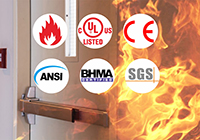
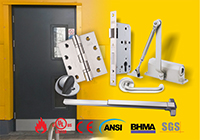
When sourcing products, always consult with a reputable Fire Exit Hardware Manufacturer like D&D Hardware. Their products are rigorously tested to ANSI/UL and CE standards, ensuring that when you specify a latch throw, it performs exactly as required to protect life and property.
Ensure your building meets the highest safety standards by checking your latch dimensions and maintaining your fire doors regularly.