Views: 0 Author: Site Editor Publish Time: 2025-12-17 Origin: Site


You hear a knock at the door late at night. You aren't expecting anyone. Do you open it blindly, trusting that it’s just a neighbor, or do you hesitate, wishing you could see who’s standing on the other side? This is a common scenario for homeowners and apartment dwellers alike, and it highlights a fundamental gap in home security.
While smart cameras and video doorbells are gaining popularity, they rely on electricity, Wi-Fi, and often expensive subscriptions. Sometimes, the simplest solution is the most reliable. A peephole door viewer offers an immediate, low-tech way to verify a visitor's identity before disengaging your lock. It acts as a critical barrier between the safety of your home and the uncertainty of the outside world.
In this guide, we will explore exactly what a peephole door viewer is, the different types available, and why this small hardware component remains a staple in residential and commercial security. Whether you are a property manager outfitting a hotel or a homeowner looking to upgrade your front door, understanding the mechanics of this device is the first step toward a safer environment.
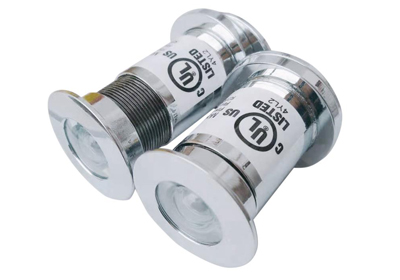
A peephole door viewer is a small optical instrument installed into a door that allows someone inside to look outside without opening the door.
Typically made of brass, zinc alloy, or steel, these devices consist of a lens and a barrel. The lens is fisheye-shaped, which provides a wide-angle view—often between 160 to 200 degrees—allowing the user to see not just who is directly in front of the door, but also the surrounding area. This wide field of view is crucial for spotting anyone trying to hide out of sight or verifying if a visitor is alone.
Security experts and hardware suppliers like D&D Hardware emphasize that these devices are essential for hotels, motels, and apartment complexes. They provide a layer of privacy and security that allows occupants to screen visitors safely.

Not all door viewers are created equal. Depending on your specific needs—whether it's for a high-traffic hotel or a private residence—you can choose from several variations.
These are the most common types found in homes. They use a simple glass or plastic lens system. They are durable, require no batteries, and are generally inexpensive.
Standard viewers might offer a limited range, but wide-angle options provide a view of 180 to 200 degrees. This ensures that a person cannot easily hide against the doorframe to avoid detection.
For commercial buildings and apartment complexes, safety regulations often require fire-rated hardware. These viewers are tested to ensure they do not compromise the fire resistance of the door they are installed in. For example, UL Listed viewers are certified to withstand heat for specific durations, such as 1.5 hours.
Some viewers come with a small internal shutter or flap. This prevents anyone outside from using a reverse-peephole tool to peer inside your home, adding an extra layer of privacy.
The viewing angle determines how much of the outside world you can see. A narrow angle creates "blind spots" where a person could hide.
Viewing Angle | Best Use Case | Description |
|---|---|---|
160 Degrees | Standard Residential | Provides a decent view of the visitor standing directly in front of the door. |
180 Degrees | Commercial/Hotels | Offers a broader view, allowing you to see the floor and limited sides. |
200 Degrees | High Security | The widest optical option; allows visibility of the doorstep and extreme sides. |
Choosing a viewer with at least a 180-degree angle is recommended for maximum security. This ensures that even if a visitor crouches down or stands to the side, they remain visible.
Since door viewers are exposed to the elements on the exterior side, the material matters.
Solid Brass: Highly durable and resistant to rust. It offers a premium look often used in hotels.
Zinc Alloy: A cost-effective alternative that is strong and corrosion-resistant.
Stainless Steel: The best option for fire-rated doors or harsh weather environments due to its high melting point and strength.
Hardware providers often offer various finishes, such as Satin Nickel, Polished Chrome, or Antique Bronze, allowing the security device to match the aesthetic of the door handle and locks.
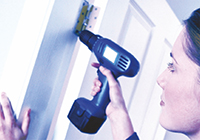
Installation is generally straightforward and can be a DIY project for most homeowners.
1. Mark the height: Standard height is usually around eye level for an average adult, roughly 5 feet (1.5 meters) from the floor. However, consider installing a second, lower viewer for children or wheelchair users.
2. Drill the hole: Using the diameter specified by the manufacturer (usually roughly 1/2 inch to 9/16 inch), drill a hole through the door. It is best to drill halfway from one side and finish from the other to prevent the wood from splintering.
3. Screw it in: Insert the lens portion from the outside and the barrel from the inside. Screw them together until tight.
Note: Always check the thickness of your door before purchasing. Most viewers are adjustable, but you need to ensure the barrel length matches your door's depth.
Hotels and motels utilize door viewers to ensure guest safety. It allows guests to verify room service or housekeeping without opening the door. D&D Hardware notes that fire-rated models are particularly standard in this industry to comply with safety codes.
Apartments and condos often lack windows near the front door. A peephole is the only way tenants can see the hallway.
Meeting rooms and sensitive office areas use viewers to allow staff to check room occupancy without interrupting a meeting in progress.
In an age of smart technology, why stick with an optical glass viewer?
Reliability: They never run out of batteries. If the power goes out, your security is not compromised.
Simplicity: There is no app to crash, no Wi-Fi signal to lose, and no software updates required.
Cost: A high-quality optical viewer costs a fraction of a digital video doorbell.
Speed: You don't have to wait for a notification on your phone; you simply look through the hole.
1
The door viewer is a small but mighty component of entryway security. Whether you opt for a 200-degree wide-angle lens or a fire-rated steel model, the ability to screen visitors is a fundamental right of privacy and safety. By choosing the right material and viewing angle for your property, you ensure that you never have to open your door to a stranger again.
For businesses and homeowners alike, investing in quality hardware is an investment in peace of mind. If you are ready to upgrade your door security, consult with professional hardware suppliers to find the perfect fit for your needs.