Views: 0 Author: D and D Hardware Publish Time: 2025-12-12 Origin: D and D Hardware


We have all been there. You are relaxing at home, perhaps in the middle of dinner or watching a movie, when a knock echoes through the house. Before you unlock the deadbolt and swing the door open, you likely pause to do one specific thing: look through the peephole.
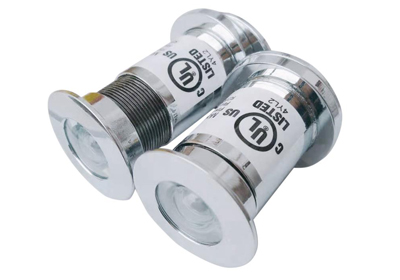
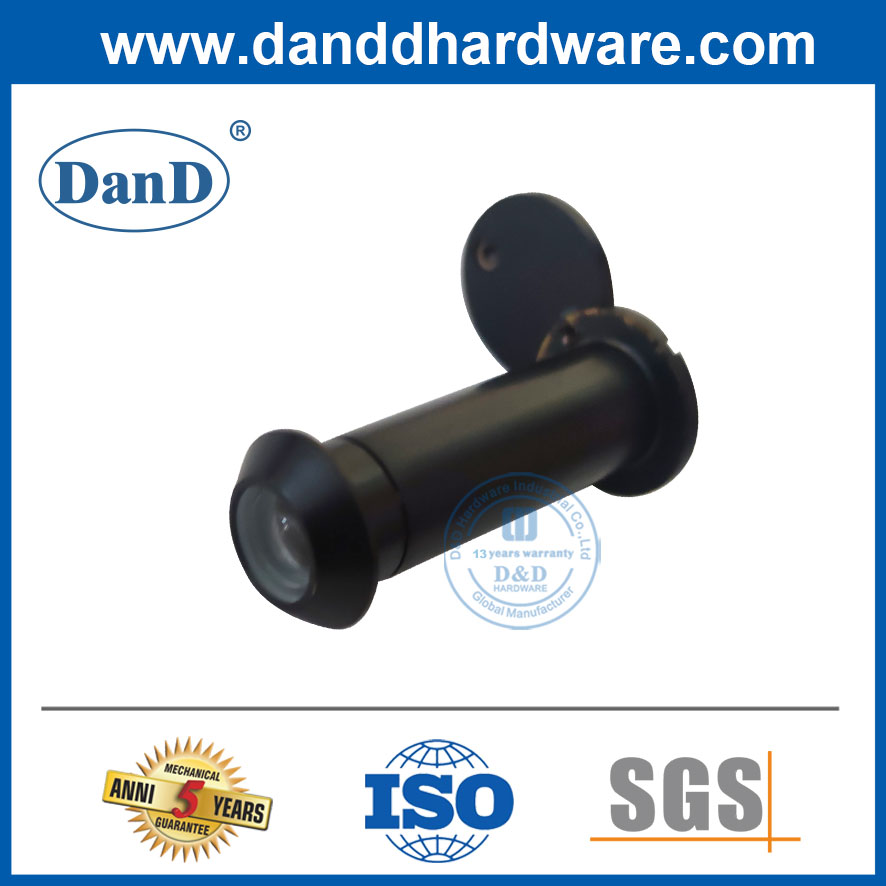
That tiny glass circle, officially known as a door viewer, is a staple of residential security. It allows you to see who is standing on your porch or in your hallway without exposing yourself or compromising the barrier of your locked door. But have you ever stopped to wonder how a lens the size of a dime allows you to see a panoramic view of your front yard?
The mechanism behind this everyday device is a fascinating application of optical physics. It relies on a specific arrangement of lenses to manipulate light, creating a "fisheye" effect that compresses a wide field of view into a tiny image your eye can process. Understanding how a door viewer works not only satisfies curiosity but can also help you choose the right security hardware for your home.

To understand the function, we first have to look at the form. A standard door viewer is not just a hole in the door with a piece of glass over it. It is a sophisticated optical instrument housing multiple lenses within a metal barrel.
The device typically consists of a hollow tube that passes through the thickness of the door. Inside this tube, there are usually four lenses, though cheaper models may only use two or three. These lenses are arranged in a specific order to capture light from the outside and deliver a clear image to the inside.
The lens on the exterior side of the door is called the objective lens. This is responsible for gathering light from the outside world. Unlike a standard flat window, this lens is designed to capture light from a very wide angle—often up to 160 or even 200 degrees.
The lens on the interior side, the one you press your eye against, is called the ocular lens or eyepiece. Its job is to take the manipulated light from the barrel and present it to your eye in a focused, viewable format.

The magic of a door viewer lies in how it bends (refracts) light. If you looked through a simple hollow tube, your field of view would be incredibly narrow. You would only see a small circle directly ahead of you. To see the delivery driver standing to the left or the neighbor standing to the right, the door viewer needs to compress a massive scene into that tiny tube.
This is achieved through the interaction of concave and convex lenses.
The front lens (objective) is typically a concave lens. This means it is thinner in the center and thicker at the edges. When light rays from a wide area hit this lens, they are refracted inward. This lens takes the massive visual field of your front porch and shrinks it down into a much smaller size.
However, a single concave lens creates an image that is virtual and upright but much smaller than the object itself. If you just had this lens, you would see a tiny, distant-looking version of your visitor.
To fix the "tiny" problem, the internal lenses and the rear ocular lens come into play. These are usually convex lenses (thicker in the center). A convex lens works like a magnifying glass. It takes the minified light rays traveling through the barrel and magnifies the image just enough so that when your eye focuses on it, the person outside looks recognizable.
This combination creates a wide-angle view. The trade-off for this wide view is the "fisheye" distortion. Straight lines (like door frames or pillars) appear curved at the edges of the image because the lens is squeezing the periphery of the view into a flat circle.
While the basic optical principles remain the same, technology has evolved. Today, homeowners can choose from several variations of the classic door viewer.
These are the most common and affordable options. They usually offer a viewing angle between 160 and 180 degrees. They rely entirely on glass or plastic lenses and require no batteries. The clarity depends heavily on the quality of the glass; cheaper plastic versions can become cloudy over time due to scratches or sun damage.
For those with large porches or hidden corners, a standard viewer might have blind spots. Wide-angle viewers use more complex lens geometry to offer up to a 200-degree field of view. This allows you to see people who might be crouching below the door line or standing flat against the wall next to the door.


We are moving increasingly toward smart homes, and the humble peephole is no exception. A digital door viewer replaces the ocular lens with a small LCD screen on the inside of the door. On the outside, a small camera captures the image.
These are excellent for:
Accessibility: Children or people in wheelchairs who cannot reach a standard peephole height can view the screen easily.
Poor Eyesight: The screen is larger and brighter than looking through a tiny glass lens.
Recording: Many digital models can record footage or take photos of visitors.

A common fear regarding peepholes is the idea of "two-way" visibility. Can the person standing outside look in and see you?
With a standard, high-quality door viewer, the answer is generally no. The optical arrangement that shrinks the outside world to fit into the tube has the opposite effect if you look from the outside in. If someone puts their eye to the exterior lens, the light from inside your home is dispersed so widely that they typically see nothing but a blur of colors or darkness.
However, privacy concerns are still valid. In rare cases, specialized "reverse peephole viewers" used by law enforcement can reverse the optics to look inside. Additionally, if it is dark outside and you have bright lights on inside, the one-way effect is diminished. To combat this, many modern door viewers come with a privacy cover—a simple shutter you can flip closed when you aren't using the device.
A door viewer is a small investment that yields significant returns in safety. It serves as the first line of defense against unwanted entry, giving you the information you need to decide whether to disengage the lock.
Whether you opt for a traditional optical lens or a high-tech digital screen, ensuring you have a functional door viewer is essential. It puts control back in the hands of the homeowner, allowing you to screen visitors safely from behind a solid barrier.

Can I install a door viewer myself?
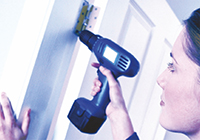
Yes, installing a door viewer is a very common DIY project. It usually involves drilling a single hole through the door at eye level. You then insert the front and back pieces of the viewer and screw them together until they sandwich the door tightly.
How high should a door viewer be installed?
The standard height is usually around 5 feet (60 inches) from the floor, which accommodates the average adult. However, if you have family members of varying heights or use a wheelchair, you might consider installing two viewers at different heights or opting for a digital viewer with a large screen.
How do I clean a door viewer?
Dirt and dust can accumulate on the exterior lens, making the image blurry. Clean it gently with a microfiber cloth and a small amount of glass cleaner. Avoid abrasive scrubbers, especially if the lens is plastic, as this can scratch the surface and permanently ruin the visibility.
Does a door viewer compromise the fire rating of a door?
If you live in an apartment or condo, your front door is likely fire-rated. Drilling a hole can technically compromise this rating. However, you can purchase UL-listed fire-rated door viewers that contain special fused glass designed to withstand high heat, maintaining the door's safety integrity.
Understanding how a door viewer works reveals the impressive engineering hiding in plain sight. By manipulating light with concave and convex lenses, these devices provide a critical layer of security for millions of homes. Whether you are looking to upgrade to a wide-angle lens or simply want to clean your current one for a better view, paying attention to this tiny device ensures you never have to open your door to the unknown.
For further information about door viewers or any of our services, please click to Contact us Now:
Contact: David Jian
Mobile No.: 0086-139 2903 7292
Email: sales@danddhardware.com