Views: 0 Author: D&D Hardware Publish Time: 2026-07-29 Origin: D&D Hardware


UL 10C and UL 10B are two distinct fire-test standards for door assemblies used in the United States. UL 10C applies to positive pressure fire door assemblies, while UL 10B applies to neutral pressure conditions. For most modern commercial buildings, UL 10C is the required standard—and the locks installed on those doors must be tested and listed accordingly.
Choosing the wrong fire rating for a door lock is not just a technical misstep. It can result in failed inspections, code violations, and—in a real emergency—a door assembly that does not perform as expected. This guide explains the difference between UL 10C and UL 10B, clarifies which standard applies to your project, and outlines what to look for when sourcing a compliant UL 10C door lock.


UL 10C is the Standard for Positive Pressure Fire Tests of Door Assemblies, published by Underwriters Laboratories. It simulates real fire conditions by applying positive air pressure during testing, replicating how fire and smoke actually behave in a building.
In a real fire, pressure builds on the fire side of a door. This positive pressure pushes smoke and heat through gaps, seams, and around hardware. A door lock tested only under neutral pressure conditions may hold under laboratory settings but fail structurally when subjected to the pressurized conditions of an actual fire.
Under UL 10C test conditions:
The fire side of the door is maintained at a positive pressure relative to the non-fire side
The door assembly—including all installed hardware—must remain structurally intact and operable for the full duration of the rated test period
Locks, latches, and other hardware components are evaluated as part of the complete assembly
A UL 10C certified door lock has been independently verified to maintain its structural and functional integrity under these realistic, pressurized fire conditions.

UL 10B is the Standard for Fire Tests of Door Assemblies using a neutral pressure fire environment. It predates UL 10C and was the dominant standard before updated building codes required testing under positive pressure conditions.
The core difference comes down to the pressure differential applied during testing:
Feature | UL 10B | UL 10C |
|---|---|---|
Pressure condition | Neutral pressure | Positive pressure |
Reflects real fire behavior | Partially | More accurately |
Required by modern IBC codes | Generally not | Yes, in most cases |
Applicable to most new commercial projects | Limited | Standard requirement |
UL 10B is better suited for projects where neutral pressure conditions are specified or where older local codes still reference it. UL 10C is better suited for new commercial construction, renovations, and any project governed by the International Building Code (IBC) or NFPA 80.

In most jurisdictions adopting the International Building Code (IBC), UL 10C is the required fire test standard for positive pressure fire door assemblies. Projects built to NFPA 80 standards similarly call for positive pressure testing in the majority of commercial applications.
To determine which standard applies to your specific project:
Check your local building code. Most U.S. states and municipalities have adopted the IBC, which references UL 10C for positive pressure applications.
Review the door schedule in the project specifications. Architects and project engineers typically specify the required fire rating and test standard directly in the hardware schedule.
Confirm with the Authority Having Jurisdiction (AHJ). When in doubt, the AHJ—typically the local fire marshal or building department—has final authority on which standard applies.
Verify the door label. UL-listed fire doors carry a label identifying the test standard and fire rating period (e.g., 20-minute, 45-minute, 60-minute, 90-minute, or 3-hour ratings).
If your door is labeled to UL 10C, every component of the hardware assembly—including the lock—must also be UL 10C listed to maintain the door's fire rating integrity.
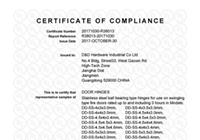
A UL 10C door lock must be independently tested and listed as part of a compliant fire door assembly. Compliance is not self-declared—it requires third-party evaluation by a recognized testing laboratory such as UL (Underwriters Laboratories).
Key characteristics of a compliant UL 10C door lock include:
Positive pressure tested: The lock has been evaluated under UL 10C conditions, not just UL 10B or no fire rating at all
Listed and labeled: The product appears in UL's online directory of listed products and carries a UL mark
Assembly-specific listing: The lock must be compatible with the specific door and frame assembly it is installed in—a lock listed on one door type does not automatically transfer to another
Hardware schedule compliance: The lock must match the grade, function, and configuration specified in the project's hardware schedule
When sourcing a UL 10C door lock for a commercial project, always request the UL listing documentation and confirm the product model number matches the listing. A reputable UL 10C door lock manufacturer will provide full documentation without hesitation.

The fire rating period (e.g., 20-minute, 90-minute) indicates how long a door assembly is tested to withstand fire exposure. The rating required depends on the wall assembly and occupancy type, not the door hardware alone.
Common fire rating periods and their typical applications:
20-minute: Corridor doors, smoke barrier doors, and some wood door assemblies
45-minute: Doors in 1-hour fire-rated wall assemblies
60-minute: Doors in certain 1-hour and 2-hour wall assemblies
90-minute: Doors in 2-hour fire-rated wall assemblies (common in stairwells and exit enclosures)
3-hour: Doors in fire walls and major barriers separating high-hazard areas
The hardware—including the lock—must be rated to the same period as the door assembly. A 90-minute fire door requires a 90-minute rated lock. Installing under-rated hardware invalidates the door's certification.
When sourcing a UL 10C door lock for a commercial project, prioritize manufacturers with third-party UL listing, traceable production documentation, and consistent supply performance. These criteria matter more than unit price alone.
Buyers sourcing a China UL 10C door lock for international commercial projects should evaluate suppliers against the following criteria:
Verified UL listing: Confirm the product is listed in UL's Product iQ database before ordering. A legitimate UL 10C door lock manufacturer will provide the exact product model number that appears in the UL directory.
ISO 9001 certified factory: ISO 9001 certification indicates that the manufacturer operates a documented quality management system, which supports consistent output across production batches.
SGS or third-party factory audit: An audited factory provides greater assurance of production controls than self-reported quality claims.
Complete hardware schedule support: For commercial projects, the manufacturer should be able to supply all required hardware components—locks, hinges, door closers, panic devices—from a single source, all compliant to the same certification standard.
After-sales and technical support: Fire-rated hardware projects sometimes require documentation for the AHJ or occupancy certificate. A capable manufacturer provides test reports, listing certificates, and installation guidance as standard.
D&D Hardware Industrial Co., Ltd. is a China-based UL 10C door lock manufacturer and ISO 9001 certified factory with over 18 years of experience supplying certified commercial door hardware to projects across North America, Europe, the Middle East, and beyond. D&D's UL-listed door locks are tested to ANSI and BHMA standards and are available with full project documentation support. For sourcing inquiries, visit www.danddhardware.com or contact the sales team directly at sales@danddhardware.com.

Q: Can a UL 10B listed door lock be used on a UL 10C rated door?
A: No. A UL 10B listing does not satisfy the requirements for a UL 10C rated door assembly. The lock must be tested and listed under the same positive pressure standard as the door. Installing a UL 10B lock on a UL 10C door can invalidate the door's fire rating and may result in failed inspections.
Q: Does every component on a fire door need to be UL 10C listed?
A: Yes. The integrity of a fire door assembly depends on all components—hinges, locks, closers, and exit devices—being rated and compatible with the door's listed assembly. A single non-compliant component can void the entire door's fire rating certification.
Q: How do I verify that a China UL 10C door lock is genuinely listed?
A: Search the product model number in UL's online Product iQ directory (iq.ul.com). A genuine listing will display the manufacturer's name, product category, model number, and applicable standard. If the model does not appear, the product is not UL listed, regardless of any markings on the hardware itself.
Q: What is the difference between UL listing and ANSI/BHMA certification for door locks?
A: UL listing verifies that a door lock has passed fire performance testing under UL 10C or UL 10B conditions. ANSI/BHMA certification (under standards such as ANSI/BHMA A156.13 for mortise locks) verifies mechanical performance—durability, cycle testing, and operational function. For a fire-rated commercial opening, both are typically required: UL listing for fire compliance and ANSI/BHMA grading for mechanical performance.
Q: How long does a UL 10C door lock last before recertification is needed?
A: UL listings do not expire automatically, but products are subject to ongoing UL Follow-Up Services, which include periodic factory audits to verify that listed products continue to be manufactured to the tested specifications. Buyers should confirm that a manufacturer is enrolled in UL's Follow-Up Services program, not just that the product was tested once historically.
For further information about door hinges or any of our services, please click to Contact us Now:
Contact: David Jian
Mobile No.: 0086-139 2903 7292
Email: sales@danddhardware.com