Views: 0 Author: D&D HARDWARE Publish Time: 2026-06-06 Origin: D&D HARDWARE


Fire-rated door openings represent one of the most critical life-safety components in any commercial building project. When the specification process goes wrong, the consequences extend far beyond compliance issues—they directly impact occupant safety, project timelines, and overall liability exposure. After decades of manufacturing fire-rated door hardware and working alongside door fabricators, architects, and project managers across global markets, I have observed recurring patterns in specification errors that consistently cause preventable problems. This article identifies those common mistakes and provides practical guidance for anyone responsible for selecting and procuring UL fire rated mortise lock solutions.
This is where the specification process often derails before it even begins. The marketplace contains numerous products that reference "fire-rated" or "fire-resistant" language in marketing materials without holding legitimate third-party certification. A UL fire rated mortise lock is not simply a standard lock with a higher temperature tolerance—it is a precisely engineered assembly that has undergone rigorous testing under UL 10C standards, which evaluate positive pressure fire performance.
When we manufacture a UL 10C fire rated mortise lock, the entire lock body, latch mechanism, strike plate, and all internal components must function as a cohesive unit during fire exposure. The certification process at our facility involves submitting complete lock assemblies to accredited testing laboratories where they are subjected to temperatures exceeding 1,900°F (1,038°C) for durations up to three hours while maintaining door assembly integrity. This is not a theoretical performance claim—it is documented, verifiable, and traceable through UL file numbers.
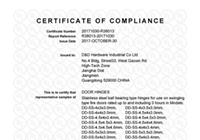
The mistake many specifiers make is accepting a supplier’s verbal or written claim without verifying the actual UL listing documentation. I always recommend requesting the UL file number directly. For example, our mortise lock assemblies carry UL certification under File No. R40901, specifically tested and verified for 3-hour fire rating under UL 10C conditions. This file number allows anyone to independently verify certification status through UL's online Product iQ database. A manufacturer that cannot or will not provide a verifiable UL file number should raise immediate concern.

One of the most fundamental misunderstandings I encounter involves the relationship between door assembly fire ratings and individual hardware component requirements. A fire door assembly rating—whether 20-minute, 45-minute, 60-minute, 90-minute, or 3-hour—applies to the complete installed system, not to any single component in isolation. The mortise lock specified for that assembly must be compatible with the door's fire rating, but the lock itself carries its own certification parameters.
The common error occurs when specifiers assume that any fire-rated lock works with any fire-rated door. A mortise lock certified for use on a 90-minute fire door assembly cannot automatically be installed on a 3-hour rated opening. The testing protocol differs, the thermal exposure duration differs, and the performance requirements under positive pressure conditions become progressively more demanding as the hourly rating increases.
From our perspective as a fire door hardware manufacturer, we engineer our UL 10C fire rated mortise lock products to meet specific rating thresholds. When we ship a lock certified for 3-hour applications under UL File No. R40901, every component from the lock case to the latch bolt has been validated under those exact test parameters. Specifiers must cross-reference the hardware listing with the door assembly rating and confirm compatibility before finalizing the hardware schedule. This verification step takes minutes but prevents months of remedial work during construction.
Since the adoption of UL 10C as the prevailing fire test standard for door assemblies in the United States and many international jurisdictions, positive pressure testing has become a non-negotiable requirement. The older UL 10B standard tested under neutral or negative pressure conditions, which did not replicate the real-world behavior of fire in a compartmented building where hot gases expand and create positive pressure zones.
UL 10C positive pressure fire testing fundamentally changed how fire-rated door hardware must perform. Under positive pressure conditions, hot gases and flames are actively driven toward gaps and penetrations in the door assembly. The mortise lock installation point—where the lock body penetrates the door core and where the latch engages the strike—becomes a critical vulnerability that must be addressed through proper hardware design and installation.
I have seen projects where hardware specified under legacy standards failed to meet current code requirements because the specification did not explicitly reference UL 10C compliance. This oversight is particularly common in renovation projects where existing specifications are being adapted rather than created anew. The corrective action is straightforward: verify that every fire rated mortise lock specification includes explicit reference to UL 10C positive pressure testing and that the manufacturer can provide documentation confirming this compliance. Our production records maintain complete traceability from raw material batch through final assembly testing, with UL 10C certification documentation available for every lock we manufacture.

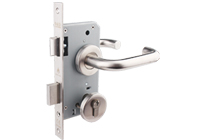
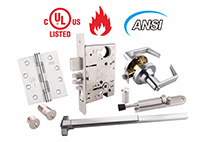
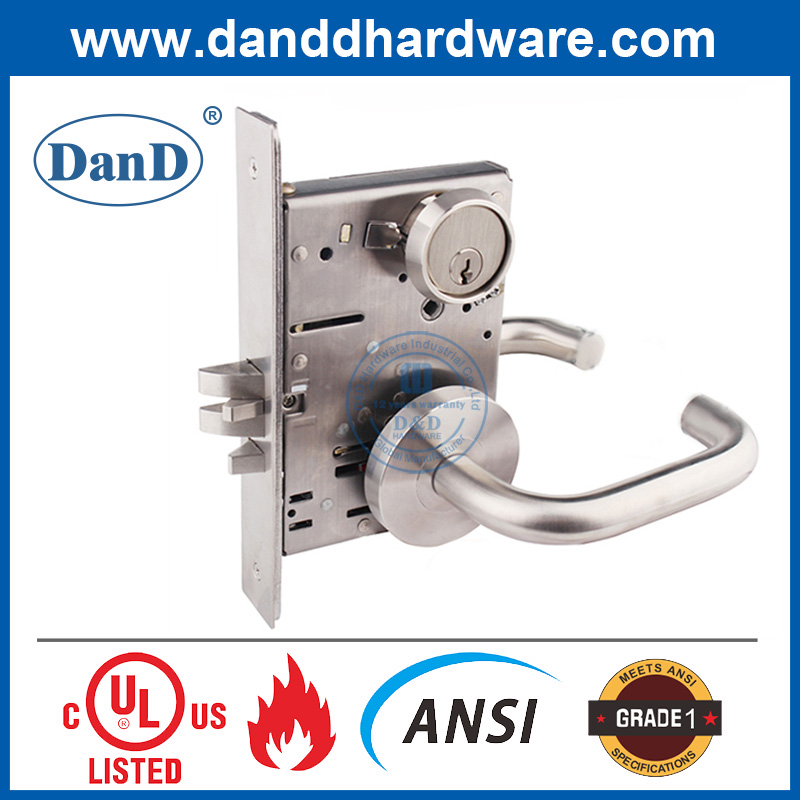
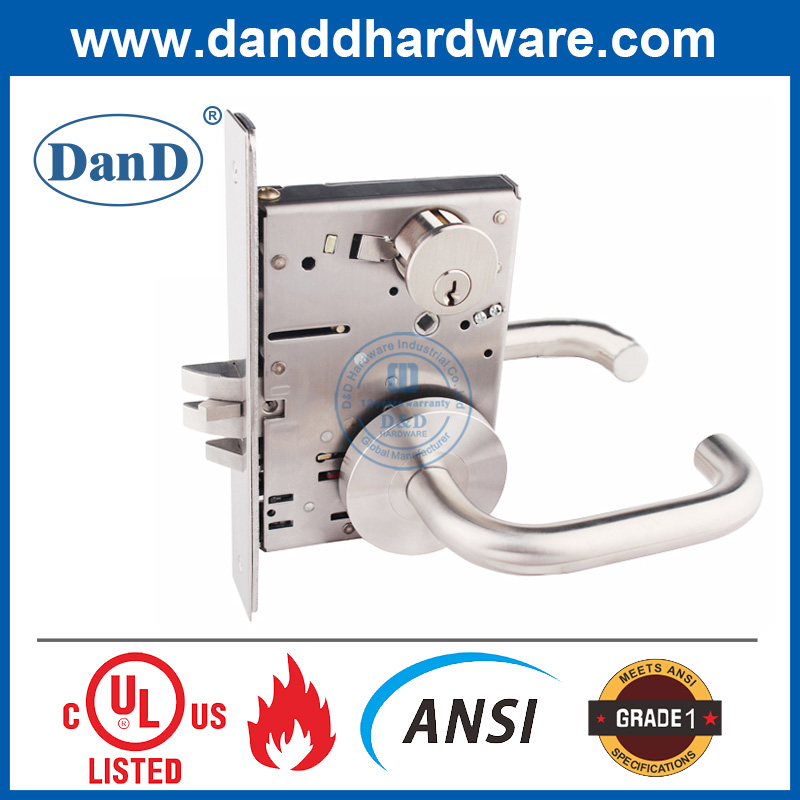
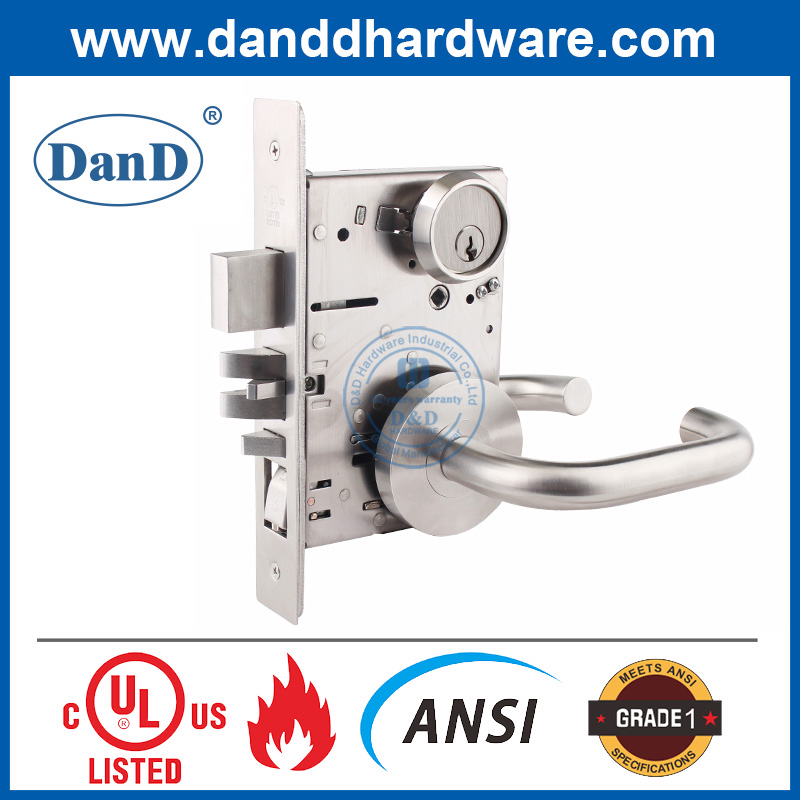
A fire rated mortise lock is never just the lock body. The complete assembly includes the lock case, latch bolt, faceplate, strike plate, cylinder or thumbturn mechanism, and all fasteners that secure these components to the door and frame. Each element contributes to the overall fire performance of the assembly, and substituting any component with a non-listed alternative voids the certification.
The most frequent substitution error I witness involves strike plates. A contractor may receive the certified lock body but use a standard-duty strike plate from existing inventory rather than the listed strike that was tested with the assembly. During a fire event, a non-listed strike can deform under thermal stress, allowing the latch bolt to disengage from the frame and compromising the door assembly's integrity at precisely the moment it is needed most.
Another common substitution involves fasteners. The screws that secure the mortise lock to the door and the strike to the frame must maintain their holding capacity under fire conditions. Standard steel screws lose significant strength at elevated temperatures, which is why listed assemblies specify fasteners with particular material properties and minimum embedment depths. When we ship our UL listed fire rated mortise lock assemblies, every component down to the mounting screws is included and matched to the certification requirements. Specifiers should write hardware schedules that explicitly prohibit component substitution and require documentation that the complete assembly as installed carries the UL listing.
Even the most rigorously tested and certified fire rated mortise lock will fail to perform as intended if the door edge preparation does not meet the manufacturer's specified dimensions and tolerances. The mortise pocket machined into the door edge must align precisely with the lock case dimensions, with clearances that allow proper latch operation while maintaining the fire-rated integrity of the door core material.
Excessive mortise pocket depth or width removes fire-rated core material that provides thermal protection to the lock body during a fire. Insufficient clearance can cause binding that prevents proper latch extension or retraction. Both conditions create potential failure points that would not be detected during a standard operational test but could prove catastrophic under fire conditions.
The same principle applies to the faceplate installation. The faceplate must sit flush with the door edge surface, with the latch aperture correctly aligned to allow smooth bolt movement. A faceplate that protrudes even slightly can prevent full door closure, while one recessed too deeply creates a gap that provides a pathway for hot gases. Our technical documentation includes precise door preparation templates and installation tolerances for every lock model we manufacture, and we provide this information in formats suitable for both automated CNC machining centers and manual fabrication operations.
The financial impact of specification errors in fire-rated hardware multiplies dramatically when discovered late in the construction process. A mortise lock substitution required after doors have been machined and finished often means replacing the entire door leaf—a cost that can exceed the hardware value by an order of magnitude.
I strongly recommend that procurement planning for fire door hardware begin during the schematic design phase, not during the submittal review phase. Early engagement with the fire door hardware manufacturer allows verification of lead times, confirmation of certification documentation requirements, and identification of any special-order configurations that may affect project scheduling. Our factory maintains direct communication channels with door fabricators and project managers specifically to support this early planning approach.
For specification-driven projects, we provide complete submittal packages that include UL certification documentation, installation instructions, dimensional drawings, and finish samples. These packages enable the specifier to validate hardware selections before doors enter production. When questions arise about application-specific requirements—such as hospital corridor doors requiring both fire rating and privacy function, or stairwell doors requiring fail-safe operation for egress—we provide engineering support to confirm that the specified configuration meets all applicable code requirements while maintaining the UL fire rating.
Selecting a fire rated mortise lock supplier involves evaluating factors beyond unit price and delivery schedule. The questions I recommend asking before placing an order include: Can you provide a valid UL file number that I can independently verify? Is the UL 10C fire rating for the complete assembly or only for specific components? Do you include all listed components—lock body, strike, fasteners—as a complete kit? What documentation will you provide for my project records and AHJ submittal? What is your process for handling field modifications or special configuration requests while maintaining the fire listing?
The answers to these questions reveal whether a supplier operates as a legitimate fire door hardware manufacturer with documented quality control processes or simply as a reseller of products they may not fully understand. Our position as a manufacturer of record for UL File No. R40901 means we control every aspect of design, material selection, production, and testing. This vertical integration provides the traceability and accountability that fire-rated applications demand.

What is the difference between UL 10B and UL 10C fire testing for door locks?
UL 10B is an older fire test standard that evaluates door assemblies under neutral or slightly negative pressure conditions. UL 10C, which has largely superseded UL 10B in current building codes, tests under positive pressure conditions that more accurately replicate real fire behavior. A fire rated mortise lock certified under UL 10C has demonstrated performance under the more demanding standard that accounts for hot gas expansion and flame propagation through assembly gaps. Always verify that specified hardware carries UL 10C certification rather than legacy UL 10B listing.
Can I install a 90-minute rated mortise lock on a 3-hour fire door?
No. The lock rating must match or exceed the door assembly rating requirement. A mortise lock tested and certified for 90-minute applications has not demonstrated performance for the extended duration required by a 3-hour assembly. Using an under-rated lock on a higher-rated door creates a code compliance violation and a potential life-safety hazard. Our UL 10C fire rated mortise lock assemblies certified for 3-hour applications under UL File No. R40901 have been tested for the full duration required.
How do I verify that a fire rated mortise lock is genuinely UL listed?
Request the manufacturer's UL file number and verify it through the UL Product iQ online database at productiq.ul.com. The database will show the manufacturer name, product categories covered, and certification scope. A legitimate manufacturer will provide this information without hesitation. If a supplier is reluctant to share the file number or claims that certification verification is unavailable, treat this as a red flag requiring further investigation before proceeding with procurement.
What documentation should I receive with a UL fire rated mortise lock purchase?
At minimum, you should receive a certificate of compliance or conformance that references the applicable UL file number, the product model or part number, the fire rating achieved, and the testing standard applied (UL 10C). This documentation should cover the complete assembly as shipped. For projects requiring authority having jurisdiction (AHJ) approval, we provide comprehensive submittal packages including test reports, installation instructions, and material certifications.
Why are the fasteners included with a fire rated lock assembly important?
The fasteners supplied with a UL listed fire rated mortise lock assembly are specified as part of the certified system. They have been tested for thermal performance, holding capacity at elevated temperatures, and compatibility with the door and frame materials. Substituting non-listed fasteners—even if they appear dimensionally identical—voids the assembly listing and can result in latch disengagement during a fire event due to screw withdrawal or material deformation.
How far in advance should I order fire rated mortise locks for a commercial project?
We recommend placing orders a minimum of 8-12 weeks before required on-site delivery, though this timeline can vary based on order complexity, finish requirements, and current production schedules. Custom configurations, specialty finishes, or large-quantity orders may require additional lead time. Early engagement allows us to plan production capacity, secure material allocations, and deliver certified products without compromising our quality control processes.
The decisions made during the specification and procurement of fire rated door hardware carry consequences that extend throughout the building's service life. Getting these decisions right requires clear understanding of certification requirements, careful attention to assembly completeness, and partnership with a manufacturer that provides verifiable documentation and technical support. By avoiding the common mistakes outlined above, specifiers and procurers can ensure that their fire-rated openings perform as designed when it matters most.
For further information about fire rated mortise lock or any of our services, please click to Contact us Now:
Contact: David Jian
Mobile No.: 0086-139 2903 7292
Email: sales@danddhardware.com