Views: 0 Author: Site Editor Publish Time: 2026-02-10 Origin: Site


Imagine a crowded theater or a bustling office building during an emergency alarm. The smoke is rising, panic is setting in, and hundreds of people rush toward the nearest exit. In this critical moment, the door they reach cannot be a puzzle to unlock. It must open instantly and effortlessly.
This scenario highlights exactly why fire exits cannot use standard residential locks or handles. The hardware installed on these doors is not just a mechanism for security; it is a lifeline. Building codes and safety regulations strictly dictate that fire exits must be equipped with specialized devices designed to facilitate rapid evacuation while maintaining the building's fire containment integrity.
Understanding the specific requirements for fire exit hardware is essential for building managers, architects, and business owners. It ensures compliance with legal standards and, more importantly, protects the lives of occupants. This guide explores the necessary hardware for fire exits and why generic alternatives simply won't cut it.
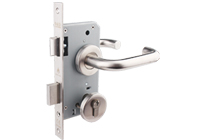
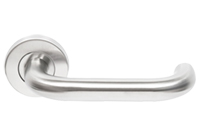
The short answer to the question is yes: fire exits absolutely require specific fire hardware. A standard deadbolt or a knob that requires tight grasping and twisting is illegal on a designated fire exit route.
Fire Exit Hardware is designed based on a simple principle: single-motion egress. A person fleeing danger should be able to open the door with one intuitive motion—usually pushing—without requiring keys, special knowledge, or significant physical effort. This allows people of all ages and physical abilities to escape quickly.
Furthermore, fire door hardware must be able to withstand high temperatures. In the event of a fire, standard metals might warp or melt, causing the door to jam shut or fail to close properly. Rated fire hardware is tested to ensure it remains functional and keeps the fire door closed (latched) to prevent the spread of fire and smoke when not in use.

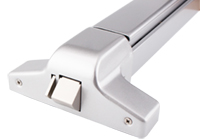
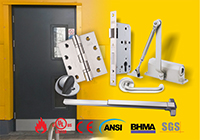
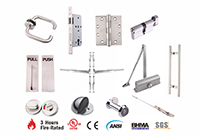
To meet safety standards, a fire exit generally requires a combination of specific components. The most recognizable of these is the fire exit push bar, often referred to as a panic bar or crash bar.
A fire exit push bar spans the width of the door. When pressure is applied anywhere along the bar, it retracts the latch mechanism, allowing the door to swing open. This is crucial for crowd safety. If a crowd presses against the door, the pressure of their bodies against the bar will automatically unlatch the door, preventing a crush.
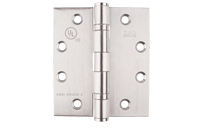
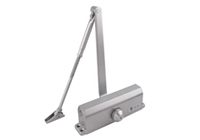
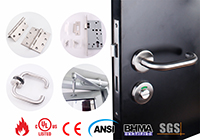
It is not just the locking mechanism that matters. The hinges must be fire-rated (often ball-bearing hinges made of stainless steel like Grade 304) to prevent the door from dropping or warping under extreme heat. Additionally, a fire door must be self-closing. A hydraulic door closer ensures that after someone passes through, the door returns to a closed and latched position to contain the fire.
To better understand why specific hardware is legally required, compare the features of standard hardware versus fire exit compliance hardware below.
Feature | Standard Door Hardware | Fire Exit Hardware |
|---|---|---|
Operation | Requires grasping, twisting, or keys. | Single motion (push) for immediate release. |
Crowd Safety | Can trap occupants if crowded against. | Opens automatically under pressure (Panic Bar). |
Heat Resistance | May warp or melt, jamming the door. | Tested to withstand high heat without failure. |
Latch Mechanism | Often deadbolts for security. | Self-latching to contain fire/smoke after use. |
Compliance | Suitable for privacy/security. | Mandatory for emergency egress routes. |
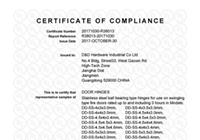
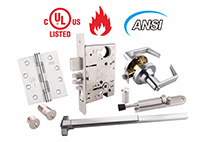
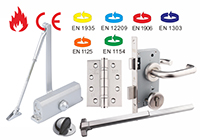
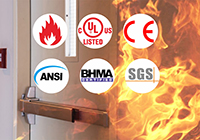
When selecting hardware, you cannot simply look for something that "looks" like a push bar. Products must be certified by recognized bodies. In the scraped data from D&D Hardware, for example, products are tested to international standards including:
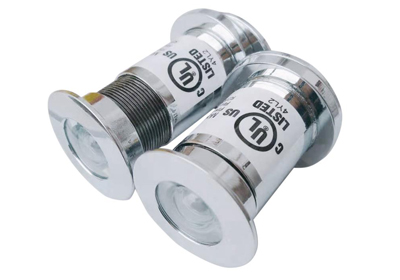
UL (Underwriters Laboratories): Common in the US and globally.
CE / BS EN: European standards for safety and performance.
ANSI/BHMA: American standards for durability and functionality.
Using uncertified hardware on a fire door can void your building's fire certificate and insurance, leaving you liable in the event of an accident.
When outfitting a commercial or public building, it might be tempting to save costs on "equivalent" hardware, but fire safety is an area where shortcuts are dangerous. Fire exits require specialized fire door hardware to function correctly during a disaster. From the fire exit push bar that allows for a swift exit to the hinges that hold the door in place against a blaze, every component plays a vital role.
Regular inspections are just as important as the initial installation. Ensure your hardware operates smoothly and that no unauthorized locks (like padlocks or chains) have been added to fire exits, as these are severe code violations. By investing in the correct, certified hardware, you ensure that your building remains a safe environment for everyone inside.