Views: 0 Author: Site Editor Publish Time: 2026-02-09 Origin: Site


Imagine a crowded theater or a busy office building during an emergency. The alarm sounds, smoke fills the air, and hundreds of people need to leave immediately. In that chaotic moment, the door they rush toward isn't just a piece of wood or metal—it's a lifeline. If that door requires a key, a complicated turn of a handle, or fails to open under pressure, the consequences could be devastating.
This scenario highlights why fire exit hardware is strictly regulated and distinct from standard door locks. Fire exit hardware, specifically panic bars and rim exit devices, is engineered for one primary purpose: to allow fast, unhindered egress without prior knowledge of how the device operates.
If you are a building manager, architect, or contractor, understanding the specific types of hardware required for fire exits isn't just about code compliance—it's about safety. This guide explores the essential hardware used on fire exits, the differences between various exit devices, and why choosing the right equipment, like the ANSI Grade 1 solutions from D&D Hardware, is critical for your building's safety strategy.
Before looking at specific products, it is important to distinguish between "panic hardware" and "fire exit hardware." While they look similar, they serve slightly different functions based on the door's fire rating.
Panic Hardware is designed for doors that are part of an escape route but are not fire-rated. The primary goal is to ensure the door opens easily when pressure is applied to the bar. These devices must feature a "dogging" mechanism, which allows the latch to be held retracted, keeping the door push-pull operable during business hours.
Fire Exit Hardware, on the other hand, is used on fire-rated doors. These doors are designed to stop the spread of fire and smoke. Consequently, fire exit hardware must not have a mechanical dogging feature. The door must latch positively every time it closes to maintain the fire barrier. Furthermore, fire exit hardware must be tested and listed by a recognized laboratory (like UL) for both panic and fire protection.
The most recognizable piece of hardware on a fire exit is the crossbar or touch bar, but there are several configurations available depending on the door type (single vs. double) and security needs.
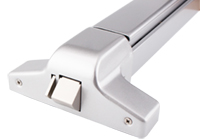
The rim exit device is the most common and easiest to install. It is mounted on the surface of the door, with a latch projecting from the device into a strike plate mounted on the door frame.
Best for: Single doors and double doors with a removable mullion.
Pros: easy installation, low maintenance, and high durability.
Example: D&D Hardware offers UL Listed Fire Rated Rim Type devices that are ideal for retrofitting existing buildings or new construction where simplicity is key.
You will often see these on double doors where there is no center mullion (the vertical post between doors). These devices use rods that connect the push bar to latches at the top and bottom of the door.
Surface Vertical Rod (SVR): Rods are visible on the face of the door.
Concealed Vertical Rod (CVR): Rods are hidden inside the door for a cleaner aesthetic and better protection against vandalism.
Best for: Pairs of doors where a wide opening is needed for moving equipment or large crowds.
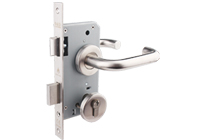
This type integrates a mortise lock body inside the door, operated by the panic bar. It offers a higher level of security and durability.
Best for: High-traffic areas requiring extra strength or specific architectural aesthetics.
1
When selecting fire exit hardware, specific certifications and features ensure the device will perform when it matters most.
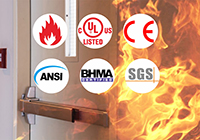
The American National Standards Institute (ANSI) and Builders Hardware Manufacturers Association (BHMA) grade hardware based on durability and cycle testing.
Grade 1: The highest standard, tested to 500,000 cycles. This is the standard for commercial buildings, schools, and hospitals. D&D Hardware’s panic bars meet this rigorous standard, ensuring longevity even in high-use environments.
Grade 2 and 3: Suitable for residential or light commercial applications but generally not recommended for main fire exits in public buildings.
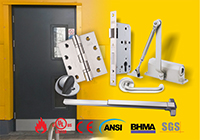
For fire doors, the hardware must bear a specific label. Look for "UL Listed for Fire Exit Hardware." If the device is only "UL Listed for Panic Hardware," it cannot be used on a fire-rated door. D&D Hardware products, for example, carry the UL 10C rating, meaning they are tested to withstand fire exposure for up to 3 hours.
Fire exits are often located on the exterior of buildings or in service areas, exposing them to potential abuse and environmental factors. Stainless steel (specifically Grade 304) is the preferred material for these devices. It offers superior resistance to corrosion and maintains its structural integrity under high heat, unlike softer metals like zinc or aluminum.

Feature | Rim Exit Device | Surface Vertical Rod | Mortise Exit Device |
|---|---|---|---|
Installation Difficulty | Low | Medium | High |
Door Type | Single or Double (w/ mullion) | Double (w/o mullion) | Single or Double |
Security Level | Medium | High (two latch points) | High (deadbolt option) |
Maintenance | Low | Medium (rod alignment) | Low |
Aesthetic | Functional/Industrial | Industrial | Clean/Integrated |
One of the most common mistakes in fire safety hardware involves the "dogging" feature. Dogging allows a hex key (Allen wrench) to retract the latch bolt and lock the push bar in the depressed position. This effectively turns the door into a simple push-pull door, reducing wear on the moving parts during the day.
However, dogging is strictly prohibited on fire-rated doors. If a fire door is dogged open (unlatched), the pressure from a fire could blow the door open, allowing smoke and flames to spread to the escape route. Always ensure that the hardware specified for fire barriers is "fire exit hardware" which legally cannot include mechanical dogging.
Installing the correct hardware is only the first step. Regular maintenance is crucial to ensure these devices save lives effectively.
Visual Inspection: Check for loose screws, damaged strike plates, or obstructions blocking the door.
Operational Test: Push the bar. The door should open smoothly with no more than 15 pounds of force (though codes vary, generally 15-30 lbs is the max).
Latch Test: Ensure the door latches positively when it closes. On fire doors, the latch must engage every time.
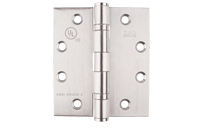
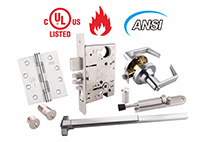
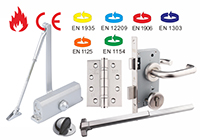
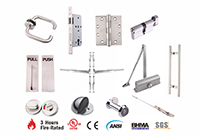
Choosing high-quality components from reputable manufacturers like D&D Hardware guarantees that your building meets strict international safety standards, including ANSI, UL, and CE. Their extensive range of door hinges, locks, and panic bars provides a comprehensive solution for any commercial safety project.
The hardware on a fire exit is the silent guardian of a building's occupants. While it may go unnoticed during daily operations, its performance is non-negotiable during an emergency. By selecting ANSI Grade 1, UL-listed panic bars and rim exit devices, you are investing in reliability.
Whether you are retrofitting an older structure or specifying for a new development, ensure your choices align with fire codes and life safety standards. If you need assistance selecting the right configuration for your specific doors, or if you require products that meet rigorous UL 10C 3-hour fire ratings, contact the experts at D&D Hardware today.